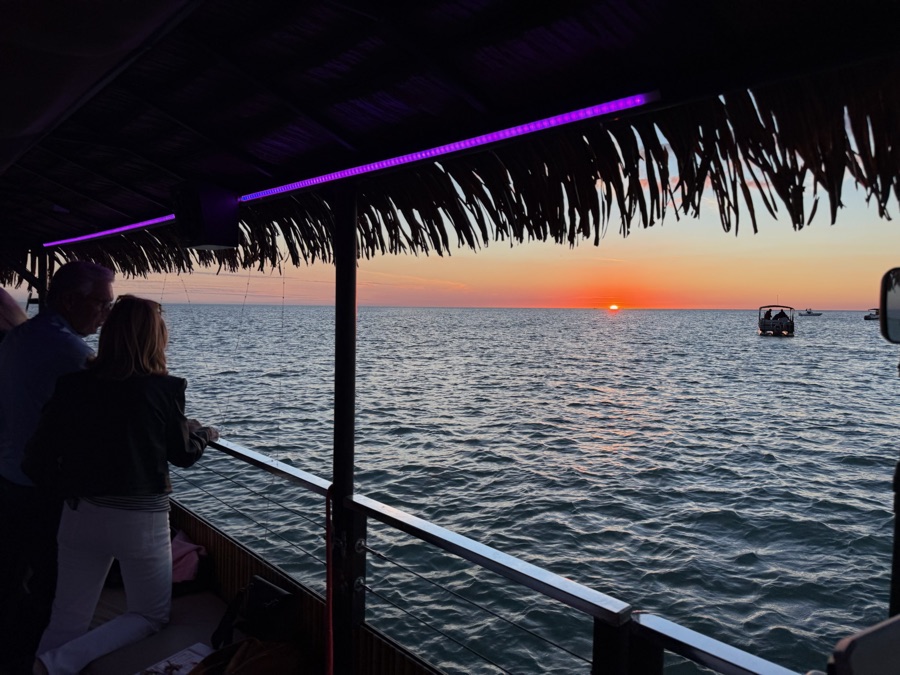
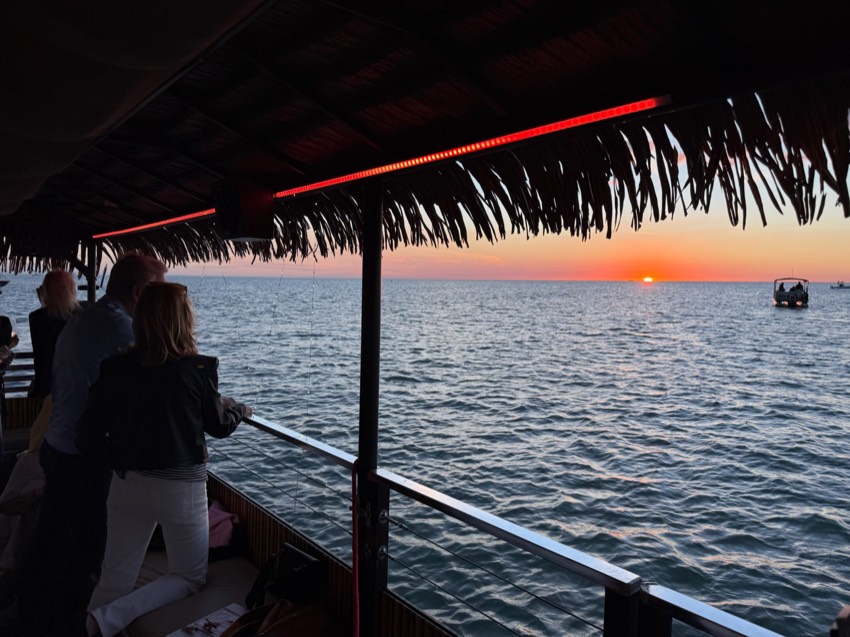
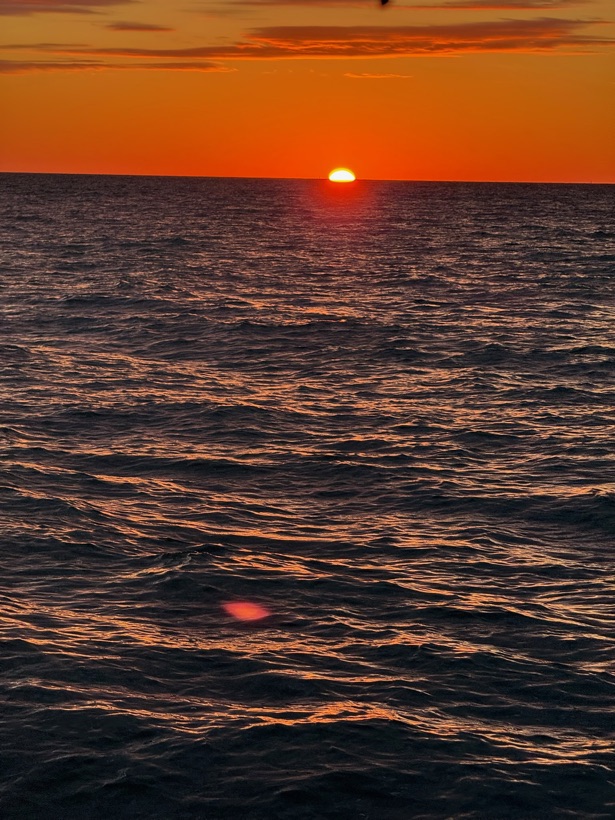
Before we ever leave the dock with an Estero group, our captains check two things first: which way the wind is blowing and which way the tide is running that morning. A dead-calm easterly paired with a falling tide means we can push all the way out to the barrier islands without a second thought. A stiff onshore wind against an incoming tide, though, and we’ll trim the plan back toward the protected mangrove creeks instead, where the water stays flat no matter what the Gulf is doing just outside the pass. We’d rather add ten minutes to a route than fight a chop the whole way out, especially with kids or grandparents aboard who don’t need the extra bounce.
If you’ve paddled or waded the grass flats around Estero Bay, you already have a feel for skinny, current-driven water — ours just stacks mangrove tunnels and oyster bars on top of the tide instead of open grass flats. The transition happens fast once you leave the dock: brackish, tannic water gives way to gin-clear tidal creeks within a couple of miles, and most guests notice the color change in the water before they even notice we’ve slowed the boat to idle speed through the narrow cut.
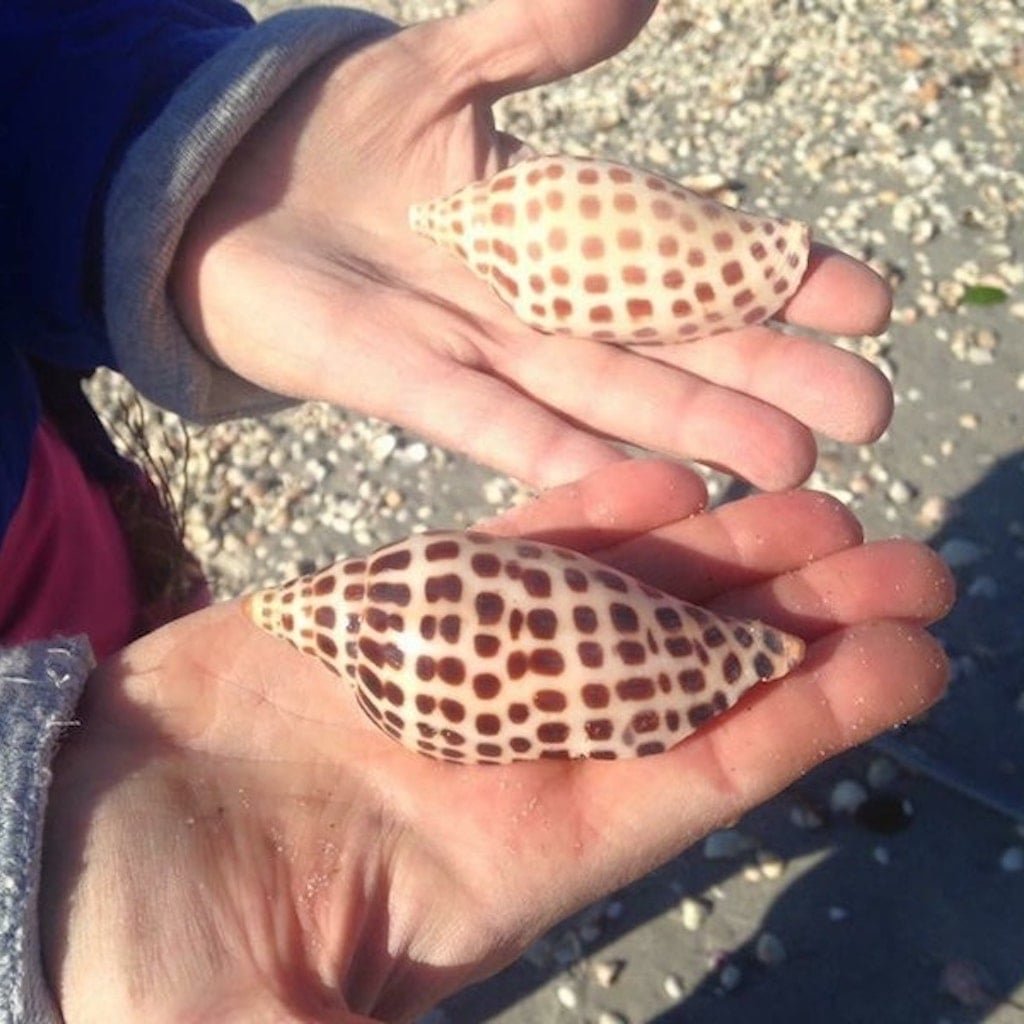
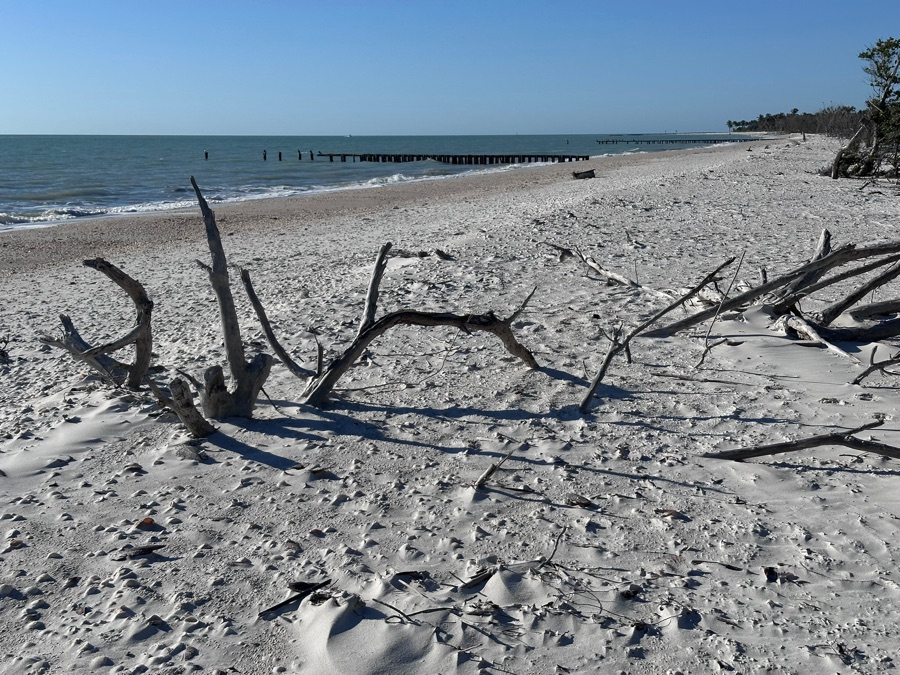
Coming from Estero, you’re close enough that either of our two departure areas works, and the choice usually comes down to what you want out of the day. Naples gets you into open Gulf water and the dolphin grounds fastest; running instead from near Marco and Goodland trades a slightly longer drive for a head start into the backwater maze further south. Ask us which suits your group when you book — a sunset crowd usually leans toward Naples, while shelling families usually lean toward the longer drive for the wilder beaches.
Once we’re underway, an incoming tide pushing against a north wind is the one combination that makes our captains change the route on the fly — it stacks a short, steep chop right where two channels meet, so we’ll swing wide around it rather than punch straight through with a boat full of guests. Most people never notice the detour; they’re usually watching a wading bird lift off a sandbar or asking what that splash was just off the bow a moment before. It’s a small correction, but skipping it means a jarring minute or two right when everyone’s just settling into the ride.
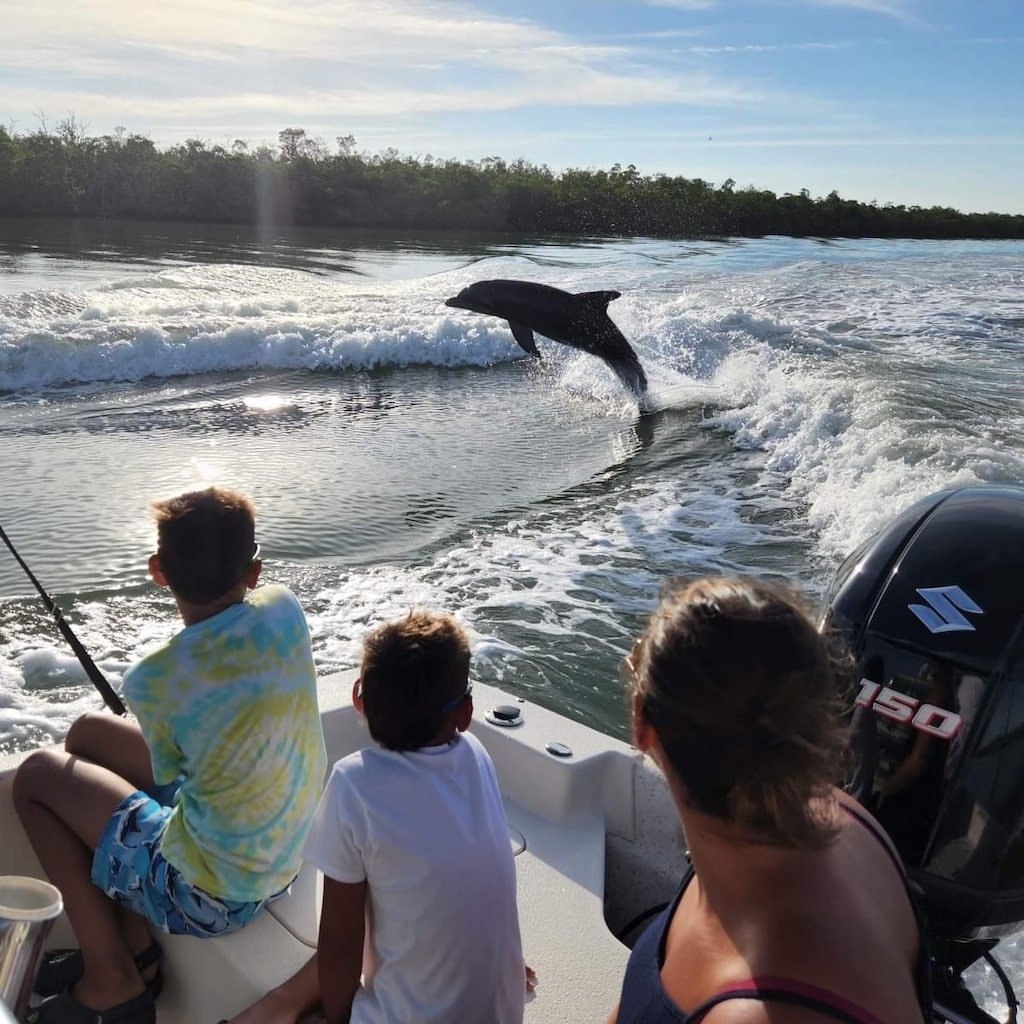
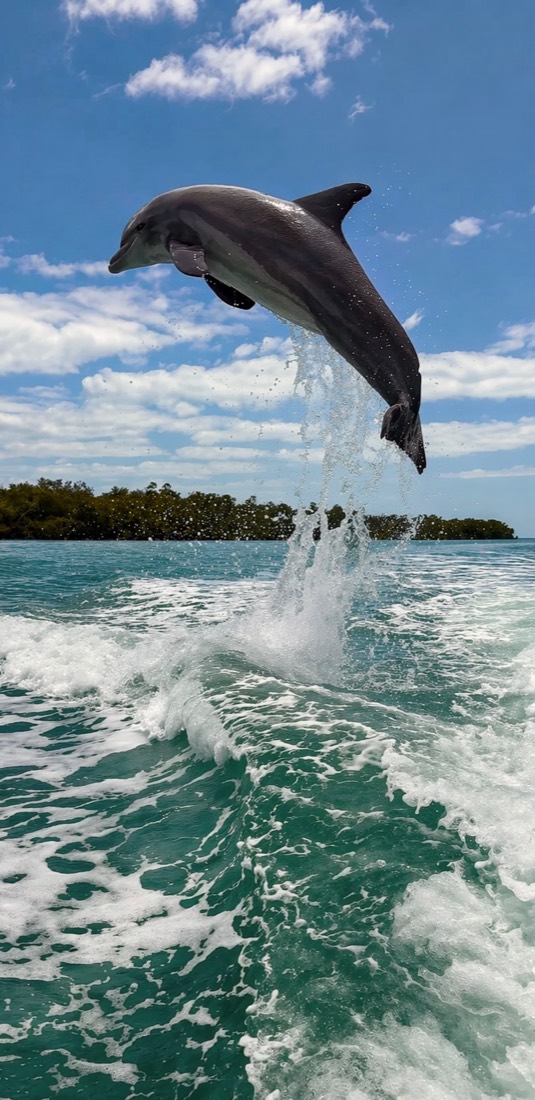
For an Estero group chasing wildlife more than shells, we’ll often build the trip around a dolphin tour instead of a shelling run, since the odds of a sighting improve in that same moving-water window. If your crew wants both in one day, ask about a private charter instead, since we can build a custom route that hits a shelling beach on the falling tide and works back toward open water for dolphins on the way in.