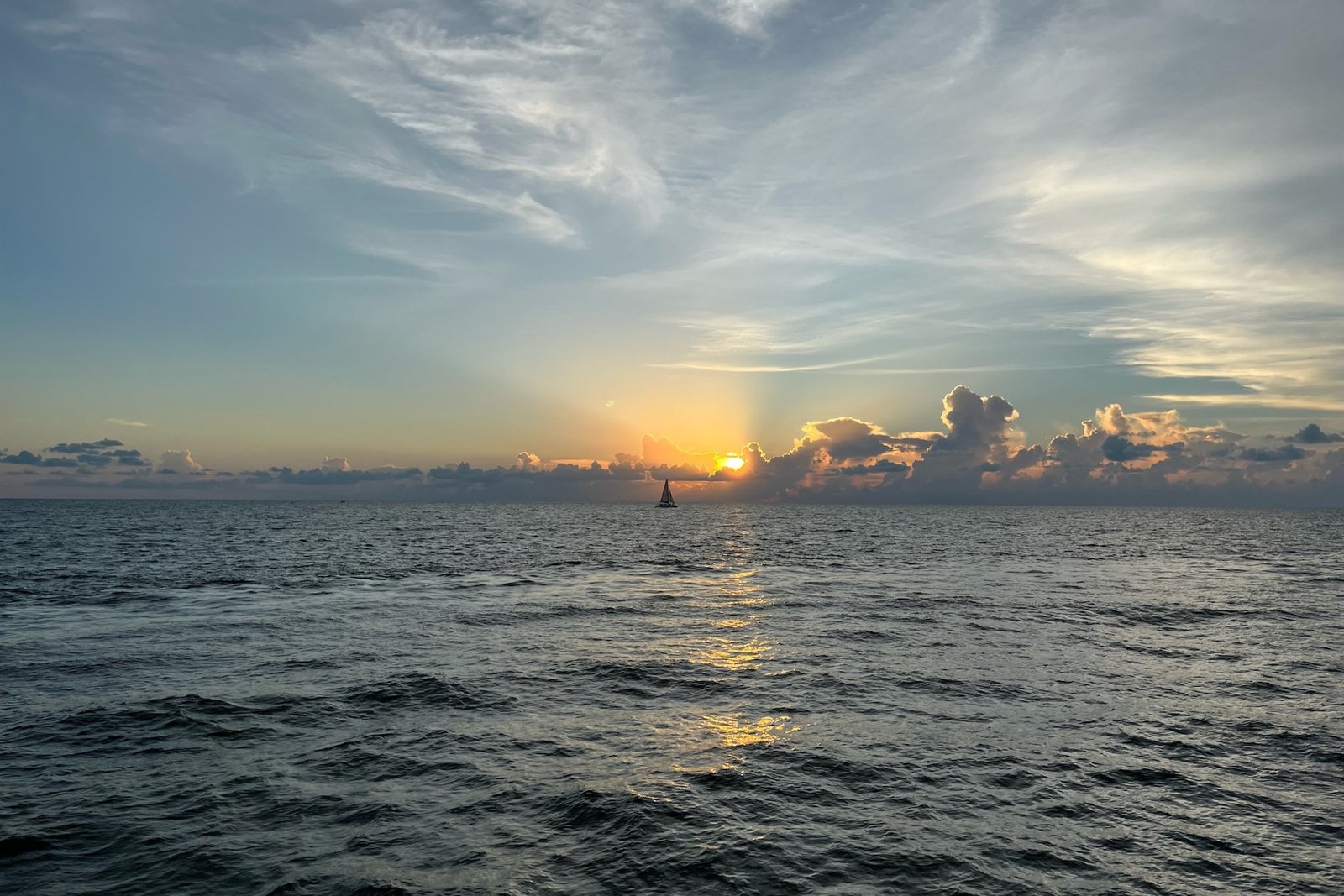
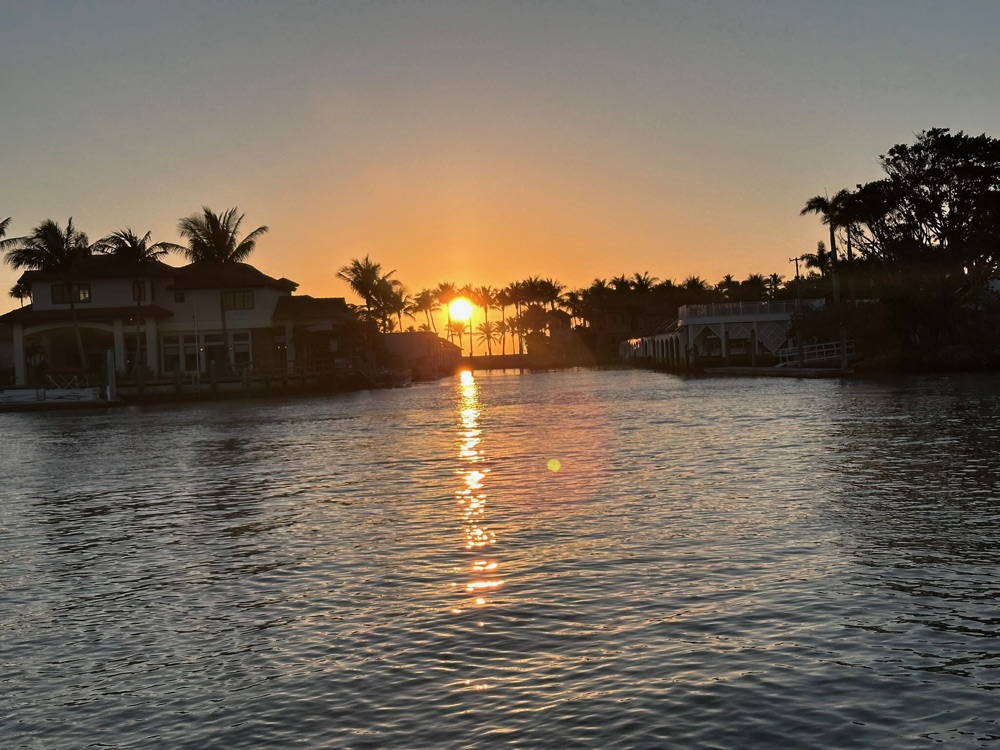
Before we ever untie the lines at the Naples city dock, our captain is already looking at two things: the tide chart for Gordon Pass and the wind direction expected by afternoon. Most mornings we like to leave on the last of an incoming tide, which keeps Naples Bay glassy and hands us slack water right as we clear the jetties. If the forecast shows the tide flipping against a stiff southwest breeze by early afternoon, we’ll often move sunset departures earlier or shift the route to spend more time inside the bay, where the chop can’t reach us.
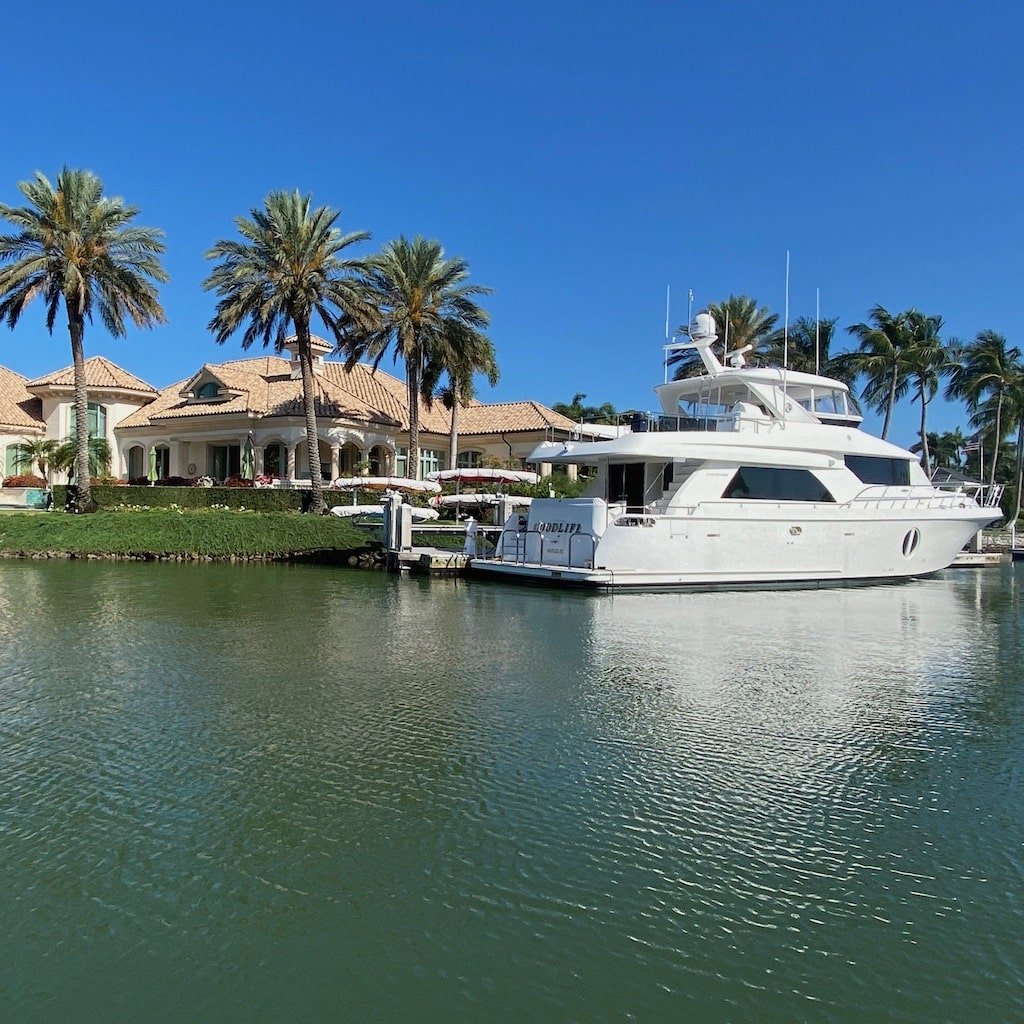
Naples Bay itself is a no-wake zone start to finish, so the run past the Port Royal seawalls stays slow and easy, engines barely above idle, water flat as a tabletop. That pace is part of the appeal — it gives you time to actually look at the homes instead of blowing past them, and it lets the captain point out which docks have had tarpon rolling on the surface that week. The hull barely makes a sound until we clear the last no-wake buoy and the throttle finally comes up for the run toward open water.
Gordon Pass is where the trip actually starts feeling like open Gulf. On a strong outgoing tide pushing against an onshore wind, the pass mouth stacks up short, steep waves that we’ll idle through along the north side of the channel rather than punch straight down the middle. If that stack looks rough for smaller kids or first-time riders, we’ll sometimes swap the run for Doctors Pass a few miles north, which tends to lie down quieter on the same tide. Either way, we’re through the worst of it in under a minute and out onto a long, rolling swell.
Leaving from Naples puts you closer to Port Royal and Naples Bay than any other departure point we run, but it also means a longer open-water crossing to reach the barrier islands and the Ten Thousand Islands south of Marco. A half-day trip from here spends more of its time on that crossing and less time anchored at a beach, so when island time and shelling are the whole point of the day, we’ll often steer guests toward booking from Marco or Goodland instead, where those islands sit practically at the back door.
What you’ll actually feel is the shift the moment we clear the pass: the hum of the hull changes pitch, the bay smell of mangrove and diesel gives way to open salt air, and the ride goes from flat calm to a gentle roll underfoot. Guests who’ve never been past the jetties before usually go quiet for a second right there, then start pointing at the horizon. From that point on, wherever the afternoon is headed — a sunset cruise back through the pass at golden hour, or a longer run south — the Naples run sets the tone for everything that follows.