
☀️ At a glance
- Sunset time
- About 8:15 p.m. early in the month, sliding back to roughly 7:50 p.m. by August’s final week
- Sky pattern
- Peak Gulf humidity plus towering afternoon storm clouds that often glow gold and crimson at dusk
- Weather status
- Climbing toward the Atlantic hurricane season’s most active stretch (mid-August through October)
- Tide
- Evening low tides — the summer pattern, which shapes which passes our captains run
- Crowds
- The lightest boat traffic of the year on the water
- Tour
- Sunset Cruise
Is August a Good Month for a Sunset Cruise?
Ask a local captain if August is worth booking for a Marco Island sunset cruise and you’ll get an honest yes, followed by an honest but. August throws some of the most dramatic skies of the entire year over the Gulf — the kind of towering, glowing cloudscape that looks painted on rather than photographed. It’s also the single month with the year’s highest odds that an evening gets weathered out before your captain ever pulls away from the dock. Both things are true at once, and any operator on Marco Island or in Naples who tells you otherwise isn’t being straight with you. Our captains would rather you know that going in than have you find out the hard way.
Here’s the practical version: if your trip dates have any flexibility at all, August tends to reward patience. Skies that look socked-in at 5 p.m. often break apart completely by 7:30, and that collapse is exactly when the color show starts. If you’re locked into one specific night with no room to move, ask your captain about that day’s forecast before you commit, or build a backup evening into your itinerary the way our own crews plan around all summer. Either way, a proper Naples sunset cruise in August is one of the more rewarding gambles on the calendar — you’re just betting with different odds than you would in April.
Why August Skies Are the Most Dramatic of the Year
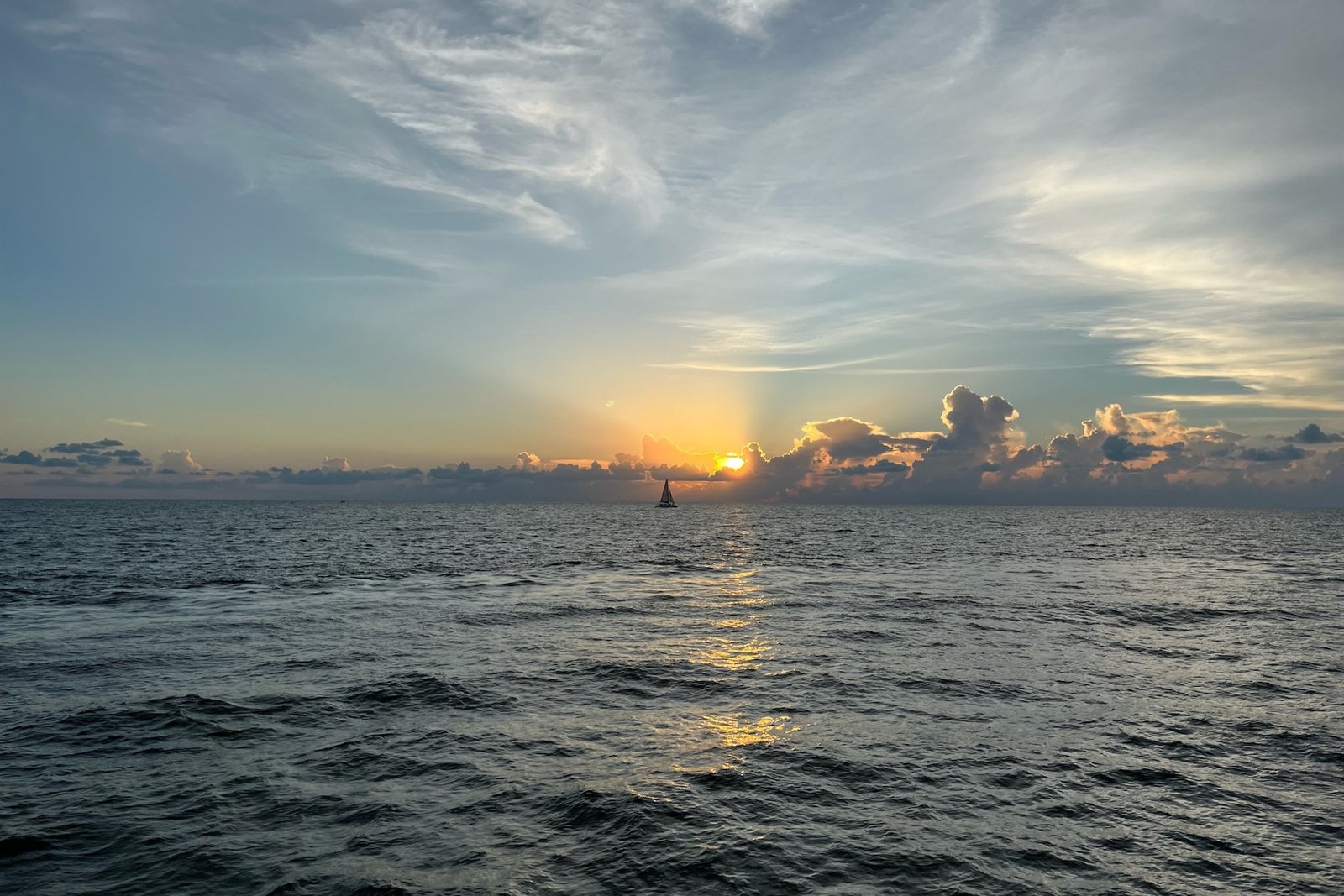
August is Southwest Florida at its most humid, and humidity is exactly what turns an ordinary sunset into the kind people photograph for years. Thick, moisture-loaded air scatters sunlight differently than the dry, clear air of winter — it deepens reds, intensifies pinks, and lets color bleed further across the sky instead of fading out fast at the horizon. Layer in the towering cumulonimbus clouds that build over the Everglades and the Ten Thousand Islands most August afternoons, and you get something a clear winter sky simply can’t produce: massive, backlit cloud towers that catch the last low sun and glow from the inside, gold at the edges and bruised purple underneath.
Our captains watch for exactly this pattern — a day with real afternoon buildup that starts breaking apart by early evening — because that’s the setup that produces the biggest color. A flat, cloudless August sky still gives you a nice sunset. A sky with storm cells collapsing at dusk gives you the kind that stops conversation on the boat. It’s a completely different look from the soft pastel gradients you’ll see in the drier months, and it’s a big part of why so many of our regulars specifically request August.
The Honest Trade-Off: August’s Weather Risk
Now the honest part. August sits right at the front edge of the Atlantic hurricane season’s most active stretch, which climbs from mid-August through October. That doesn’t mean named storms roll through every week — most August days are just routine Florida summer weather — but the baseline chance of an afternoon storm cell sitting directly over the departure area at cruise time is genuinely higher in August than in any other month our captains run. We’d rather tell you that plainly than have you find out at the dock.
In practice, this means our captains track radar and the tropics daily, all summer long, and they’ll move your reservation to another evening rather than run a boat full of guests into a building cell. If you’re planning an August trip, the single best move is keeping a backup evening open, or booking earlier in your stay instead of on your last night, so a reschedule doesn’t cost you the sunset entirely. For the fuller picture of how the month treats every trip we run, not just sunset cruises, our August boat tours guide breaks it down tour by tour.
What Time Does the Sun Set in August?
Daylight is already noticeably shorter in August than it was at July’s peak. Early in the month, the sun typically drops into the Gulf around 8:15 p.m.; by the final week of August, that slides back to somewhere near 7:50 p.m. It’s a small shift night to night, but across the month it adds up to a meaningfully earlier departure window by Labor Day than you’d have booked on the Fourth of July.
Because the exact minute matters for catching the color at its peak, our captains adjust the sunset cruise departure time through the month rather than running one fixed slot all summer. If you want the whole evening built around your own group’s schedule instead of a set departure, a private charter lets you lock in the exact window and chase that day’s specific sky.
Fewer Boats, Warm Water: August’s Quiet Upside
Whatever risk August carries on the weather side, it more than makes up for it in elbow room. Boat traffic runs far lighter in August than during the winter snowbird season, when the passes and open Gulf can feel crowded with charters working the same stretch of horizon. In August, our captains often have long runs of open water to themselves, which means more room to idle, reposition, and put you exactly where the color is best without another boat’s wake in the shot.
The Gulf itself is at its warmest of the year, and the tide pattern shifts to its summer rhythm — evening low tides instead of winter’s early-morning lows — which shapes which flats and passes our captains favor for the trip. August also overlaps with loggerhead sea turtle nesting season, which runs May through October along Southwest Florida’s beaches, and bottlenose dolphins live in these waters year-round, so a fin working the last light isn’t unusual, even though no captain can promise you one. If you’re weighing August against other months, our Seasonal Guide lines up the trade-offs, and the September sunset cruise page shows how the same trade quiets down as hurricane season starts to ease.
| Month | Approx. Sunset Time | Storm/Hurricane Risk | Crowd Level |
|---|---|---|---|
| August | About 8:15 p.m. early, ~7:50 p.m. by month’s end | Highest of the year — peak humidity, climbing hurricane activity | Lightest of the year |
| September | About 7:50 p.m. early, ~7:15 p.m. by month’s end | Still elevated — near the Atlantic season’s historical peak | Quiet, mostly locals |
| October | About 7:10 p.m. early, ~6:45 p.m. by month’s end | Easing — storms less frequent, first cool fronts arrive | Starting to pick up |
| November | About 5:35 p.m. early, ~5:25 p.m. by month’s end | Low — dry season typically underway | Busier as winter season begins |
That’s the honest August trade: the most dramatic skies of the year set against the highest odds that any single evening gets rerouted by weather. Most of our captains will tell you the trade is worth it — keep your dates flexible, watch for that afternoon buildup, and let the storm season do what it does best right at dusk.