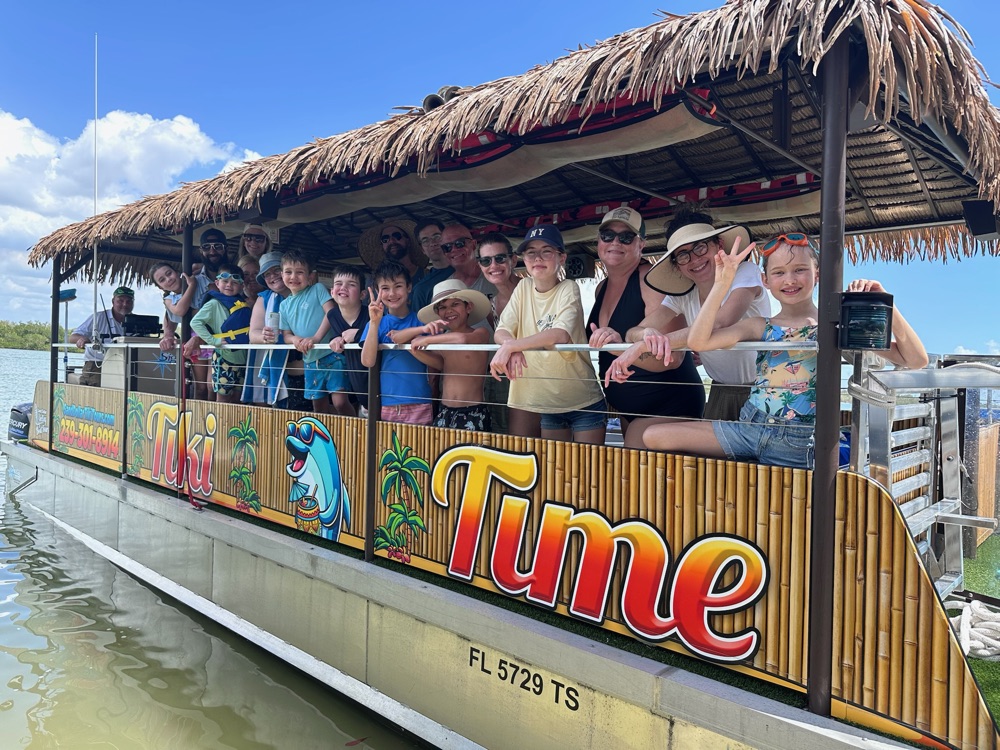
A tiki boat handles differently than our other boats the moment any wind gets involved — that thatched roof catches a crosswind like a sail, so the captain’s first decision every trip is whether today calls for open water or the sheltered backwaters instead. On a breezy afternoon we’ll steer the whole route toward the calmer water behind Goodland rather than fight the wind the whole way, and we make that call before the lines are even off the dock cleats.
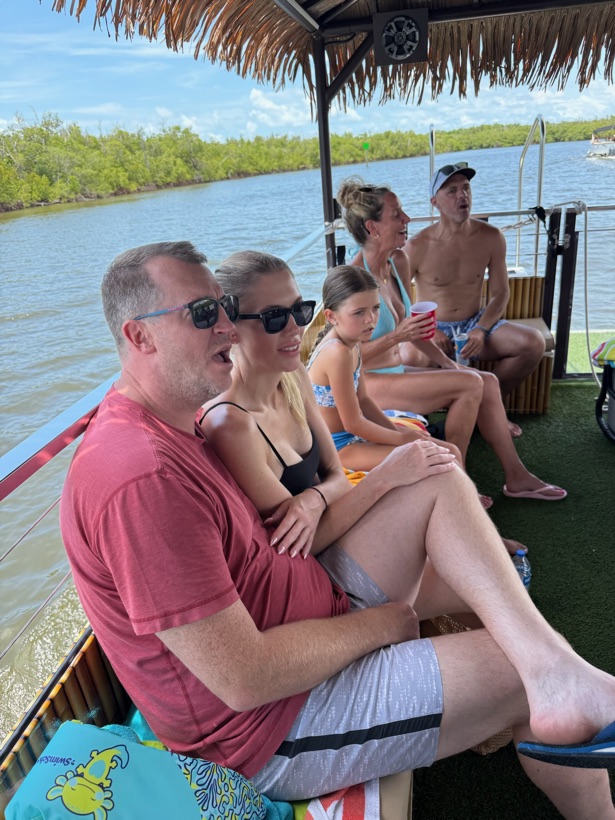
Because the tiki draws so little water, we can run creeks and back bays that our deeper boats simply can’t reach — skinny mangrove cuts behind Goodland where the water’s often barely waist-deep at low tide. We back the throttle off well before those cuts and coast the last hundred feet in on dead momentum, since a wake in water that shallow can push mud up into water that was clear a minute before. It’s a slower way in, but it keeps the whole backwater looking the way it did when we arrived.
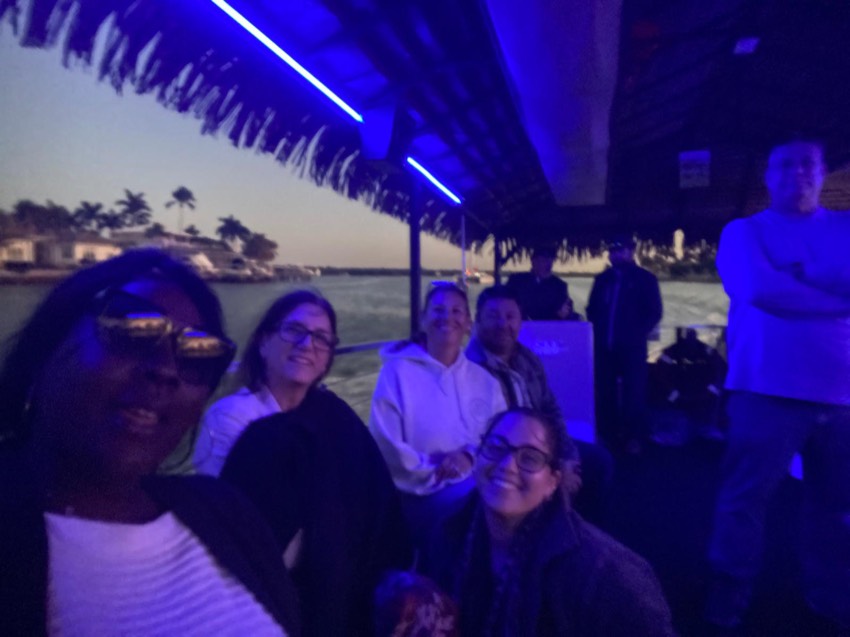
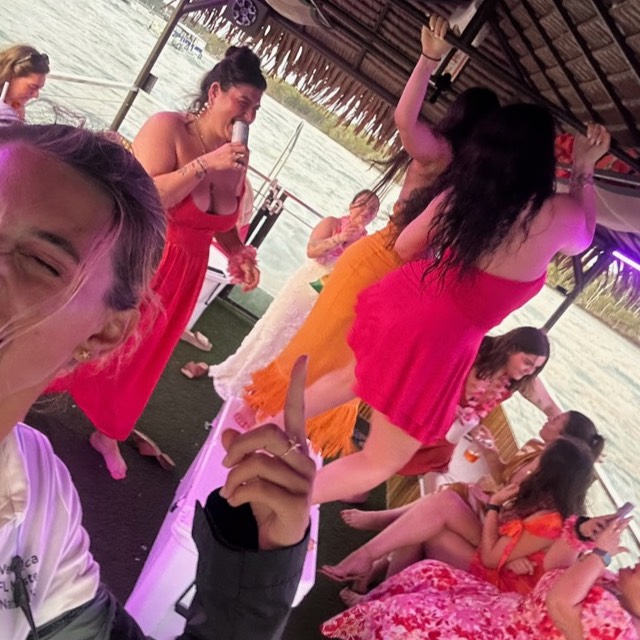
Once we’re tucked back in there, the boat practically disappears under the mangrove canopy, and the color-changing lights actually show up against the shade instead of washing out in open sun — something the crew rarely notices until we point it out. It’s a different kind of scenery than open Gulf water, quieter and closer, with birds working the mangrove edge instead of a horizon line, and the roofline finally doing its job as shade instead of a sail.
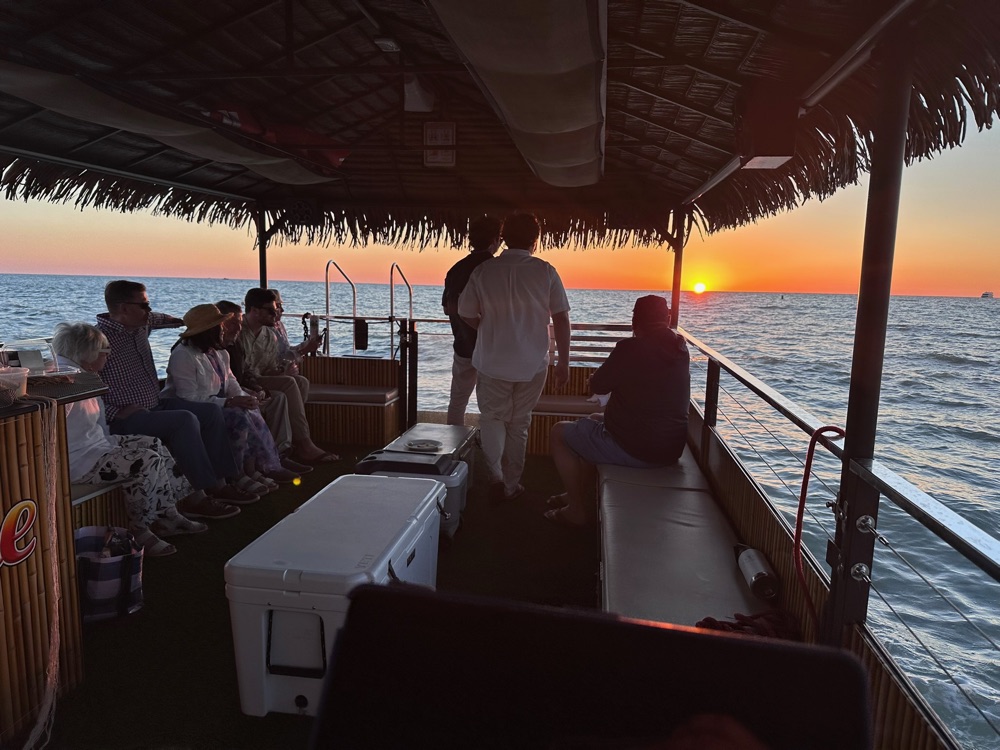
On a still morning with no wind working against the roofline, we’ll happily run the tiki straight out toward open water instead, since there’s no real trade-off to make on a calm day. The call really comes down to that morning’s forecast — we’d rather adjust the plan at the dock than have a full boat standing under a roof that’s fighting the wind the whole ride.
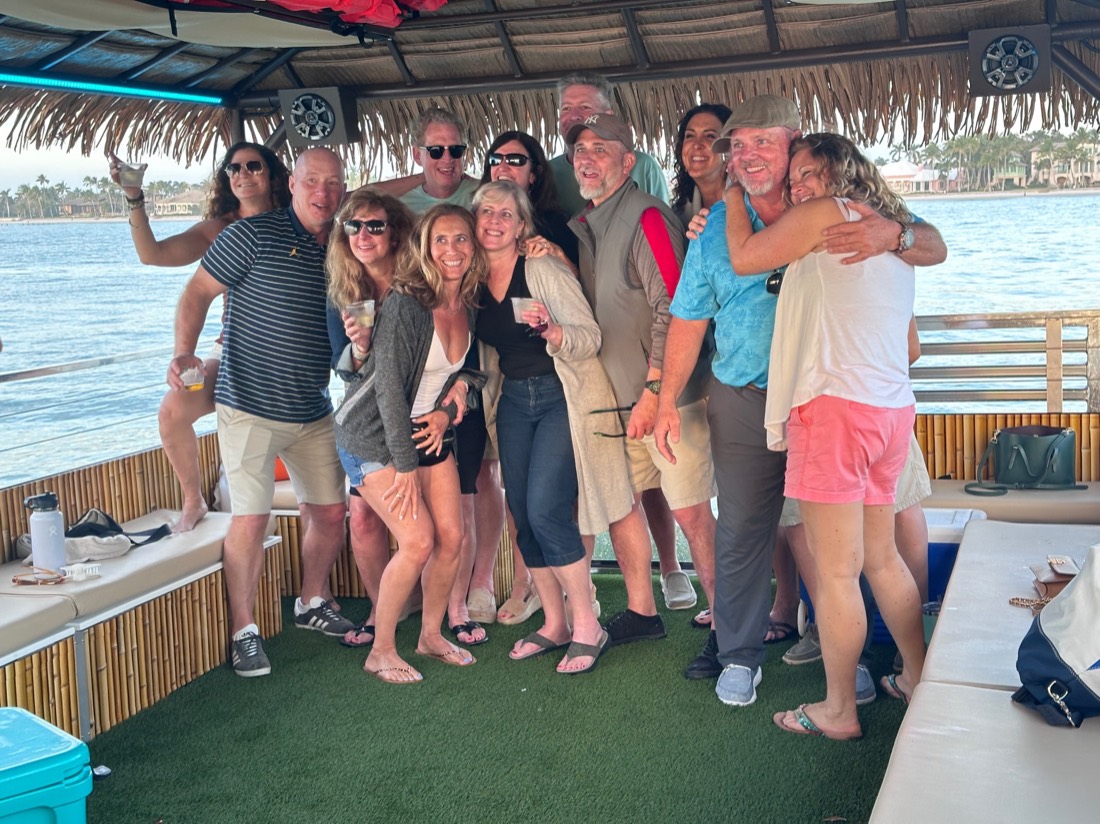
Boarding a group this size takes its own rhythm too: we load from the stern one at a time rather than crowding the boarding gate, since the tiki’s flat, open floor plan means weight needs to spread out evenly before we ever leave the dock. Skip that rhythm and the boat leans hard the moment it comes up on plane; get it right and the group barely feels the boat leave the dock at all.
Whichever way the wind blows that day, the boat handles it without the group ever feeling the compromise, the same way any private tiki cruise should. If your crew would rather spend the afternoon island-hopping than tucked in a backwater, our island hopping trip covers more water in the same afternoon.