
📜 At a glance
- Naples & Marco Island fossil teeth
- Rare — not a real shark-tooth beach
- Florida’s real hot spot
- Venice & Caspersen Beach, about two hours north
- What you’ll find here instead
- Whelks, horse conchs, keyhole urchins & the occasional junonia
- Why the difference
- Naples sits on young, shell-rich sediment; Venice sits on older fossil beds
- Best way to find shells here
- A boat-only barrier island run with a shelling tour
- Rule
- Empty shells only in Collier & Lee County
Why Naples Isn’t a Shark-Tooth Beach
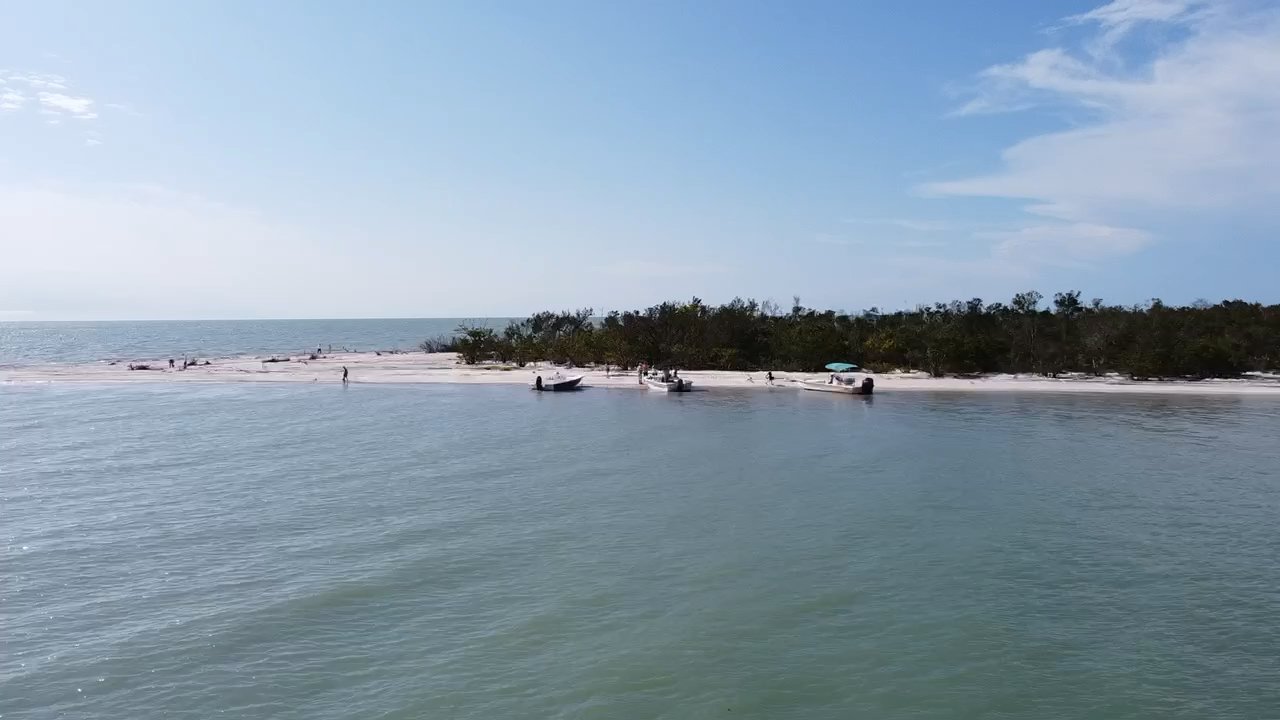
If you grew up watching megalodon documentaries or scrolling videos of Florida beachcombers holding up dark, palm-sized teeth, it’s natural to assume any Gulf beach might turn one up. Naples and Marco Island won’t, at least not in any real quantity, and it comes down to what’s actually under your feet. The sand here is young, shell-rich Gulf sediment, built and constantly refreshed by currents moving through the mangrove-fringed barrier islands of the Ten Thousand Islands. It’s a shell factory, not a fossil bed.
Fossil shark teeth — megalodon included — come out of much older marine sediment, the kind exposed along a very different stretch of coastline north of here. Naples and Marco simply don’t sit on that layer, so no matter how early you walk the beach, how carefully you scan the wrack line, or which low tide you time it to, you’re looking for something that isn’t really here to find. That’s not us being modest about our beaches — it’s geology, and our captains would rather tell you straight than let you spend a vacation morning hunting for a fossil this stretch of coast doesn’t produce.
Where Megalodon Teeth Actually Wash Up
If fossil hunting is the actual goal, point the car north to Venice and Caspersen Beach, about two hours up the coast. That shoreline sits over older, fossil-rich sediment that erodes and washes ashore continually, which is exactly why Venice has earned its reputation as Florida’s shark-tooth capital. Regulars there wade the shallows with a mesh sifting scoop, working small sections of sand and shell hash at a time until something dark, glossy and triangular turns up in the mix.
It’s a different kind of hunting than what happens on our stretch of coast — slower, wetter, and more about technique and patience than about timing a tide. But if a megalodon tooth is genuinely what you’re after, Venice is the honest answer, not Naples or Marco Island. We’d rather point you toward the beach that will actually deliver than let you burn a whole trip scanning sand that was never going to produce one.
| Naples & Marco Island | Venice & Caspersen Beach | |
|---|---|---|
| Primary find | Shells — whelks, conchs, sand dollars | Fossil shark teeth, megalodon included |
| Beach type | Shell-rich barrier islands, mostly boat-access | Drive-up beach over fossil-rich sediment |
| Best method | Walk the wrack line at low tide | Wade and sift with a mesh scoop |
| Distance from Marco Island | — | About two hours north |
| Our honest take | The real shell capital of this coast | Florida’s true shark-tooth capital |
What You’ll Actually Find Here
Here’s the flip side, and it’s the good news: what Naples and Marco Island lack in fossil teeth, they more than make up for in shells. Lightning whelks, horse conchs (Florida’s actual state shell), keyhole urchins — our local sand dollar — and, after a big storm, the occasional junonia all wash up on the boat-only barrier islands our captains run to. That’s the real treasure hunt on this coast, and it’s one Naples genuinely wins over Venice.
You will occasionally spot a small, bone-white shark tooth on a Gulf beach anywhere in Florida, Naples included — sharks shed teeth constantly through their lives, and a fresh one can wash up in the same wrack line as a whelk shell. That’s a real, modern tooth, though, not a fossil, and it won’t look anything like the dark, permineralized megalodon teeth Venice is known for. Finding one here is a fun bonus on a shelling morning, never a given, and never something our captains would promise on any trip.
Shark Tooth vs. Shell: How to Tell
If something on the wrack line catches your eye and you’re not sure whether it’s a tooth, a shell chip or just a pebble, look at color first. Fossilized shark teeth run black, gray or dark brown — they’ve spent ages absorbing minerals from the sediment around them. A modern, freshly shed shark tooth is bone-white or cream instead. Either way, a true tooth has a smooth, glossy enamel face, a triangular blade shape, and often a small root at the base where it once anchored in the jaw.
Shell fragments, by contrast, usually show layered or ridged growth lines and a curved profile, even when broken down small, and a worn piece of coquina rock tends to look chalky and pitted rather than glossy. When you’re not sure what you’re holding on one of our trips, just hand it to your captain — identifying beach finds is half the fun out here, and our crews have looked at enough shells, and the occasional tooth, to know the difference at a glance.
Your Best Bet in the Ten Thousand Islands
Rather than spending a vacation morning combing sand for a fossil that isn’t really out there, put the odds back in your favor. A shelling tour runs you straight to islands like Keewaydin, Kice and Cape Romano — places you can’t reach on foot or by car — where the tide refills the shell line overnight and most mornings hand you a real haul to take home. It’s the closest thing to a guaranteed-feeling trip on this coast: not a promise of any one species, but a strong likelihood you’ll come back with a bag of genuine Gulf shells instead of an empty hand and a sunburn.
Curious what else is worth chasing on our stretch of coast? Our beach finds guide runs down everything from sea glass to sand dollars, and the wider Travel Guide answers the other honest questions travelers ask before they book. If megalodon teeth are still calling your name, Venice is a short drive north — but if shells, dolphins and a sunset over the Ten Thousand Islands sound better, that’s exactly what our captains do best.