
🏝️ At a glance
- Nickname
- Shark Tooth Capital of the World
- Access
- Drive-up day trip north of Naples (Sarasota County)
- Best spots
- Venice Jetty, Brohard Beach, Caspersen Beach
- Best method
- A “Venice snow shovel” sifter; hunt the black-sand hash
- Best time
- Low tide after a storm or strong onshore wind
Why Venice is loaded with shark teeth
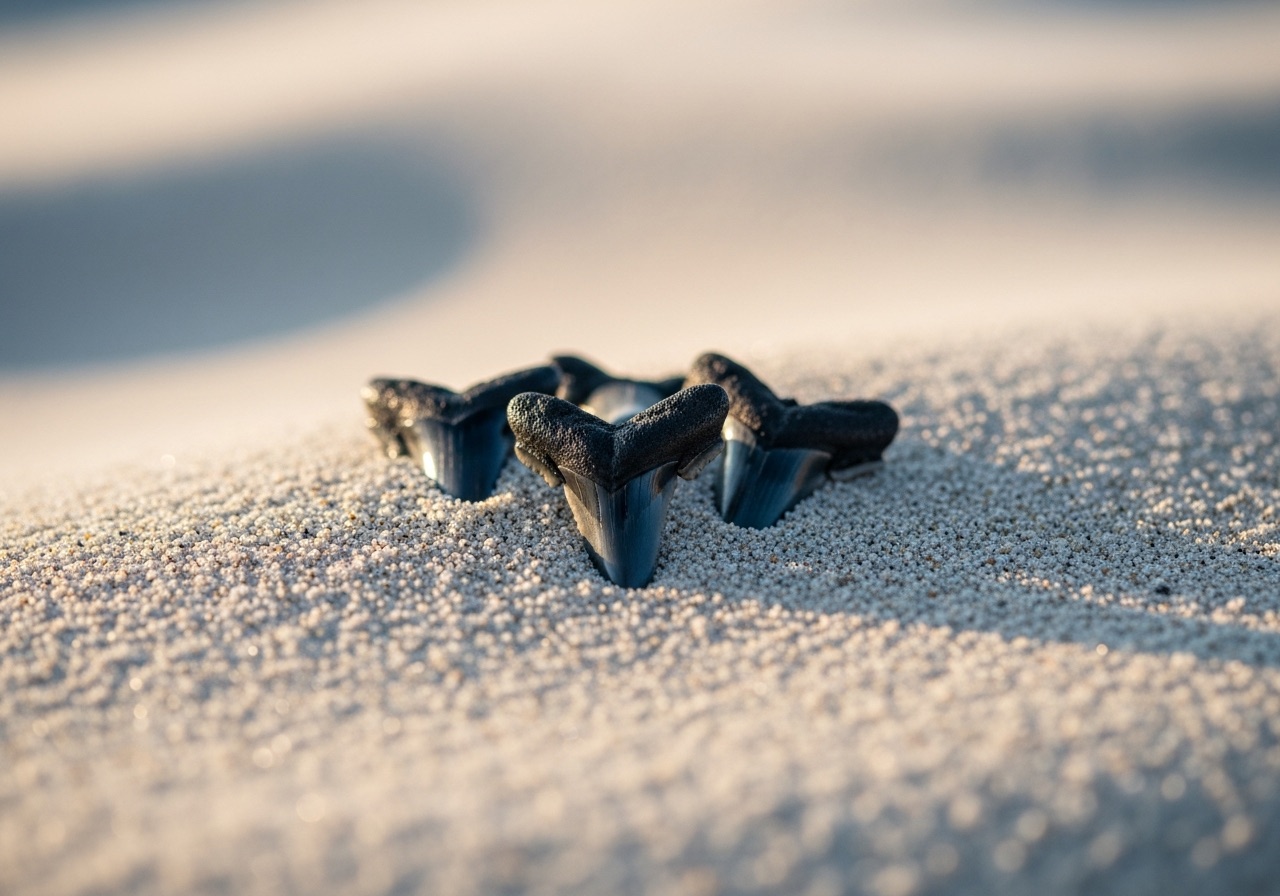
The seafloor off Venice sits on top of an ancient fossil layer, and the Gulf is constantly chewing teeth loose and rolling them ashore. These aren't fresh teeth — most are fossils, mineralized to a glossy black over millions of years. You'll find tiny lemon and sand-tiger teeth most often, the occasional bigger bull or tiger, and if the gods smile, a chunky megalodon. They surface anywhere the surf concentrates the heavy stuff.
That heavy stuff is the secret. Teeth are denser than sand, so they collect with shell hash, gravel and dark mineral grains. Find that line and you've found the teeth.
How to find shark teeth at Venice
Two methods work. The first is the Venice snow shovel — a long-handled basket sifter you scoop into the wet sand and shallow surf, then shake until only the heavy bits remain. The second is simpler: get on your knees in the wrack line at low tide and scan the fossil shark tooth hash — those patches of dark gravel, broken shell and black grains where teeth hide. Train your eye for the glossy black triangle and you'll start seeing them everywhere.
Low tide after a storm is gold. Big surf churns the bottom and dumps fresh material up the beach, refilling the hash lines you'll be sifting.
| Trait | Fossil tooth | Modern tooth |
|---|---|---|
| Color | Black, gray, brown (mineralized) | White or cream |
| Age | Thousands to millions of years | Recent |
| Where | Venice surf line, in the hash | Rare on the beach |
| Feel | Heavy, stone-like | Lighter |
Where and when to go— and the honest distance note
The classic spots are the Venice Jetty, Brohard Beach (home of the fishing pier), and quieter Caspersen Beach just south. Go at low tide, ideally after a blow, and bring a sifter, a small container and patience. Sunscreen and water round out the kit.
Be honest with yourself on the drive: Venice is up in Sarasota County, a good hour-plus north of Naples and well outside our tour range. If you'd rather collect classic Gulf shells — whelks, olives, conchs — closer to home and by boat, our shelling tours run the boat-only islands off Marco. For the fuller fossil-hunting playbook, see our best beaches for shark teeth guide, and compare shells-vs-teeth on the Sanibel vs. Venice page.
From the Helm: Why some of our captains still chase Venice’s shark-tooth sand after a winter front
A few of our captains grew up making the drive up to Venice on their own time long before they ever ran a charter for a living, and the habit hasn’t fully gone away. What gets them checking the forecast isn’t a tide table so much as a cold front — a stretch of hard north wind that churns up the nearshore sand and dumps a fresh layer of black, tooth-heavy hash right at the surf line. That’s the same kind of weather read our captains use for storm-fed shell lines back home, just aimed at a different stretch of coast.
Once that front’s cleared and the wind’s laid back down, the window that actually produces is the first low tide after the water settles, ideally at first light before foot traffic churns the black hash back into the lighter sand around it. Our captains walk the swash line slow, eyes down, looking for that telltale flat black shape against pale sand rather than anything that catches the light — a real fossil tooth reads dull and heavy, nothing like the bright shell fragments guests’ eyes usually snag on first.
Most of our captains skip the long-handled scoop tourists carry and work a simple wire kitchen colander instead, scooping a double handful of black hash straight from the wash and shaking it under the next wave rather than sifting standing sand. It’s a smaller, slower method, but it means checking every scoop by hand rather than trusting a shovel’s holes to sort teeth from sand on their own — and it travels a lot easier than hauling gear meant for a whole day’s dig.
None of that turns a Venice morning into a sure thing; some trips up there produce a pocketful of teeth and some produce nothing but tired knees, and our captains say so rather than oversell a hobby that happens on their own time, not aboard one of our boats. What we do bring back to work with us is the same patient, low-tide, after-the-front instinct, applied to the whelks and olives our own water actually specializes in. A shelling tour with us runs that same instinct on ground we know professionally, not just personally.
If Venice is already part of your Florida trip, treat it the way our captains do — a north-wind, after-the-front bonus hunt, not a guaranteed haul, and always with an eye on what’s still alive in the hash before it goes in a pocket. Our shelling beaches guide covers the stretch of coast our boats actually run, in case the rest of the week calls for water we can put you on ourselves.