
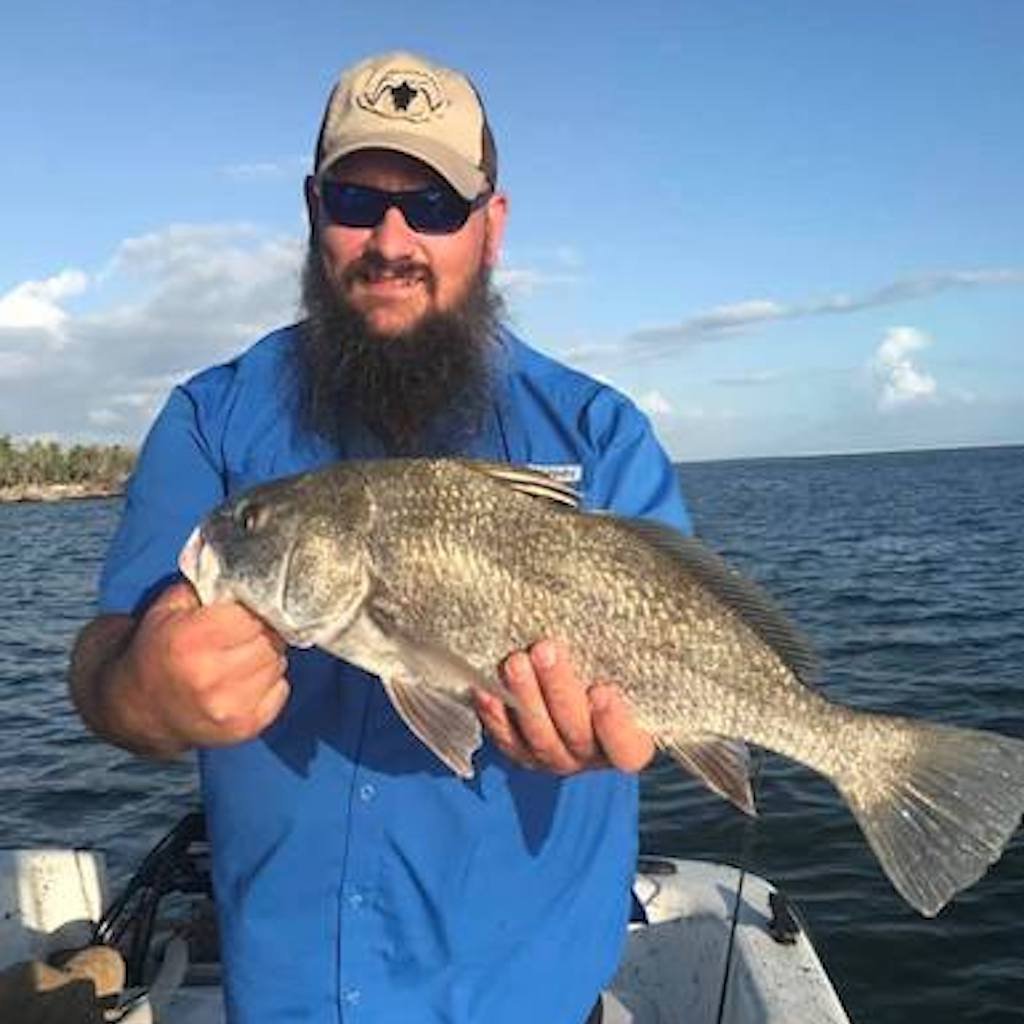
The short answer: no
When you fish aboard a licensed charter in Florida, you do not need to buy your own fishing license. The charter operates under a vessel/captain license that covers all paying guests aboard, so you’re good to go. Just show up and fish.
How it works
Florida allows licensed charter and guide vessels to cover their customers under the boat’s license. That’s one of the conveniences of booking a guided charter versus fishing on your own — no paperwork, no fees, no hassle.
If you fish on your own
If you were fishing from shore or a rental boat without a guide, you’d generally need a Florida saltwater fishing license. But on our charters, it’s handled — another reason a guided trip is the easy choice, especially for beginners and visitors.
From the Helm: Rigging spinning rods off Caxambas Pass before anyone boards
Rigging spinning rods off Caxambas Pass before anyone boards
The license question almost always comes up at the rail, right as someone notices the rods are already rigged and ready before we’ve even left the dock. That’s deliberate — by the time you step aboard, we’ve already matched leader to whatever’s realistically biting that morning, so there’s no fumbling with tackle once we’re anchored up and the bite’s on. The paperwork side is handled the same way, quietly, before you ever have to think about it, which is usually the moment the question actually gets asked out loud.
Where we start the morning depends on the tide more than anything else. On the last of an incoming tide, the markers off Caxambas Pass tend to hold bait and the fish that follow it, so that’s often our first stop of the day rather than running straight out to open water. We idle up on the structure, watch the sounder and the surface for a minute before committing a line, and adjust from there — sometimes staying put for an hour, sometimes moving twice before lunch depending on what the first few casts tell us.
If a tarpon shows up on the line that morning, the plan shifts instantly to catch-and-release — we’ll fight it carefully, get a quick look boatside, and let it go without ever bringing it aboard. Most other inshore species we keep within whatever’s currently regulated and seasonal, and we’ll tell you plainly at the rail what’s fair game that day rather than leaving anyone guessing. It’s not a rule recited off a laminated card — it’s just how the morning actually runs once a fish is at the boat.
What you actually need to bring is shorter than people expect: sunglasses, sunscreen, and closed-toe shoes if you’ve got them, since a deck can get slick once the livewell’s been open a while. Rods, tackle, bait and the license coverage are all part of what’s already aboard, so the only real prep on your end is showing up ready to fish rather than researching regulations the night before. That’s the part guests seem most relieved to hear once they realize how little they actually had to plan.
The tidy written answer is simple — the charter’s license covers you — but the actual morning involves a lot more small decisions than that one fact suggests, from which pass we start at to how we handle whatever ends up on the line. If you want the fuller rundown of what a morning like this covers, our fishing charters page walks through it, and the blog has more first-hand answers like this one.