
How to plan it
Choose a family or beginner inshore charter — calm water, steady action and a patient guide. A half day is ideal for kids. Book around naps and meals, and tell us the kids’ ages so the guide can tailor the trip.
What to expect
Smooth, short runs in protected water; the guide rigging rods and baiting hooks; frequent bites of trout, reds and more to keep little anglers excited; and lots of hands-on coaching. Every guest gets a life jacket, and the guide keeps a close eye on the crew.
Tips for parents
- Bring sunscreen, hats, drinks and plenty of snacks
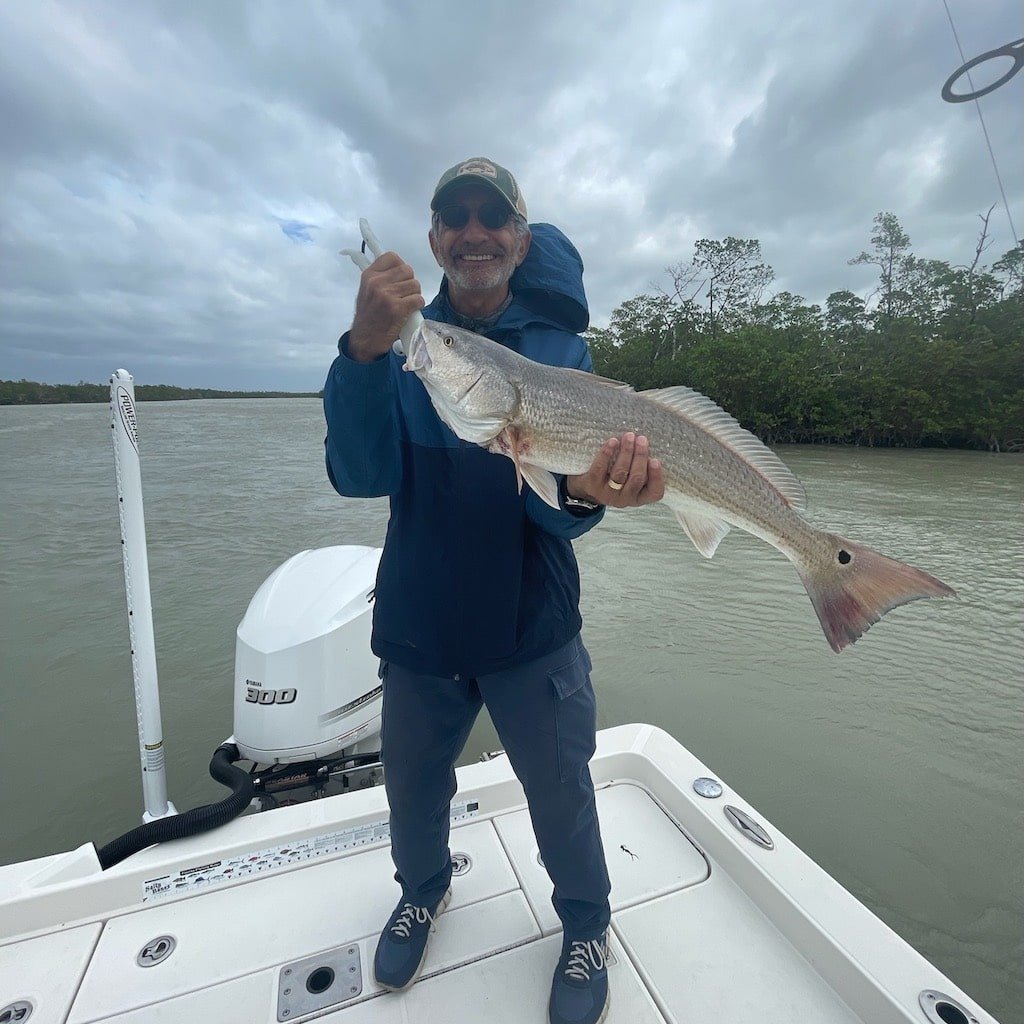
- Pack a camera for the first-catch photo
- Keep expectations on fun, not trophy fish
- Let the guide lead — they’re great with kids (see what to bring)
From the Helm: Why a live shrimp under a popping cork wins a first family charter
At the dock, the question we hear most from parents booking a first family trip isn’t about the boat or the weather — it’s whether their kid will actually catch something in the first twenty minutes. That’s the honest goal on a family charter: fast, visible action over a trophy fish. So we usually start the rods rigged with live shrimp under a popping cork instead of a bait rig on the bottom, because a cork gives a five-year-old something to watch and something to do the second it dips. We’ll adjust exactly how deep that cork rides depending on how skittish the water looks that morning, since one set too shallow just skips across chop without ever really working the bait.
A bottom rig can out-fish a cork on a slow day, but it also means waiting on a bite you can’t see and a hook set a kid can’t feel in time. The cork does the noticing for them — it ducks under, the rod tip loads up, and the mate’s already got a hand near the reel to help finish it. We’ll switch a few rods to bottom rigs once the group settles in, but the cork is almost always the first thing in the water on a family trip.
We tuck into the mangrove-lined creeks and canals behind Naples Bay for most of a family trip rather than running out to open water, because the fish holding along those shorelines — mangrove snapper, ladyfish, the occasional small snook — bite steadily in water flat enough that nobody’s worried about the ride. Guests notice the quiet first: no chop slapping the hull, just the popping cork’s soft chug against the mangrove roots and a kid leaning over the rail to watch it disappear. Every so often a hooked ladyfish will skip clean across the surface on its own, and that gets a reaction from the whole boat, not just whoever’s holding the rod.
When a rod does bend, the mate’s job is as much about the parent as the fish — a hand near the rod butt, a word about keeping the tip up, and enough patience to let the kid crank the reel even when it would be faster to just do it. That handoff is the part a brochure can’t capture: the fumbling first turns of the handle, the fish finally breaking the surface, and a kid who wants to hold it before it even clears the water. We’ll usually let them lift the last few feet themselves too, even if it takes twice as long, because that last stretch is the part they’ll talk about on the ride home.
If this is also your family’s first time on any boat, not just a fishing trip, it’s worth reading through what a first-time boat tour actually involves before you go, since the check-in and safety briefing are the same regardless of what’s on the end of the line. Book it as one of our fishing charters and we’ll build the morning around your kids’ attention spans, not the other way around.