
📖 At a glance
- Boat tour
- Saltwater Gulf & islands; dolphins, shelling, sunsets
- Airboat
- Freshwater marsh; alligators, sawgrass
- Vibe
- Boat = calm & coastal; airboat = fast & loud
- See dolphins?
- Boat tour only
- See alligators?
- Airboat (gators are freshwater)
Two different Floridas
The split is salt versus fresh. The Everglades airboat experience happens inland on freshwater marsh — a shallow river of sawgrass where alligators sun on the banks and the big draw is the speed and the fan-driven glide across water too shallow for a normal boat. Our world is the coast: the salty Gulf passes, the mangrove backwaters of Rookery Bay, and the Ten Thousand Islands where the land dissolves into a maze of green keys. Saltwater means dolphins, rays, wading birds and shell beaches; freshwater means gators and grass. You genuinely can’t see one set of animals on the other trip — dolphins won’t be in the marsh, and alligators don’t live in the salty Gulf.
What you actually see on each
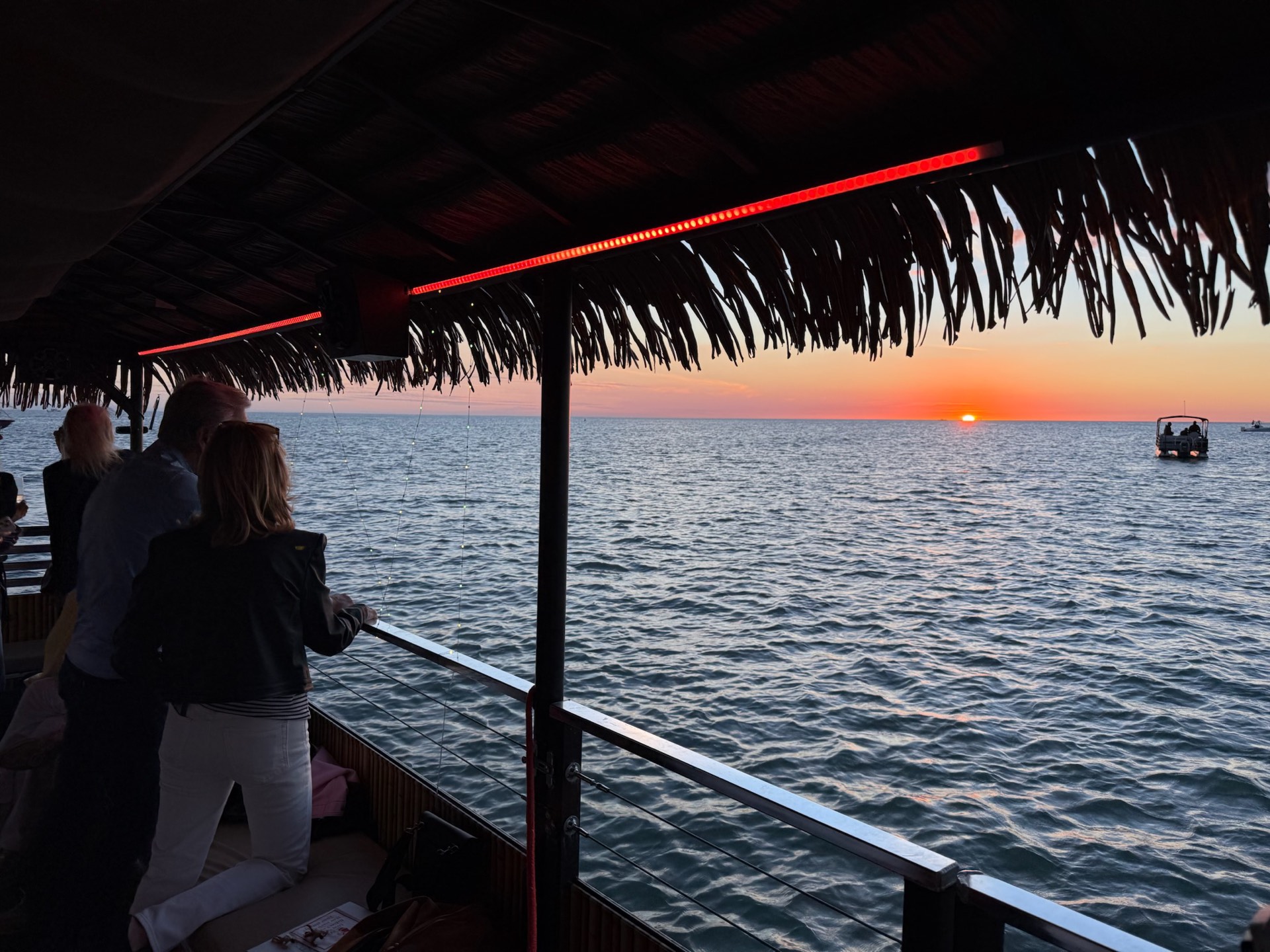
On a Gulf boat tour you’re watching for bottlenose dolphins riding the bow, ospreys and pelicans working the passes, and on a shelling trip you’re stepping onto boat-only islands to comb fresh beds. The pace is slow and quiet, kid- and grandparent-friendly, and at the end of the day a sunset cruise lights up the whole horizon. An airboat day is about the rush across the marsh and the thrill of spotting a gator from a few feet up. Both are great; they just deliver totally different memories.
| Naples/Marco boat tour | Everglades airboat | |
|---|---|---|
| Water | Saltwater Gulf & islands | Freshwater marsh |
| Star animals | Dolphins, rays, birds | Alligators |
| Activities | Shelling, sunsets, island stops | Fast marsh ride |
| Noise | Quiet idle | Loud overhead fan |
| Vibe | Relaxed, coastal | Fast, thrilling |
Which to do first
If we’re being honest, do both if you have the days — they’re different enough that neither spoils the other. But if you only get one and you came for the classic Southwest Florida coast — dolphins, islands, shells, a Gulf sunset — start with a Marco Island boat tour. It’s the gentler, more scenic day and works for every age. Save the airboat for when you specifically want gators and grass and don’t mind the noise. Many of our guests do the coast with us, then book an airboat for the inland half of the trip, and come home having seen two completely different ecosystems.
From the Helm: Why our flats skiff idles past oyster bars where an airboat can’t follow
Guests who’ve already done an airboat ride out in the sawgrass often ask us the same question in the first few minutes aboard: why are we going so slow? The honest answer is that our hull and the water we run in simply don’t work the way a fan-driven airboat does — we’re threading channels between oyster bars and grass flats where a wrong move means a scraped hull or a stranded boat, not a wide-open marsh to gun across.
A shallow-draft hull built for the flats lets us ease into skinny water an airboat’s flat bottom was never meant for anyway, since airboats are built to skim over sawgrass and mud, not navigate a tidal channel with real current and oyster reef underneath it. We idle down through those stretches on purpose, both to protect the hull and because a slow approach is exactly what gets you close to a dolphin or a wading bird without spooking it off.
You notice the difference in your ears before anything else. An airboat puts you behind a roaring fan and hands you ear protection before you even shove off, while our boat idles quiet enough that guests can hear a dolphin exhale at the surface a boat length off the bow, or catch a captain pointing out an osprey overhead without raising a voice. That quiet carries into everything else about the ride — you can talk normally and pick up on small cues, like a fish spooking in the shallows nearby, that an airboat’s engine simply drowns out.
Morning is when we favor these quieter inside runs, before the sea breeze builds and puts a chop on the open water past the barrier islands. That same wind that ruffles the Gulf by early afternoon does nothing to an airboat crossing a marsh, which is one real advantage of the freshwater side — weather that sends us looking for a protected route barely slows an airboat down at all.
The mistake we hear most is guests assuming one trip is just a wetter version of the other. They’re not comparable rides so much as two completely different ecosystems — ours runs tidal, salty and slow past oyster bars and mangrove roots, while an airboat runs fresh, fast and loud across open marsh. Ask any of our captains which to do first, and the answer depends on whether you want the water calm and close, or the ride loud and wide open.
If dolphins and a quiet island stop are what you’re after, that’s squarely our side of things — our wildlife guide covers what to expect on the water, and a dolphin tour is the easiest way to see it for yourself.