
⚓ At a glance
- Big tour boat
- Double-decker or catamaran, fixed harbor loop, PA-narrated, seats a crowd
- Small boat tour
- Captained shallow-draft boat, small group, live narration from the captain
- Shallow-water access
- Only a small boat can beach on boat-only islands like Keewaydin or Kice
- Best for a crowd
- Big tour boat — casual, budget-friendly first look at the harbor
- Best for intimacy
- Small boat — shelling, wildlife spotting and real captain interaction
- Our take
- We run small — private and small-group charters through the Ten Thousand Islands
What a Big Tour Boat Actually Is
If you’ve driven along the Naples or Marco Island waterfront, you’ve seen it: a big double-decker or catamaran-style tour boat, painted in bright colors, running the same loop past the same landmarks two or three times a day. These boats carry dozens of passengers on a fixed schedule, with a PA system — sometimes a live guide with a microphone, sometimes a recording — narrating the sights as you cruise. There’s nothing wrong with that: it’s an easy, affordable way to get out on the water for an hour with the whole extended family, no reservations drama, no minimum group size. You’ll see the skyline, maybe a dolphin at a distance, and get back to the dock in time for lunch. What you won’t get is a say in where the boat goes. The route is set, the stops are set, and the boat itself — built for capacity, not for skinny water — can’t leave the deeper main channels even if a pod of dolphins is working the shallows fifty yards off the bow.
Big tour boats fill a real niche in a place like Naples: they’re often the cheapest way to get a large family reunion or a group out on the water at the same time, and departures usually run often enough that you rarely need to book far ahead. If your goal is a quick, no-fuss loop past the skyline before dinner reservations, that convenience is honest and worth acknowledging.
What a Small Boat Tour Actually Is
A small boat tour looks completely different from the dock. Think a shallow-draft center-console or similar vessel with a USCG-licensed captain at the wheel and a handful of guests aboard — often just your own group on a private charter. There’s no script and no PA system; the person steering the boat is also the one pointing out the osprey nest, explaining why the tide matters today, and answering your kid’s question about what that bird just caught. Because the boat draws so little water, it can leave the marked channels entirely, running skinny-water routes through the Ten Thousand Islands that a big tour boat simply can’t follow.
That access also means the day can flex. If the tide’s dropping and a sandbar’s exposed, or a pod of dolphins is working a pass, a small boat can adjust the plan on the spot — something a fixed-route vessel isn’t built to do.
Crowd Size vs How Much You Actually Hear
Crowd size changes more than comfort — it changes what you actually experience. On a big tour boat, you’re one of dozens competing for rail space when someone spots a dolphin, and the narration comes through speakers rather than a conversation. Kids especially feel this: they’re often looking at the backs of other passengers’ heads instead of the water. On a small boat, everyone’s close enough to the captain to ask a real question and get a real answer, and when dolphins do show up on a dolphin tour, there’s no scramble for a spot at the rail because there isn’t a crowd to scramble through.
There’s also the noise factor. A PA system fighting wind and engine noise over dozens of passengers rarely sounds as good as it does in the brochure, and a lot of the detail gets lost. A small group hears every word the first time, no repeating required.
Which One Can Reach the Shallow Islands
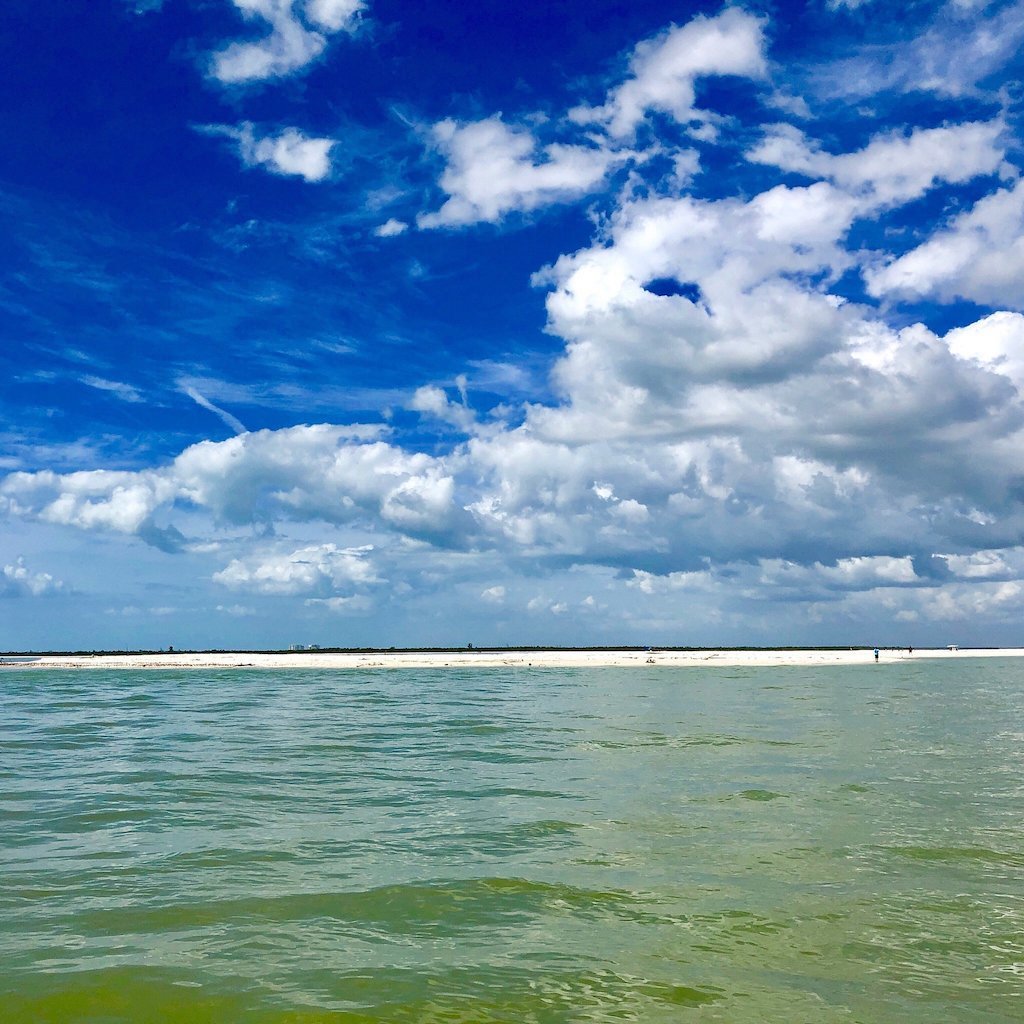
This is the trade-off that matters most if shelling or exploring an uninhabited island is on your list. Big tour boats have a deeper draft and a fixed route for a reason — they’re built to carry weight safely in the harbor and main channels, not to nose up onto a sandbar. A small boat can do exactly that: run shallow-draft routes into the Ten Thousand Islands and beach right on boat-only islands like Keewaydin or Kice, the kind of spot you can only reach by water.
That access is the whole point of a shelling tour — our captains run to whichever island the tide just refilled, then let you walk the beach and fill a bag. Remember that Collier and Lee County allow empty shells only, so whatever you find and keep should already be uninhabited — no live shells, sand dollars or starfish leave the beach. Shallow-water access isn’t only about shelling, either: it’s how you get close to mangrove creeks, oyster bars and the quiet backcountry that most visitors never see from the main channel.
| Feature | Big Tour Boat | Small Boat Tour |
|---|---|---|
| Group size | Dozens of passengers per trip | A handful of guests, often private |
| Route | Fixed harbor loop on a set schedule | Flexible, tide- and wildlife-driven |
| Narration | PA system, pre-recorded or scripted | Live, from the captain steering the boat |
| Shallow-water access | Stays in main channels & the harbor | Beaches on boat-only islands like Keewaydin |
| Best for | Large groups, tight budgets, a casual first look | Shelling, wildlife & guests wanting real interaction |
Which One Fits Your Trip
So which one should you actually book? If you’ve got a big multi-generational group, a tight budget, or you just want an easy hour of sightseeing without committing to a full charter, the big tour boat does exactly what it’s built to do — there’s no shame in that choice. But if you want to talk to the person driving the boat, get to a beach no drive-up tourist will ever see, watch for dolphins without a crowd blocking the rail, or spend the morning shelling on an island that’s only reachable by water, a small captained boat is the better trip almost every time.
That’s the version we run out of Marco Island, Goodland and Naples — small groups, real islands, and a captain who’s actually talking to you, not a speaker. Either way, the honest answer depends on what your day is actually for; there isn’t a wrong choice here, just a better fit for your group. Browse the rest of our Travel Guide for more head-to-head comparisons before you book.