
⚓ At a glance
- Best pick
- Non-marking, rubber-soled boat shoes or water shoes with a back strap
- Good backup
- Sport sandals (Chaco/Teva style) with a heel strap
- Skip entirely
- Flip-flops, wedges, heels, leather or suede
- Beach landings
- Bare feet are normal on soft-bottom islands like Keewaydin
- Bring along
- A small dry bag or towel for wet, sandy shoes on the ride back
- Shelling rule
- Empty shells only if you wade for finds in Collier County
The Best Shoes for a Boat Tour
Your best bet is a pair of boat shoes, water shoes or sport sandals with a heel strap and a grippy, non-marking rubber sole. Non-marking means the sole won't leave dark scuffs on a fiberglass deck, which is exactly why most boat operators, including ours, ask guests to skip street sneakers with hard black soles. A rubber sole that's designed to grip when wet is the real requirement here, since a boat deck gets splashed the moment we clear the pass, and a slick sole on a rocking boat is how ankles get twisted.
Sport sandals built for the water, think a Chaco- or Teva-style shoe with an adjustable back strap, check every box: they drain instantly, they dry fast in the sun on the ride out, and the strap keeps them locked to your foot even if you're climbing down to a swim platform or hopping off onto a sandbar. If your trip includes a stop for shelling, pack a dedicated pair of water shoes too. Our boat tour packing guide covers the rest of what to bring, and our shelling tours page has more on what a typical island landing looks like.
A true boat shoe, the classic deck-shoe style with a siped, razor-cut sole, is built exactly for this: those tiny cuts bite into a wet, angled surface the way a slick flat sole never will. You don't need anything new or fancy for the day, just make sure whatever you're wearing has real texture left on the sole and isn't already worn smooth from the driveway.
Why Flip-Flops & Heels Fail on Deck
Plain flip-flops are the one shoe we'd steer you away from. They have no heel strap, so a gust of wind, a wake from a passing boat, or just a quick step toward the rail can send one flying, and now you're barefoot for the rest of the trip anyway (or, worse, hunting for it in the water). The open sole also offers almost no traction once the deck gets wet, and between the bow spray and the occasional splash off a following sea, it will get wet.
Heels and wedges are an even easier call: there's no version of a moving boat deck where a thin heel is a good idea. It can catch in a hatch, a cleat, or the gap between deck boards, and it turns a simple step into a stumble. Stick to something flat, strapped down and rubber-soled, and you'll stop thinking about your feet for the rest of the trip.
It's a common enough story at the dock: someone tries to step up onto the gunwale in an unstrapped sandal, and by the time anyone notices, it's bobbing fifty yards behind the boat. A strapped shoe never gives you that problem, and it means you're not hopping around on one foot trying to fish a sandal out from under a bench seat while everyone else is watching for dolphins.
Going Barefoot for Beach Landings
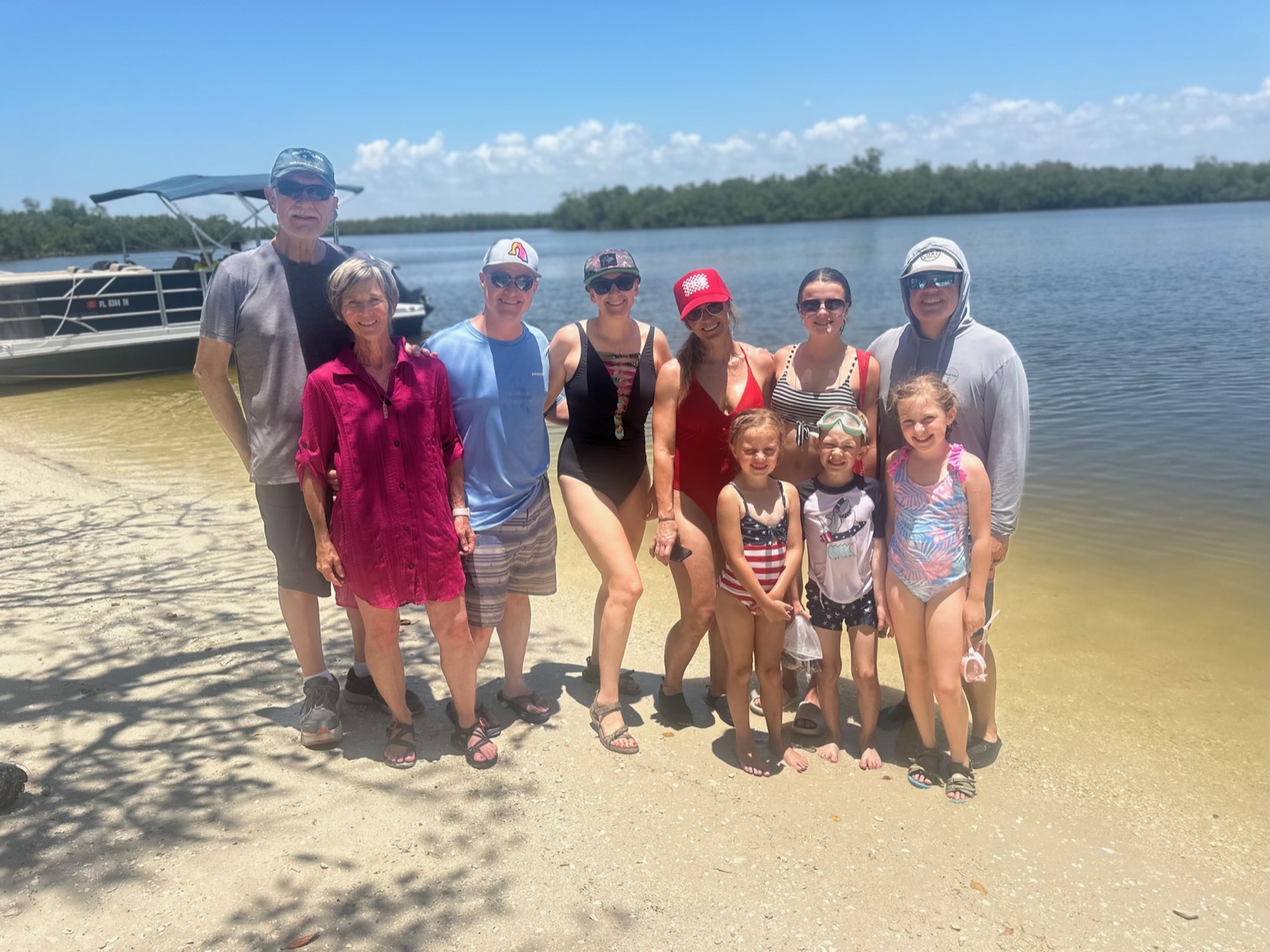
Once we idle up onto a soft-bottom island like Keewaydin for a beach landing, plenty of guests kick their shoes off entirely, and that's completely normal out here. The bottom is fine sand, not oyster rock, so bare feet are comfortable for walking the tideline and wading the shallow flats where shells tend to collect. If you're planning to wade out further or you know you have tender feet, a water shoe with a secure strap is the more comfortable call, since it keeps sand and shell grit out while you're bent over scanning the shoreline.
Most guests find the sand near the waterline cool and firm enough that bare feet feel better than shoes, especially once you're wading calf-deep along a sandbar. If the sun's been baking the dry sand all morning, though, it can get warm underfoot by midday, so keep sandals within reach if you're heading up toward the dune line instead of staying in the wet sand near the tide.
Whatever's on your feet during the landing, remember the rule that applies to every find: it's empty shells only on Collier County beaches like Keewaydin. Live shells, sand dollars and starfish all have to go back exactly where you found them. Our what to wear shelling guide goes deeper on the rest of your beach-landing outfit, from sun coverage to what to carry your finds in.
Shoes & Materials to Avoid
Leather shoes and boots are the other thing to leave in the car. Saltwater and salt spray stiffen and stain leather fast, and once it's soaked through, it rarely dries out looking, or smelling, the same. Closed-toe boots and heavy sneakers have their own problem: they trap water and sand once you've waded, and a soaked shoe is dead weight for the rest of the ride.
New, stiff sneakers are another one to skip. Between the wet deck and a beach landing, you'll likely be stepping through water and soft sand at some point, and breaking in a brand-new pair on a boat is a recipe for blisters. Save the debut for dry land and bring something you already know is comfortable.
If you're torn between two pairs, default to whichever one you don't mind getting wet and sandy. Bring a small dry bag, or just an old towel, to stash your regular shoes in once you switch to sandals or bare feet for a landing, and you'll step off the boat with dry feet and clean shoes waiting for you back at the dock. It's a small detail, but it's the kind of thing that turns a soggy afternoon into a comfortable one.
What Else to Pack for Your Feet
A couple of small extras make the shoe question even easier. Toss a spare pair of socks or a backup pair of sandals into your bag in case your main pair gets soaked earlier than expected, and pack a small zip-top bag or dry sack to keep wet shoes from soaking everything else on the ride home. Sunscreen on the tops of your feet is easy to forget and one of the first spots to burn on a sunny run out to the islands, so give it the same attention you give your shoulders and the back of your neck.
If you're bringing kids, pack a backup pair of shoes for them too. Little feet get cold or tired faster than adults' do, and having a dry pair waiting in a bag means nobody's stuck in soggy sneakers for the ride back to the dock. For more on what to expect once you're aboard, browse the rest of our Travel Guide. Whatever you land on, comfort and grip beat style every time out here.
| Footwear | Deck Grip | Wet-Ready | Good for Beach Landings | Our Take |
|---|---|---|---|---|
| Boat shoes (non-marking sole) | Excellent | Yes | Yes | Top pick for most guests |
| Sport sandals w/ heel strap | Good | Yes | Yes | Great all-around backup |
| Water shoes | Good | Yes | Yes | Best for wading & shelling |
| Flip-flops | Poor | Sort of | Okay on sand only | Fine for the dock, risky on deck |
| Leather shoes or boots | Fair when dry | No | No | Salt ruins them — leave at home |
| Bare feet | N/A | N/A | Yes | Normal once we're beached on soft sand |