
📖 At a glance
- Feet
- Water shoes or strap sandals — grip on wet shell beds, no lost flip-flops
- Body
- Swimsuit or rashguard under quick-dry shorts; a light layer for the ride
- Head
- Hat with a strap, polarized sunglasses
- Skin
- Reef-safe sunscreen, reapplied; long-sleeve sun shirt in summer
- Why
- Boat-only islands mean wet landings, full sun and no shade
Water shoes are the one thing people forget
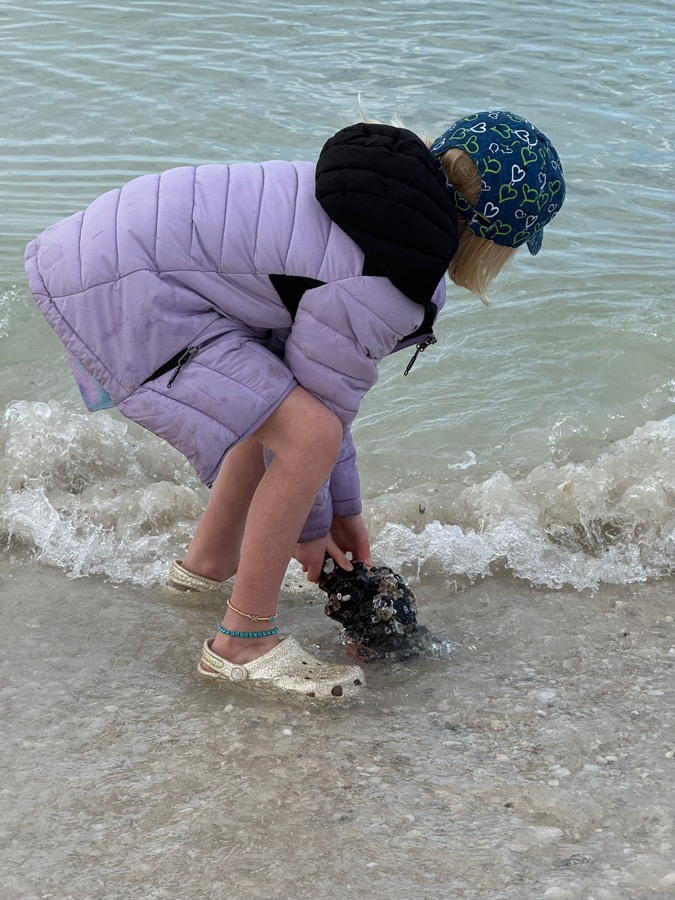
Here’s the part that surprises first-timers: our shelling islands like Keewaydin and Kice have no dock. We nose the boat up to the sand and you step off into ankle- to shin-deep water. Then you’re walking a shell bed made of millions of broken and whole shells, which is beautiful and also pointy. That’s why we’re militant about footwear. A pair of water shoes or sturdy strap sandals grips wet sand, protects your soles from the occasional sharp piece, and won’t float away the way a flip-flop will the second a wave catches it. Plenty of folks shell barefoot and love it, and you can too — just know the bottom is shell, not soft beach. If you want the full rundown on footing and tide timing, our shelling tours page walks through how a landing actually works.
Quick-dry layers, because you will get wet
Assume your lower half gets splashed and plan around it. A swimsuit or rashguard under quick-dry shorts is the move — cotton soaks up water and stays heavy and cold in the breeze. We run shelling trips around the low tide on the boat-only barrier islands of the Ten Thousand Islands, and that ride back across the pass can be cool even on a warm day, so toss a light long-sleeve or a windbreaker in your bag. In winter, when the best shelling follows a cold front, bring an extra layer you don’t mind getting salty. The goal is to be the person who shrugs off a splash, not the one shivering on the bench.
Sun protection is not optional out here
There’s no shade on a sandbar. The Gulf throws sun at you twice — straight down and bounced up off the water and white sand — so a strong, reapplied reef-safe sunscreen, polarized sunglasses and a hat with a chin strap (the wind will take a loose one) make or break your afternoon. In the summer months a long-sleeve sun shirt beats sunscreen alone. Polarized lenses do double duty: they cut glare and let you actually see shells and the occasional ray gliding over the flats. If you’re weighing what else to throw in the dry bag, our guide on what to bring on a shelling tour covers the gear side, and best shelling gear goes deeper on bags and scoops.
| Item | Winter (cold-front shelling) | Summer |
|---|---|---|
| Footwear | Water shoes | Water shoes or strap sandals |
| Top | Rashguard + light fleece | Long-sleeve sun shirt |
| Bottom | Quick-dry shorts over swimsuit | Swim shorts |
| Extra layer | Windbreaker for the ride | Light cover-up |
One rule that shapes your day
Whatever you wear, you’re heading out to collect empty shells only. In Collier and Lee County it’s illegal to take a live shell, sand dollar or starfish, so we coach everyone to flip a shell and check for a resident before it goes in the bag. It keeps the islands stocked for the next sheller and keeps you on the right side of the rules. If you’re bringing the family, the same outfit advice applies to kids — see shelling with kids for the pint-sized version. Dress for wet sand and full sun, and the islands take care of the rest.
From the Helm: The 60-second shelling briefing we give before you wade off the stern at Dollar Bay
Every shelling trip has the same moment: someone shows up at the dock in flip-flops, and our captains gently talk them out of wearing them off the boat. At Dollar Bay, where we often nose in over a skinny sandbar so guests can wade the last twenty feet to the exposed flat, the bottom is a mix of soft mud and broken shell — not sharp exactly, but not forgiving on bare feet either. We hand out the same 60-second version every time: shoes on before you touch the ladder, hat on before the sun gets high, and don’t worry about staying dry.
The mistake we correct most isn’t footwear, it’s the dry bag people bring convinced they’ll keep their phone and towel bone-dry all day. Between wading, wind spray on the ride out and the odd wave over the gunwale crossing open water, almost nothing on deck stays fully dry, so we tell guests to plan for damp, not dry, and pack accordingly. A gallon zip bag inside a backpack does more real work than an expensive dry bag people are too nervous to actually use at the rail, and it takes up almost no room once you’re wading with a mesh bag of shells in the other hand.
Sun protection matters more on a falling tide than people expect, because the same flats that expose the best shells also throw glare straight back up off wet sand and skinny water. Our captains watch guests squint through the first twenty minutes and start handing out extra hats before anyone asks for one. Reef-safe sunscreen goes on before we ever leave the dock, not after we’ve nosed onto the island, since it needs a few minutes to actually set before saltwater and sweat start working against it. A hat strap or a cheap sunglasses lanyard is worth more out there than it looks — the breeze off the stern is stronger than it feels standing still.
We keep a stack of old bath towels and a couple of spare zip-up layers aboard for exactly this reason — the ride back into the wind after an hour barefoot in the sun catches people off guard every time, even on an 85-degree day. A dry shirt over a wet swimsuit and thirty knots of apparent wind is a genuinely different feeling than the walk down the sand ten minutes earlier. Bring your own layer if you’ve got one; if not, we usually have you covered.
None of this is complicated, but it’s the difference between a guest who’s comfortable the whole trip and one who’s counting minutes until we’re back at the dock. If shell-hunting itself is new to you, our shelling tours page walks through what a typical outing looks like, and the shelling beaches guide is worth a look before you pick a date, since different islands fish differently depending on the week.