📜 At a glance
- Founder
- John Glen Sample, a Chicago advertising executive
- Era
- Platted in the late 1930s; dredged and filled through the postwar boom
- Method
- Dredge-and-fill — mangrove flats pumped into finger-canal, deep-water lots
- Namesake
- Port Royal, Jamaica — the 17th-century pirate stronghold
- Signature streets
- Galleon Drive, Rum Row & a run of other pirate-themed names
- Today
- One of Naples' most exclusive deep-water addresses
The Ad Man Behind Port Royal
Drive down Gordon Drive today and it's hard to picture Port Royal as anything but old money. It wasn't. Before the 1930s, the land at the southern tip of Naples was exactly what the rest of the Ten Thousand Islands still looks like — low mangrove flats, tidal creeks, and mosquitoes, valuable to nobody but the herons. The man who saw something else in it wasn't a dredge operator or a land baron. He was John Glen Sample, a Chicago advertising executive who'd made his money selling other people's products and decided to sell a lifestyle instead.
Sample bought up the mangrove acreage south of the young fishing town in the late 1930s, well before Naples had much of a name outside a handful of winter visitors and the Collier family's land holdings nearby. Where a swamp buyer might have seen liability, Sample saw a blank canvas: a peninsula that, properly reshaped, could put a private dock and a Gulf sunset behind every house on the street. That single idea — deep water at every lot line — is still the whole premise of the neighborhood.
How Port Royal Was Built
Sample's tool wasn't a paintbrush, it was a dredge. Building Port Royal meant literally remaking the land: crews cut a network of finger canals into the mangrove flats, then pumped the dredged fill back onto the adjoining ground to raise it above the tide line. The result was a grid of skinny peninsulas and canal-front lots, each one backing up to navigable water that connected, canal by canal, out toward Gordon Pass and the open Gulf. It's the same dredge-and-fill playbook that shaped waterfront subdivisions across Southwest Florida in the mid-20th century, just applied here with an unusually theatrical sense of branding.
The work didn't run in a straight line. World War II stalled construction — materials, fuel and labor all went to the war effort, and a speculative canal community south of a sleepy fishing town wasn't exactly a wartime priority. Sample's project picked back up after the war, riding the same postwar building boom that filled out much of coastal Florida, and it kept dredging and platting new sections through the 1950s and into the 1960s as demand for winter waterfront property took off.
Why the Pirate Street Names
Most postwar developers named their streets after trees, birds, or whatever sounded pleasant. Sample, the ad man, understood that a name sells a place before the buyer ever sees the lot. He built Port Royal around a single running theme: pirates, plunder and the swagger of the Spanish Main. Galleon Drive and Rum Row are the two names every longtime local can rattle off, and the pattern carries through much of the street grid — a whole neighborhood laid out like a treasure map, on purpose.
It wasn't random. Sample named his development for a real place: Port Royal, Jamaica, one of the most notorious pirate ports in Caribbean history. Founded by the English in the 1600s at the mouth of Kingston Harbour, that original Port Royal became a home base for privateers and buccaneers, grew rich enough on plundered Spanish trade to be called, only half-jokingly, the wickedest city on Earth, and then largely dropped into the sea when a massive earthquake struck in 1692. Sample wasn't claiming any real historical link between Southwest Florida and Jamaican piracy — the Ten Thousand Islands have their own, separate outlaw history of Prohibition-era rum runners and plume hunters. He was simply reaching for a name with instant, romantic recognition and hanging a brand-new Florida canal community on it.
Naples' Most Exclusive Address
The transformation Sample set in motion didn't stop when he did. Section by section, the mangrove flats south of downtown kept turning into finished canal lots through the mid-20th century, and Naples itself grew up around the project — from a small winter colony into the destination it is now, not unlike the way Tin City turned working clam sheds into a landmark shopping village a few miles up the water. What started as a speculative bet on swampland became, decades later, one of the priciest zip codes in the country: a peninsula of grand estates, private docks and manicured seawalls where the pirate-themed street signs are about the only visible reminder of how the land got there. For a look at the neighborhood as it stands today — the homes, the access points, the who's who of it — see our full Port Royal neighborhood guide.
See It From the Water
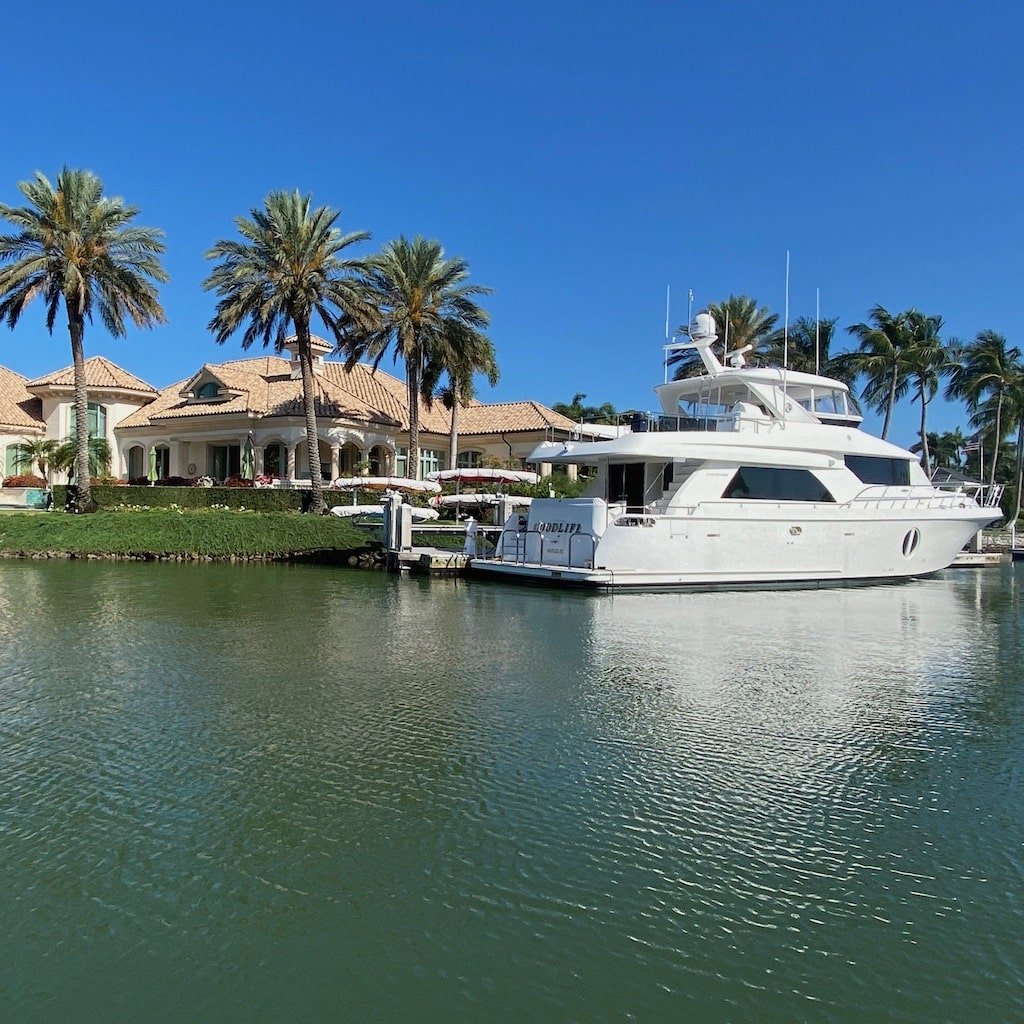
Here's the detail that gets lost when you only see Port Royal from the street: Sample didn't design this neighborhood to be seen from the road. He designed it around the water. Every lot was platted to put its best face — the dock, the pool, the wall of glass looking out at the canal — toward the water side, with hedges, gates and long driveways doing the work of privacy on the street side. That means the version of Port Royal most visitors never see, the one Sample actually built, only shows itself from a boat idling past the seawalls.
That's exactly the vantage point our Port Royal boat tours run past — a slow pass along the canals Sample dredged eight decades ago, with the estates, the private docks and the whole improbable ad man's dream laid out the way it was meant to be seen. It's one small chapter in the larger story of how this coast got built, dredged and settled — you can dig into the rest of it back in our Local History hub.
| Era | Land | Access |
|---|---|---|
| Before Sample (pre-1930s) | Remote mangrove flats and tidal marsh south of Naples | No roads, docks or platted lots |
| Under construction (1930s to 1950s) | Dredged and filled into finger-canal lots, paused by WWII | New pirate-themed street grid platted, one section at a time |
| Today | Finished deep-water canal lots with grand estates | Private docks on every lot; best seen by boat, not street |