
📜 At a glance
- Built
- 1982, by retired oilman Bob Lee
- What they were
- Six self-sufficient, solar-powered concrete domes with rainwater collection
- Turning point
- Decades of barrier-island erosion pulled the beach out from under them
- Storm hits
- Wilma (2005) flooded the compound; Irma (2017) toppled two domes; Ian (Sept 28, 2022) toppled the rest
- Status today
- Half-submerged concrete ruins standing in open Gulf water
- Access
- Boat-only, off the south tip of Cape Romano
1982: Bob Lee Builds the Domes on Dry Beach
Every timeline of the Cape Romano dome houses starts in the same place: 1982, when retired oilman Bob Lee built six self-contained concrete domes on the open beach at the southern tip of Cape Romano. Lee designed the compound to run entirely off the grid — solar panels fed the household power, a rainwater cistern system supplied drinking water, and the dome shape itself was chosen partly for its wind resistance, an early nod to just how much weather this stretch of coast can throw at a structure. The island had no road access at all, so every barge load of concrete and steel had to come in by water, a detail that says a lot about the grit it took to build something this remote in the early 1980s. Back then the domes sat well back from the surf line, ringed by a wide apron of dry sand — part of what made them so photogenic, a strange, futuristic silhouette rising out of one of the wildest stretches of the Ten Thousand Islands. The compound changed hands more than once over the following decade, prized as a one-of-a-kind vacation retreat even as its surroundings kept shifting. You can read the full rundown of what the domes were built to do on our Cape Romano dome houses guide.
How Erosion Put Them in the Surf
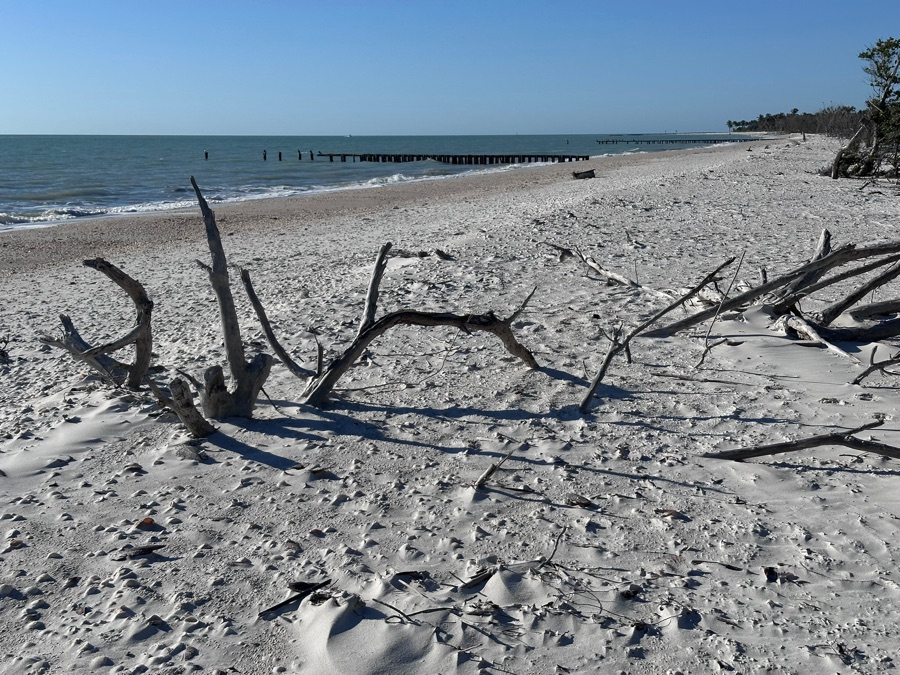
Cape Romano sits at the northern edge of the Ten Thousand Islands, a stretch of coast where barrier sand has never held still for long. Longshore currents and storm cycles constantly steal sand from one shoal and pile it onto another, the same restless geology that keeps reshaping the wider island chain our captains run through on every trip. The dome houses were built on the losing end of that cycle. Through the 1980s and into the 1990s, the beach that once surrounded Bob Lee’s compound narrowed year after year, the high-tide line creeping closer to the pilings with every storm season. By the early 2000s, the dry sand ring around the domes had all but disappeared — what had been a beachfront vacation home was turning, slowly and then all at once, into a structure standing directly in the surf. Locals who have fished or run boats past Cape Romano for decades will tell you the shoreline here has rarely stayed the same for more than a season or two, which is exactly the geography our captains navigate on every trip south of Marco Island. The erosion set the stage for everything that came next.
2005-2017: Wilma and Irma Start the Damage
The first storm to leave its mark on the record was Hurricane Wilma in October 2005. Wilma’s surge pushed straight into the compound, flooding the ground level and driving home just how far the water had crept in over two decades — photographs from that storm season are among the first to show waves breaking directly against the domes rather than a beach in front of them. The domes held through Wilma, but the storm marked a turning point: from 2005 on, the compound was effectively a surf-line structure, exposed to every tropical system that tracked anywhere near Southwest Florida. That exposure caught up with it twelve years later. In September 2017, Hurricane Irma made a direct hit on Marco Island — you can read the full account on our Hurricane Irma page — and the storm’s wind and surge toppled two of the six domes into the water, leaving four still standing but visibly closer to the edge than ever. Everyone who followed the story after that understood it was only a matter of time before the next major storm finished the job.
September 28, 2022: Hurricane Ian Topples the Rest
The next major storm arrived five years later. Hurricane Ian made its Southwest Florida landfall on September 28, 2022, one of the most powerful hurricanes to hit this coast in decades, and it did not spare what Irma had left behind. Ian’s wind field and storm surge toppled the remaining four domes, bringing down the last of Bob Lee’s 1982 compound in a single afternoon. For a structure that had survived four decades of erosion, a direct flooding by Wilma, and a partial collapse under Irma, Ian was the storm that finally closed the chapter — every one of the six original domes was down. Guests who had seen photos of the domes fully intact online often arrived expecting the same view, only to find the compound had changed again since the last update they had read. It is a pattern that shows up again and again in the record of storms along this coast; you can see how Ian and its predecessors reshaped everything from beaches to backcountry islands on our roundup of hurricanes that shaped Marco Island & Naples.
What’s Left Today, and How to See It
Today there is no dry land left around the Cape Romano dome houses at all — the barrier beach Bob Lee built on in 1982 has eroded away completely, and what remains are the concrete shells of all six domes, tilted at odd angles and rising straight out of open Gulf water. There is no boardwalk, no parking lot, and no way to walk up on the ruins from shore; the only way to see them is by boat, which is exactly how our captains have always shown guests this stretch of coast. On a calm-tide run out past the south end of Cape Romano, we ease the throttle back to an idle and let guests take in the scale of what erosion and four decades of storms actually did to a structure that once stood on dry sand. Sun, salt and wave action continue to work on the exposed concrete and rebar every year, so even these ruins are not a fixed, unchanging sight — another reason our captains like to point them out on every trip that runs south of the island. We have written up the full story of what that trip out looks like on our Cape Romano dome houses boat tour guide, and it is one of the stops our captains work into shelling tours and private runs through the local history this coast keeps writing one storm at a time.
| Year | What Happened |
|---|---|
| 1982 | Bob Lee builds six solar-powered concrete domes on dry beach at the south tip of Cape Romano |
| 1980s-1990s | Ongoing shoreline retreat narrows the beach around the domes year by year |
| 2005 | Hurricane Wilma floods the compound and pushes the surf line up to the domes |
| 2017 | Hurricane Irma topples two of the six domes |
| Sept 28, 2022 | Hurricane Ian topples the remaining four domes |
| Today | Half-submerged concrete ruins sit in open Gulf water, boat-access only |