
⚓ At a glance
- Boarding
- A step down into the boat with a hand from the crew — no ramp, gangway or lift on any vessel in the fleet
- Best fit
- A private charter booked with advance notice, matched to the vessel and dock that suit you
- Dock type
- A floating-dock marina keeps the boarding step consistent regardless of tide; a fixed pier can mean a bigger drop at low tide
- Beach stops
- Barrier-island stops like Keewaydin are dockless, so landing means a short wade — not workable for a wheelchair
- What to tell us
- Chair type (manual or power), transfer ability, and whether the chair needs to come aboard
- Group size
- Always a private trip for accessibility requests, never a shared group tour on a fixed schedule
Are Naples Boat Tours Wheelchair Accessible?
The honest answer is: it depends, and we’d rather tell you that upfront than promise something we can’t deliver. None of the boats in our fleet is a purpose-built ADA vessel with a boarding ramp or a hydraulic lift — they’re small charter boats that tie up at a dock or seawall, and every guest boards by stepping down from the dock onto the deck. For most guests that’s a small, easy step. For a guest using a wheelchair, whether that step is workable comes down to three things: the specific boat, the specific dock, and the tide at the moment you board. That’s a different answer than a resort pool or a cruise ship gangway would give you, and we think it’s more useful than a vague “yes, we’re accessible” that falls apart the moment you show up at the dock.
What Boarding Actually Looks Like
Here’s the physical reality, plainly. You’ll walk, or roll, down the dock to where the boat is tied off, and the deck sits below the level of the dock — sometimes by a few inches, sometimes closer to a foot, depending on the boat and the tide. Your captain or deckhand will hold the boat steady and offer an arm as you step down, then a few more steps to your seat. A guest who uses a manual wheelchair and can transfer to a boat seat with assistance can often still make the trip work, with the chair folded and stowed for the ride. A power wheelchair is a tougher ask — most are too heavy and too wide for our decks and gunwales, and we don’t have the equipment to lift one aboard safely. If that’s your situation, call us before you book so we can talk through your specific chair and figure out honestly whether it’s workable, rather than finding out at the dock.
Floating Dock, Fixed Pier or Beach Landing: Why the Dock Matters
This is the detail most guests never think to ask about, and it makes a real difference. A floating dock rises and falls with the tide right along with the boat tied to it, so the step from dock to deck stays roughly the same height all day — morning, noon or evening. A fixed pier, on the other hand, is bolted at a set height above the water, which means the gap between the dock and the deck grows or shrinks as the tide moves. At high tide that gap might be barely a step; at low tide on the same pier, it can turn into something closer to climbing down into the boat. Tell us ahead of time that boarding height matters, and we’ll plan around both variables — choosing a floating-dock slip when one’s available and timing your departure for a tide that keeps the step small.
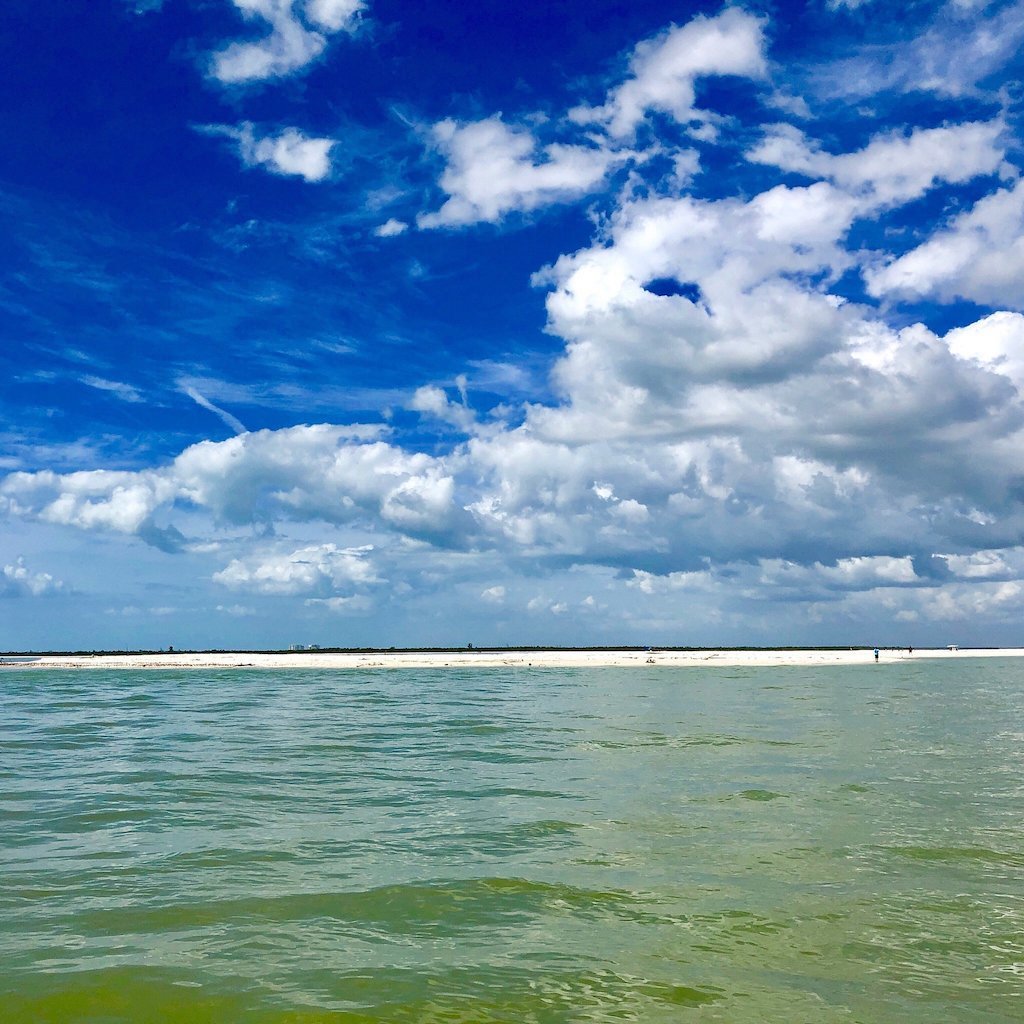
Boarding is only half the picture, too. A lot of what makes the Ten Thousand Islands special is that the barrier islands out here — places like Keewaydin and Kice on a shelling tour — are roadless and dockless. There’s no pier to walk down when the boat reaches one; it noses up near the shoreline and everyone steps off into shin-deep water, then walks the rest of the way onto the sand. That’s part of the adventure for most guests, but it’s simply not workable for a wheelchair, and there’s no way around it once you’re anchored offshore. The fix is choosing a route that skips the beach landing entirely — a Naples Bay sightseeing cruise or a sunset cruise stays dock to dock the whole way, so the trip never leaves the boat until you’re back where you started.
| Mobility Situation | What to Expect at the Dock | Best-Fit Option |
|---|---|---|
| Manual wheelchair, can transfer with assistance | Step down with crew help; chair folded and stowed for the ride | Private charter at a floating-dock marina, booked in advance |
| Power wheelchair, can transfer with assistance | Chair itself is usually too heavy or wide to bring aboard | Call first to discuss your specific chair and the dock |
| Cannot transfer without a lift | Boarding isn’t possible without a ramp or lift, which we don’t carry | Not a fit for our boats — call and we’ll be straight with you |
| Uses a cane or walker, steps independently | Standard boarding step, easiest at a floating dock and higher tide | Any tour; a private charter adds extra time and flexibility |
Why a Private Charter Is Your Best Bet
On a shared group tour, your captain is running a set boat on a set schedule with other paying guests aboard, and there’s only so much room to slow down boarding, swap vessels, or shift the departure time to catch a better tide. A private charter removes that constraint entirely. It’s just your group, which means your captain can pick the boat with the easiest step at that dock, choose a departure window when the tide favors you, and take as long as it actually takes to get everyone aboard safely — no one else waiting, no fixed clock running. If your whole party is coming along, booking the boat as a private trip for your family works the same way; see our guide to family boat tours for how that’s typically structured. It’s the same approach we recommend for any guest with a mobility need, and it’s consistently the option that actually delivers on the flexibility a wheelchair user needs.
What to Tell Us Before You Book
A short, specific note when you book saves everyone a headache on the day of your trip. Let us know the type of chair, manual or power, whether you can transfer to a boat seat with help, and whether the chair itself needs to travel aboard or can wait dockside with a companion. We’ll use that to match you to the right boat, the right marina, and a departure time when the tide keeps the step manageable — ideally with a few days’ notice so we can actually plan around the tide charts instead of scrambling the morning of. If your goal is simply reaching a barrier island or a private dock without a beach landing, it’s also worth asking about our water shuttle, which docks directly rather than requiring guests to wade ashore — a detail that matters as much as the boarding step itself. And if we don’t think a trip is going to work safely for your specific situation, we’ll tell you that too, the same way we would with any question in our travel guide.