
☀️ At a glance
- Short answer
- No — the Gulf breeze keeps the water cooler than shore
- Best departure times
- Early morning or sunset avoid the midday heat peak
- Water temperature
- Warm and swim-friendly all summer
- Afternoon pattern
- Clouds and passing showers build most summer days — captains route around them
- What to bring
- Reef-safe sunscreen, a secured hat, polarized sunglasses & water
Is a summer boat tour too hot in Naples?
It’s a fair question — a Southwest Florida summer afternoon on land can feel brutal, all shimmering asphalt and still, thick air. But the moment our boat clears Gordon Pass and picks up speed, that changes. Moving air over open water strips the humidity off your skin and drops the felt temperature well below whatever the dock thermometer says. Guests who show up braced for a scorcher are usually the first ones asking why they didn’t book sooner. The Gulf doesn’t radiate heat back at you the way pavement, sand and rooftops do, so even on the hottest July or August day, a boat tour is one of the most comfortable ways to spend a few hours outside in Naples.
That doesn’t mean the sun disappears — you’re still on open water with nothing but a bimini top for shade, and the UV index on a Southwest Florida summer day runs high. The heat itself isn’t the obstacle; sun exposure is. Plan around that, and a summer trip is genuinely one of the best times of year to get out with us.
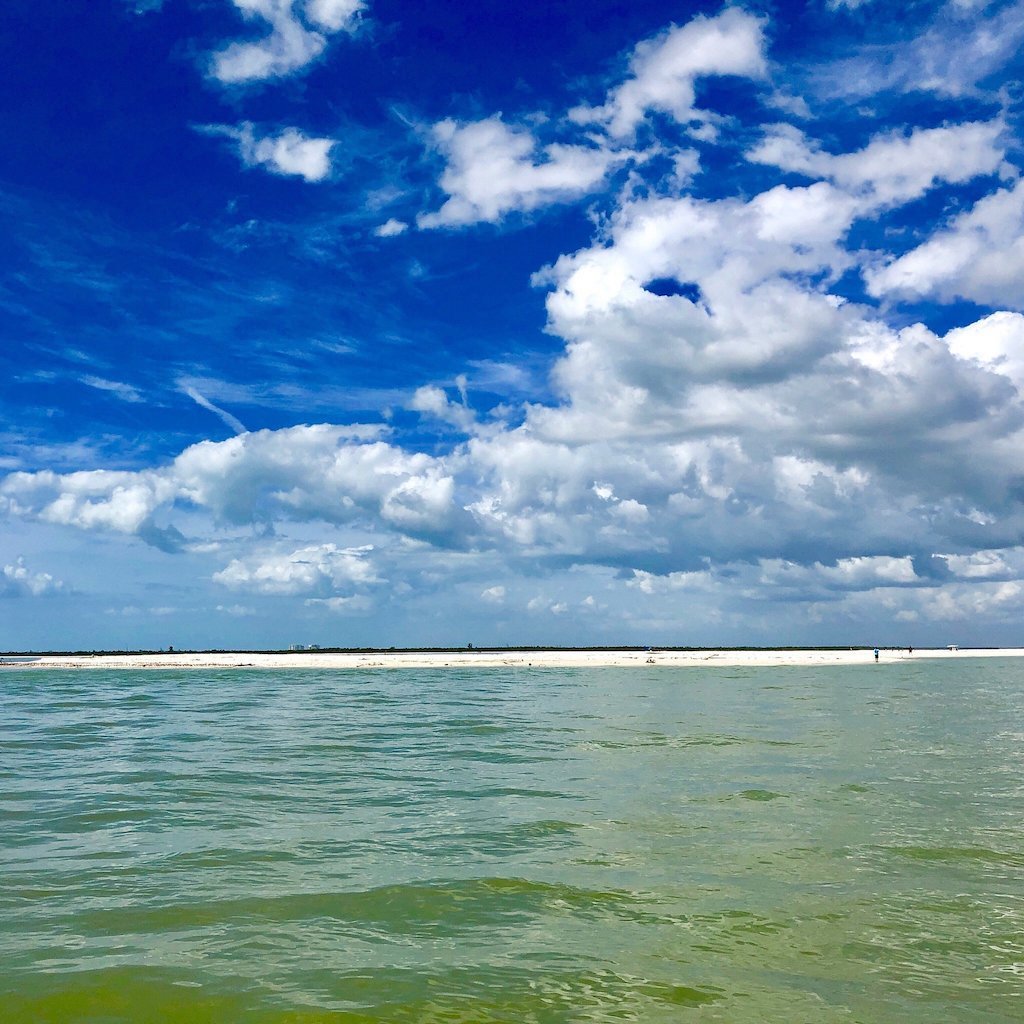
It also helps that summer is when the Ten Thousand Islands feel most alive. Bait fish push into the passes, birds work the mangrove edges, and the Gulf itself takes on that deep, clear turquoise color visitors picture when they imagine Southwest Florida. None of that stops for the heat — if anything, it’s part of what makes a summer trip worth planning around rather than avoiding.
Why the water beats the shore
Land heats up fast and holds onto it. Asphalt parking lots, boardwalks and dry sand can run far hotter than the air temperature by early afternoon, and there’s no breeze to move that heat away once you’re standing still. Out on the Gulf, there’s no pavement to bake and nothing to block the wind. Add the boat’s own motion and you’ve got a steady, natural air-conditioning effect for the whole ride.
Humidity plays a role too. Naples summers are humid enough that the air can feel hotter than the actual reading, especially inland. Over open water, that same humidity gets carried off by the breeze instead of sitting on your skin. It’s the same reason a beach walk at noon feels miserable while an hour offshore in a moving boat feels like relief — you’re trading stagnant heat for constant airflow.
Best time of day to book a summer tour
If you want to dodge the hottest stretch of the day entirely, an early morning departure is hard to beat. The sun sits low, the Gulf is usually at its calmest, and wildlife tends to be more active before the heat builds. It’s also the easiest way to steer clear of Southwest Florida’s classic summer pattern — clouds building through the late morning and a passing shower or thunderstorm most afternoons. Our captains watch that pattern closely and route around what they can, but a morning trip sidesteps it altogether.
The other sweet spot is sunset. As the afternoon heat starts to break off the water, a sunset cruise out toward Gordon Pass turns into one of the most comfortable rides of the day — golden light, a cooling breeze, and often the liveliest dolphin activity as fish start moving with the tide. Midday trips still run, and plenty of guests prefer them for the sun itself, but if heat sensitivity is a concern for anyone in your group, book the ends of the day.
Summer shelling and swim stops
Warm Gulf water is one of summer’s real perks. Where a winter trip might mean bundling up between stops, summer water usually sits warm enough that guests are in and out without a second thought, which makes a swim-and-shell stop on a barrier island like Keewaydin one of the highlights of the season. Shelling itself is good year-round out here — it isn’t a matter of one season beating another so much as which tide you catch. Winter tends to bring the best negative low tides in the morning; summer flips that pattern toward evening lows, which is part of why a sunset run pairs so naturally with a shelling stop.
Whatever you find, remember the rule: Collier & Lee County allow empty shells only — no live shells, sand dollars or starfish leave the beach. Our captains will help you tell the difference before anything goes in your bag. If you want a deeper primer before you go, our shelling tours page and the wider month-by-month weather guide break down what to expect no matter when you visit.
| Time window | Feel on the water | Sun angle | Why book it |
|---|---|---|---|
| Early morning (7-9am) | Coolest, calmest water of the day | Low, gentle light | Best odds for active wildlife and a smooth ride |
| Midday (11am-3pm) | Warmest window; steady breeze still helps | Directly overhead, strongest UV | Runs fine — just double down on sunscreen and water |
| Sunset (roughly 7-8:30pm in summer) | Heat breaks off as the sun drops | Low, golden light | Classic Gordon Pass run; cooler air and often the liveliest dolphin activity |
How to prep for the heat
A little preparation goes a long way. Reef-safe sunscreen is non-negotiable — the Gulf water everyone’s swimming in deserves the same protection your skin does. Pair it with a hat you can strap down (open water means open wind), polarized sunglasses to cut the glare, and a refillable water bottle you actually drink from throughout the trip. Light, breathable, quick-dry clothing beats heavy cotton, and a rash guard is a smart layer if you burn easily or plan to be in and out of the water at a swim stop.
Hydrate before you board, not just during — by the time you feel thirsty on the water, you’re already behind. If sunburn has caught you off guard on a past trip, our guide on how to avoid sunburn on a boat tour walks through the specifics. None of this is complicated, and once it’s dialed in, a summer afternoon on the Gulf is genuinely one of the most pleasant ways to spend a hot Naples day.
One more habit worth building: reapply sunscreen after any swim stop, not just before you leave the dock. Gulf water and a couple hours of direct sun will wear through even a strong application faster than most guests expect, and kids especially do better with a rash guard from the start rather than relying on sunscreen alone for the whole trip.