
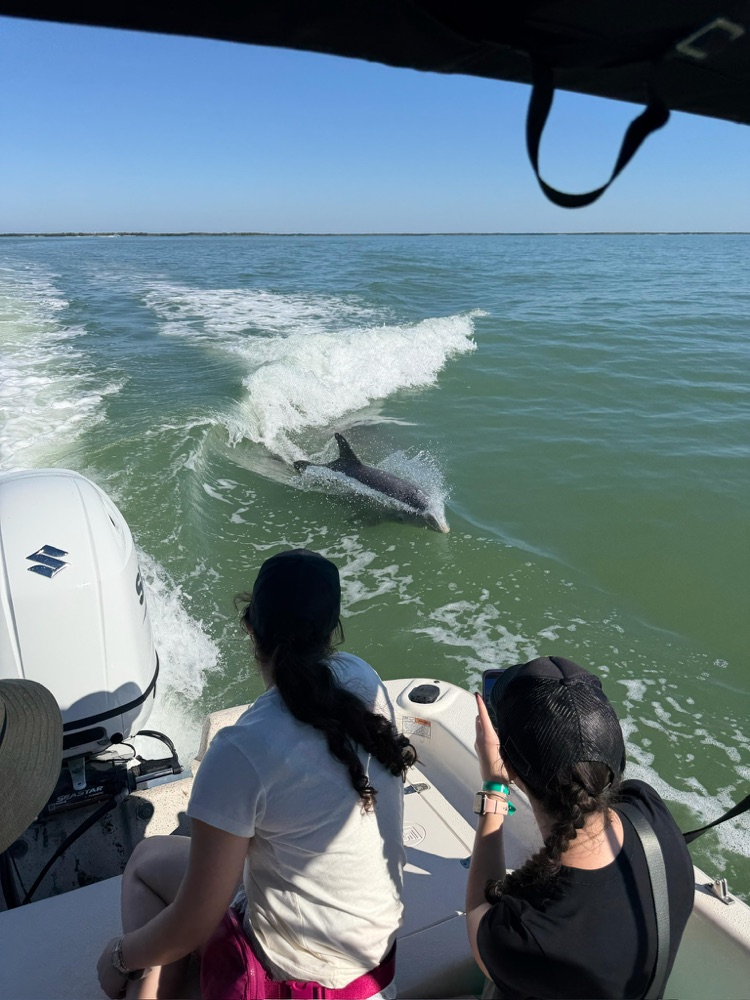
Why kids love a dolphin tour
It’s simple: wild dolphins are thrilling, and they show up close. When a pod starts surfing the boat’s wake just feet away, even the most screen-glued kid forgets the iPad exists. The cruise itself is an adventure — the breeze, the boat, being the lookout who spots the next fin. It’s the easiest crowd-pleaser on the water, which is why we built a dedicated family dolphin tour around it.
Is it safe for kids?
Yes. Every guest, including the kids, wears a Coast Guard-approved life jacket. The trips run on calm, protected bay water, your captain is USCG-licensed and keeps a close eye on the whole crew, and the small-group and private formats keep things relaxed and well-supervised.
What ages is it good for?
All of them. The short duration and calm water make it comfortable for toddlers, and the same qualities make it easy for grandparents — so the whole multigenerational crew can come. It’s one of the few activities that genuinely entertains a four-year-old and a 74-year-old at the same time.
| Who | Why it works |
|---|---|
| Toddlers | Short, calm cruise with dolphins up close; no swimming required |
| Big kids | Be the lookout; an instant thrill when a pod surfs the wake |
| Teens | Genuinely cool and very photo-worthy |
| Grandparents | Easy, comfortable, calm-water ride |
Tips for parents
- Book around naps and meals — a rested, fed kid is a happy dolphin spotter. (Time of day matters less than you’d think; see the best time of day for dolphins.)
- Bring sunscreen, hats and a light layer for the breeze on the water.
- Make the kids the official lookouts — it keeps them engaged the whole cruise.
- Consider a private family charter for birthdays or younger kids, so you can set the pace and add a beach stop.
From the Helm: Family dolphin runs: hugging the Marco River side with little ones aboard
The moment we watch for on a family trip isn’t the first dolphin sighting — it’s the first time a kid’s hands actually stay on the rail instead of reaching for it every few seconds. That settles faster on protected water, so with little ones aboard we tend to hug the Marco River side rather than push straight out toward open pass water, even if it means a slightly longer run to find dolphins. Calmer water means less bounce, less bracing, and a kid who’s actually looking outward instead of holding on.
We also fit life jackets before anyone sits down, not after we’re underway, because a squirming toddler in a moving boat is a different job than a squirming toddler tied up at the dock. Your captain will ask ages before you even board, partly for the jacket sizes and partly because it tells us how far out we’ll push and how long the middle stretch of the trip should run before attention spans start to fray.
Kids clock a dorsal fin faster than most adults do — low to the water, dark, gone in a blink — and we’ve learned to call it out early and loud rather than wait for a clean surface shot everyone can point a phone at. Two o’clock, right there works better than trying to narrate the whole animal. Half the time the fin’s gone before the sentence finishes, and that’s fine; a kid who saw something move under the surface is already hooked for the rest of the ride.
We’ll usually hand the smallest kid aboard an unofficial job — junior lookout, eyes on the water off the bow — because a kid with a task stays engaged longer than a kid just waiting for something to happen. It also means when a fin does break the surface, that kid is the one who gets to yell it out first, which does more for the rest of the trip than anything we could say from the helm.
On calmer river water we’ll also idle past a mangrove edge or two on the way back in, since low-flying pelicans and the occasional wading bird hold a kid’s attention almost as well as a dolphin does. If your family’s first stop in town is a dolphin tour, pair it with one of our beach & island stops so the whole outing stays inside a nap-friendly window.
For anyone aboard who’s less steady on their feet, we’ll walk them through the step down from the dock before the rest of the group boards, and we’ll offer a hand at the same spot on the way back off, since that transition is where most slips happen — not out on the open water, where people expect to feel the boat move.