
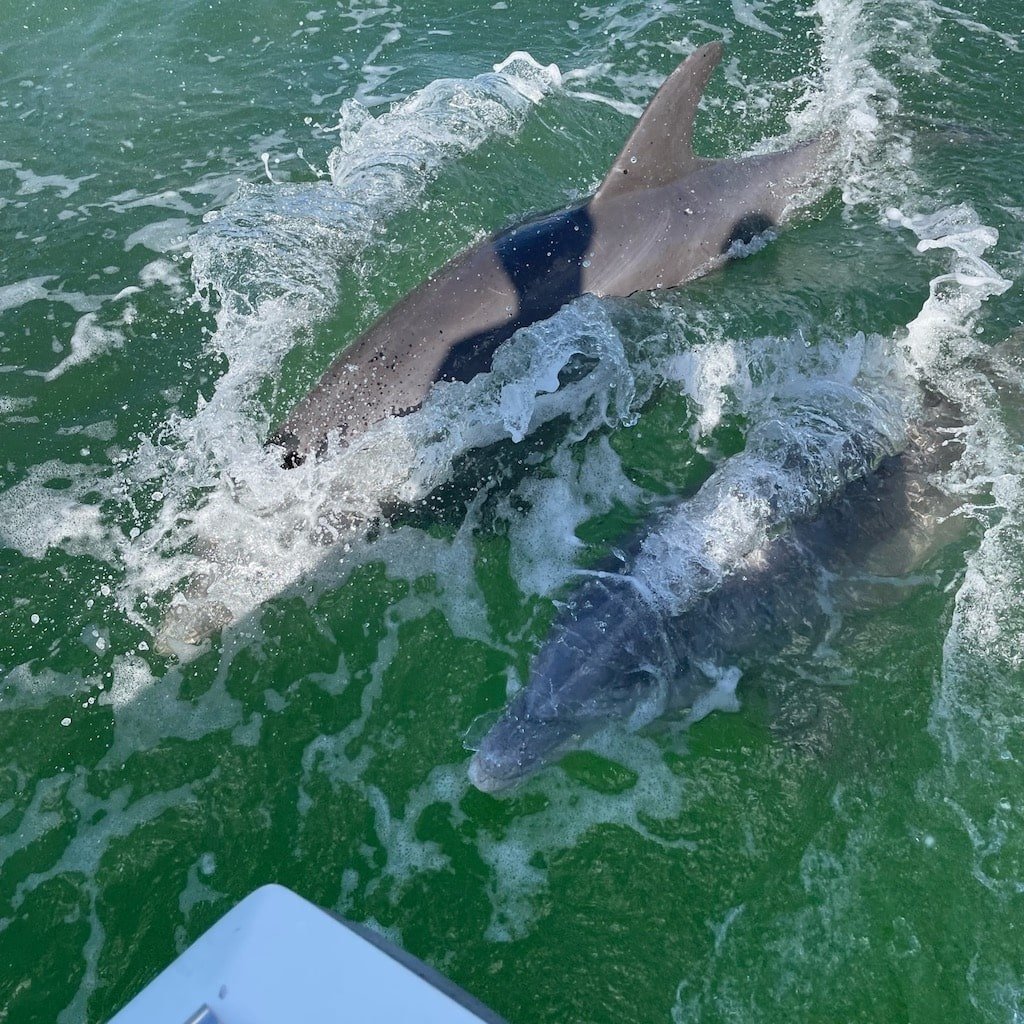
| Spot | Why dolphins gather | How to reach it |
|---|---|---|
| Gordon Pass | Moving tides funnel baitfish through the narrow inlet | Short cruise from the downtown Naples marina |
| Naples Bay | Calm, protected water dolphins cruise daily | Right from the downtown marina |
| Ten Thousand Islands (Marco) | Resident pods surf boat wakes through the mangrove cuts | From our Goodland dock near Marco Island |
Gordon Pass: the Naples dolphin hotspot
If you only have time for one spot, make it Gordon Pass — the inlet where Naples Bay empties into the Gulf. As the tide moves, it squeezes baitfish through the narrow pass, and wild bottlenose dolphins gather there to feed and surf the current. It’s the most reliable dolphin water in Naples, and it’s a short cruise from our downtown marina. Our Naples dolphin tours head straight for it.
Naples Bay
You don’t always have to reach the pass — dolphins regularly cruise the calm, protected water of Naples Bay itself, alongside the yachts and waterfront estates. The smooth water makes for easy, close-up sightings, which is why bay cruises are a favorite for families and grandparents.
The Ten Thousand Islands (Marco side)
South toward Marco Island, the Ten Thousand Islands hold playful resident dolphins that love to surf the boat’s wake through the mangrove cuts. There’s more wildlife variety here too — manatees and wading birds — so it’s a great choice if you want a full safari, not just dolphins. Launches from our Goodland dock.
How to actually find the dolphins
Three things make the difference: timing the tide (moving water concentrates bait and dolphins), knowing the spots (where the pods have been feeding lately), and going by boat (you simply can’t reach the pass or the islands from shore). A local captain handles all three. Sightings aren’t guaranteed — they’re wild animals — but they happen on the great majority of our trips.
From the Helm: The bait-shower signs that send us to Capri Pass over Gordon Pass
Long before anyone on board spots a fin, our captains are usually watching something else entirely: a nervous patch of bait skipping the surface, a knot of terns and gulls stacking up and diving in the same spot over and over, or a slick smoothing out the chop where fish oil has risen from feeding below. Any one of those is worth slowing down for, because bottlenose dolphins are almost always working the same bait that’s got the birds worked up. A tight knot of terns diving over and over is usually the better tell than a lone pelican, since terns tend to key on the same small bait schools dolphins are pushing toward the surface. We’d rather idle toward a bird stack for two minutes and come up empty than run past one at speed chasing a spot we like on principle.
When we do find the right sign, we won’t point the bow straight at it. Dolphins feeding on a bait ball generally hold their pattern better if we run parallel to their direction of travel and let the boat drift down on them rather than closing head-on, and we’ll cut the engine to an idle well before we’re close enough to matter. It’s a habit built from a lot of mornings out here, not a rule written down anywhere — a boat that eases in tends to get watched, not fled from, and a boat that charges in usually gets a flat, empty patch of water instead.
On weekend mornings when Gordon Pass has three other charters and a line of center consoles working the same stretch, we’ll often swing toward Capri Pass instead, where the current still funnels bait through a narrower cut but the boat traffic thins out fast. It’s a smaller pass with a shorter feeding window around the tide change, so timing matters more there than at Gordon, but a quiet cut with one boat idling in it beats a crowded one with five.
There’s a particular hush that comes over a boat right before a dolphin surfaces close — conversation drops, phones come up, and someone always asks how we knew to stop right there. We’ll point back at whatever tipped us off, the birds or the slick or the bait, so the sighting feels like something you were let in on rather than a trick performed for you.
We won’t promise a dolphin on any given run — they’re wild animals working wild water, not trained performers — but reading those signs stacks the odds heavily in your favor. If dolphins are the whole reason you’re booking, our dolphin tours are built around exactly this kind of morning, and our wildlife guide covers the other signals worth watching for beyond the pass.
🧭 Captain’s call
- Signs we watch for
- Bait showers, stacked birds, slick patches on the surface
- Our approach
- Idle in parallel to the pod’s direction, never bow-on
- Backup pass
- Capri Pass on crowded mornings, tide-change window only