
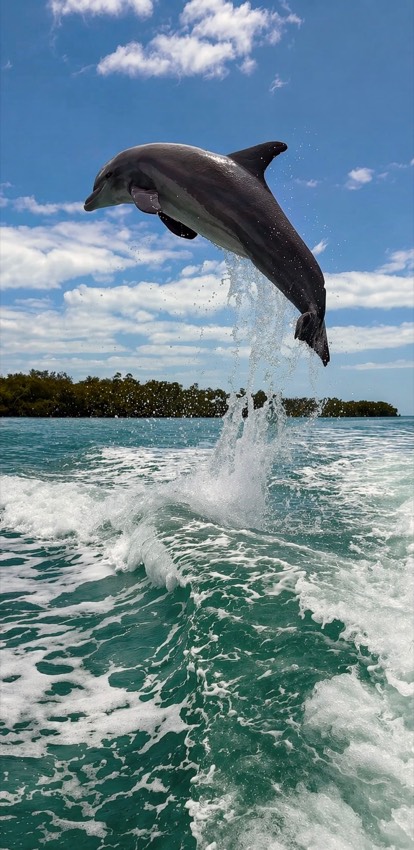
| Window | Conditions | Best for |
|---|---|---|
| Morning | Calm, glassy water and soft light | Photos, families, comfort |
| Midday | Fine for dolphins (it’s about the tide) | Convenient around naps & meals |
| Sunset | Active dolphins, golden light, a Gulf sunset | Romance and the crowd favorite |
Why the tide beats the clock
Dolphins follow food, and food follows the tide. A moving tide — incoming or outgoing — pushes baitfish through passes like Gordon Pass and the mangrove cuts, and the dolphins show up to feed. So the single best predictor of great dolphin activity isn’t the hour on the clock; it’s whether the water is moving. Our captains plan trips around the day’s tide windows first.
Morning trips
Mornings tend to be calm and glassy, with good light and comfortable temperatures — pleasant cruising and easy spotting. If a morning trip lines up with a moving tide, it’s hard to beat.
Midday trips
Midday is perfectly good for dolphins (remember, it’s about the tide), and it’s convenient for families working around naps and meals. The light is harsher for photos, but the dolphins don’t check their watches.
Sunset trips
Sunset cruises are the crowd favorite for a reason: dolphins are often active in the cooler evening, the golden light is gorgeous, and you get a Gulf sunset as a bonus. If you want dolphins and romance, this is the window — see our Naples dolphin tours, which pair naturally with sunset.
From the Helm: The water signs we watch for near Gullivan Bay before anyone spots a dorsal fin
Long before anyone aboard spots a dorsal fin, we’re usually already watching something else entirely — a slick of flat water sitting oddly still against a rippled surface, or a handful of birds suddenly stacking up and diving in the same spot. Those signs matter more to us than whatever the clock says. A mud boil kicked up along a shallow flat, a shower of small baitfish skipping the surface, gulls working low and tight: any of that gets us slowing down and angling the boat toward it, because something is almost always pushing that bait from underneath.
Near Gullivan Bay and the open stretches around it, that kind of activity tends to show up wherever bait is getting squeezed against a shoreline or a drop in the bottom, which is part of why we watch structure as much as the surface itself. We’re not guaranteeing dolphins show up every time birds start working — sometimes it’s just bait doing its own thing — but it’s a far better tell than staring at open water hoping something swims by on schedule.
When we do spot something promising, we’ll ease off the throttle well before we’re close, since a boat running full speed at a group of dolphins tends to push them away rather than draw them in. Guests notice the engine drop first, then the quiet, then usually someone at the rail pointing before we’ve said a word. We’ll hold position and let the animals decide whether to come closer, which sometimes means a long, curious pass right along the hull and sometimes means they move off without much interest at all.
Wind plays into it too. A stiff breeze chops the surface enough to hide the small tells we’re usually watching for, so on blustery days we lean harder on the birds and the structure instead of the water’s texture, and we’ll idle a little longer near a likely spot instead of running a wider search pattern. It’s a slower way to work a morning, but it tends to pay off better than covering more water at higher speed and hoping something crosses our path along the way.
None of this replaces the tide logic that actually sets our schedule — it just tells us where to look once we’re out there on the window we’ve already picked. If you want the fuller rundown on the wildlife signs worth watching for beyond dolphins, our wildlife guide covers more of what shows up around that same bait and structure, and a dolphin tour booking is the easiest way to put a captain’s eyes on the water for you instead of guessing from shore.
| What we see | What it usually means |
|---|---|
| Flat, oily-looking slick | Bait balled up tight near the surface |
| Birds stacking and diving | Bait getting pushed up from below |
| Mud boil on a shallow flat | Something working the bottom nearby |
| Baitfish skipping the surface | A predator making a pass underneath |