
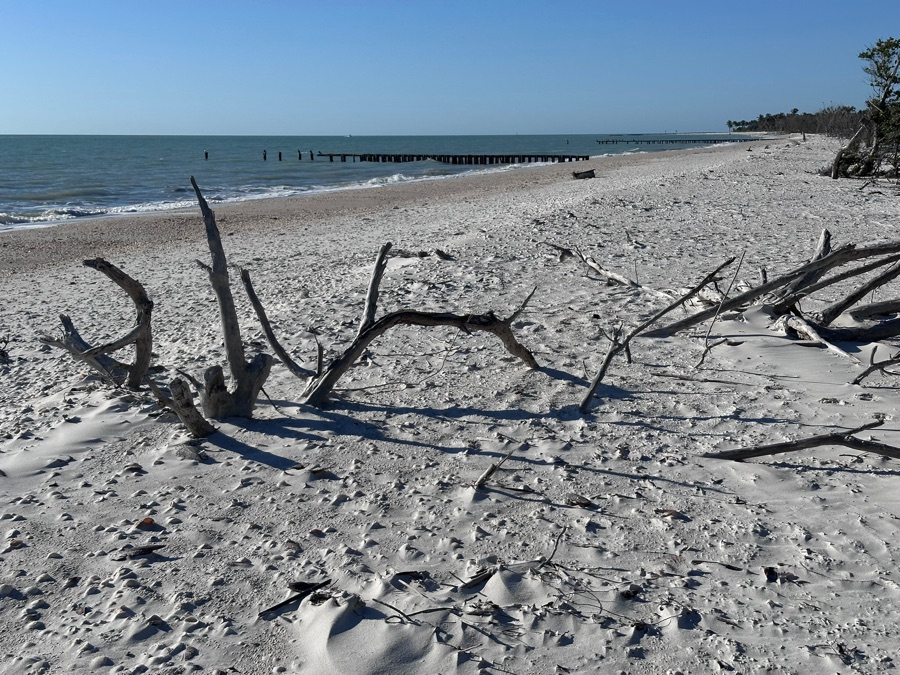
It’s boat-only
Keewaydin Island has no road and no bridge — it’s a true barrier island. The only way to set foot on it is by boat, which is exactly why it stays wild and uncrowded. You can’t drive, bike or walk there.
Where you launch
The closest launches are downtown Naples (Naples Bay Resort & Marina) and Goodland near Marco. From Naples it’s a short, scenic ride through Gordon Pass to the island’s north end.
The easiest way to go
A guided Keewaydin beach trip is by far the simplest option — no boat to rent or navigate, no tides to figure out, no risk of running aground in the shallow flats. Your captain handles everything and beaches the boat right on the sand. (Going for shells? See our Keewaydin shelling tour.)
From the Helm: Beaching the bow on Keewaydin against a falling tide
The last hundred yards into Keewaydin happen slower than the rest of the ride, and that’s on purpose. A captain reads the sand shelf as we come off plane, watching how the color of the water changes from a deep green-blue to a pale, sandy tint that tells us how much bottom is left under the hull. On a falling tide especially, that shelf moves by the hour, so the approach we ran an hour ago isn’t always the same line we’d run right now.
As we close in, the motor comes up on the trim, easing the skeg toward the surface without lifting the prop clear before we actually need it to. Cut the power too early and you drift short of the beach; leave it down too long and you risk touching sand before you mean to. It’s a narrow window, and it’s the one moment on the whole trip where the captain’s attention is entirely on the boat instead of on you — which is exactly how it should be.
Which route we run out to the island in the first place often comes down to wind more than distance. A stiff wind out of the west can build a chop right at Gordon Pass that makes the Naples Bay run choppier than the Goodland side, where the water tends to stay a little more sheltered behind Marco Island. On those days we’ll favor whichever launch keeps the ride comfortable, even if it isn’t the shorter one on the chart.
Even after we’ve committed to a launch, the wind can still decide exactly where on the island we put the bow down. A north wind tends to leave the south end of the beach calmer for the approach, while a south wind flips that, so the captain will often run the shoreline for a few hundred yards before picking the final spot instead of aiming for the same stretch of sand every time. That extra look is what separates a beaching that settles in smooth from one that gets pushed sideways at the last second.
The payoff is the hush right after the hull settles into the sand — engines drop to idle, then off, and the first sound left is water lapping against the bow. Guests step off into ankle-deep water that’s usually warmer than they expect, and there’s a beat where everyone just stands there taking in an island with no buildings, no bridge, and no way to have driven here.
That beaching maneuver is the whole reason Keewaydin stays this quiet — no dock, no ferry schedule, just a captain who knows the shelf well enough to put you on the sand at the right moment on the tide. If shelling the island afterward is part of your plan, our shelling tours run this same stretch of coast, and the beach & island page covers a few other boat-only stops worth adding to the day.