
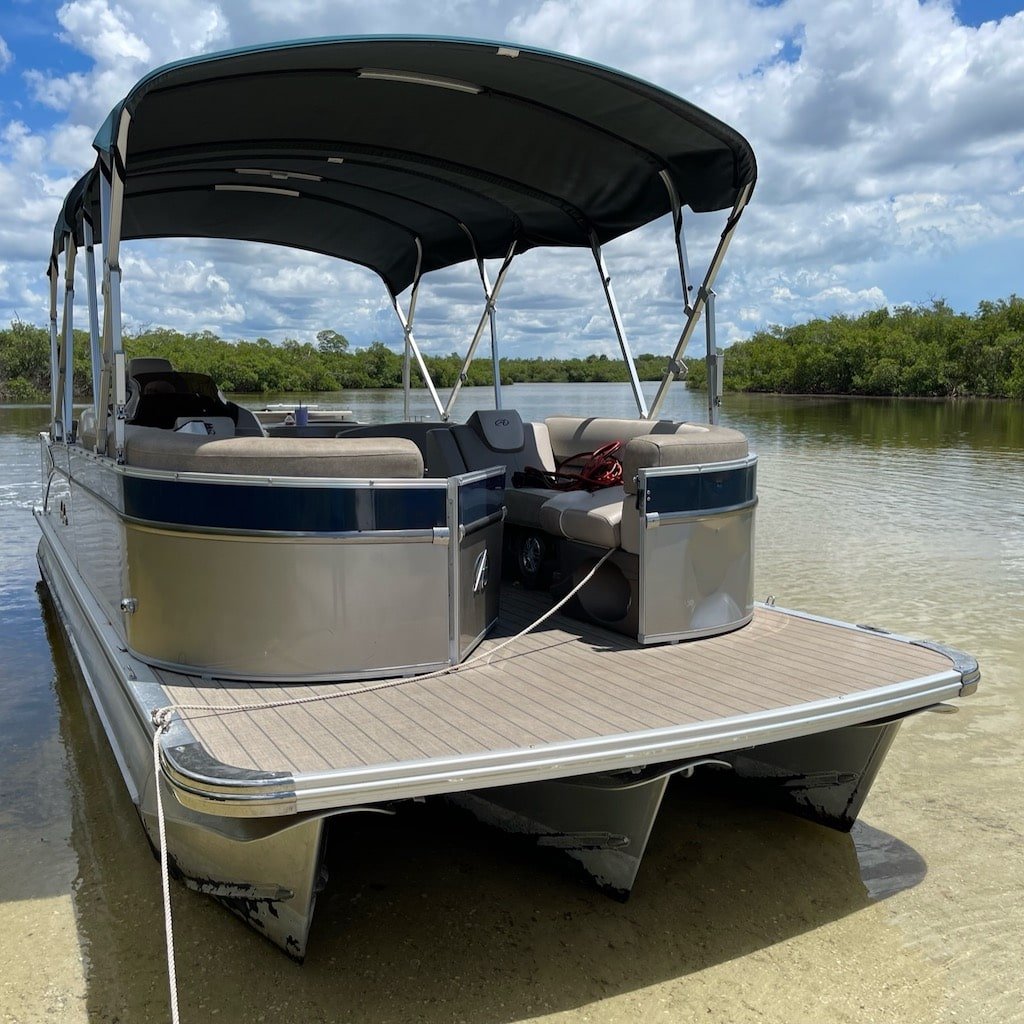
What island hopping is
Instead of one beach, island hopping strings together several boat-only spots in a day — a shelling beach, a swimming sandbar, a quiet cove — so you sample the best of the area. See our island hopping tour.
Where to hop
The Ten Thousand Islands off Marco are the prime island-hopping water — a maze of keys and sandbars with endless options, plus dolphins, manatees and birds between stops. The Naples side offers Keewaydin and the Gordon Pass area.
How to plan it
Let the tide lead and a captain do the routing — sandbars appear at lower tides, shelling is best at low water, and a local captain sequences the stops so each is at its best. A private charter is ideal since you can customize the route.
From the Helm: Deciding between Keewaydin and Panther Key when the wind picks a side
Nosing up to Keewaydin on a calm morning is one thing; doing it with a stiff southwest wind pushing swash up the beach is another. Our captains will idle wide of the sandbar first, watching how the surf is breaking along the last fifty yards, before deciding whether to drop the ladder there or run on to a more protected pocket instead. That extra lap around the approach, done before anyone aboard even clocks it’s happening, is the part of island hopping that never makes it into a packing list.
When the wind is up out of the southwest, we’ll usually favor the lee side near Panther Key instead, where the mangroves cut the fetch and the water off the beach stays calm enough for kids to wade without getting knocked around. It’s not always the prettiest stretch of sand we could reach that day, but a comfortable landing beats a scenic one guests can’t actually enjoy. Most mornings we’ll make that call within the first ten minutes out of the pass, well before it’s obvious from the dock which way the day is leaning.
We’ll always carry a spare anchor rigged with more scope than the first island needs, because a hard sandbar bites completely differently than the soft grass flats closer to the mangroves, and ground tackle that held fine on one stop can drag within minutes at the next. Guests never see that swap happen; they just notice the boat sits steady the whole time everyone’s filing down the ladder.
Every island in this stretch has its own personality once you’re standing on it — the sand on one beach runs finer and almost white, while a stop a few minutes away can be shelly and coarse underfoot, packed with broken shell hash and bits of whelk left behind by the last outgoing tide. We’ll usually mention that difference before anyone steps off, mostly so guests aren’t surprised when the beach they photographed from the boat feels completely different once their feet are on it.
At the dock, the question is almost always some version of “how many islands do we actually get to?” and the honest answer is that it depends entirely on how the water behaves that day. An outgoing tide can open up a sandbar that’s underwater at high tide, turning what looked like a two-stop day into three without anyone planning it that way. That flexibility is the part a fixed itinerary can’t promise in advance, and it’s usually the part guests end up talking about afterward.
If beaches and wildlife matter more to your day than any single island, we’ll lean the run toward the quieter beach and island stops instead of the busier ones, and if you want the fuller map of where these islands sit inside the wider chain, our destinations guide is the place to start before you pick a day.