
📖 At a glance
- Boat tour edge
- Fresh, less-trampled beds; captain times the tide
- Public beach edge
- Free, walk-up, no schedule
- Best boat islands
- Keewaydin, Kice, Cape Romano, the Ten Thousand Islands
- Catch on public beaches
- Picked over by mid-morning, but easy access
- Rule everywhere
- Empty shells only in Collier & Lee County
Why boat-only beaches give up more shells
It comes down to foot traffic and timing. A public beach near a parking lot gets walked by hundreds of people a day, so by mid-morning the easy shells are gone. The boat-only barrier islands — Keewaydin, Kice and Cape Romano — might see a fraction of that, so the wrack line still holds whole whelks, conchs and the occasional surprise. On top of that, our captains run to the islands the falling tide just exposed, hitting fresh sand before anyone else gets there. That’s the real difference: not magic shells, just beds nobody’s beaten you to. Our boat-access shelling guide maps out the best of them.
The honest trade-offs
We won’t pretend a tour is the right call for everyone. If you just want to wander the sand for an hour with the kids and aren’t chasing a specific find, a walk-up beach like Tigertail or Vanderbilt is easy, free and lovely. A tour costs money, runs on a schedule, and you’re on the water for a couple of hours. What you get back is access, timing and a guide who points you to the productive stretch of beach instead of letting you wander the dead spots. For collectors and anyone who wants the trophy shells — a whole horse conch, a clean lightning whelk — the boat is the upgrade that pays off.
| Shelling tour | Public beach | |
|---|---|---|
| Shell quality | Fresher, less picked over | Picked over by mid-morning |
| Tide timing | Captain times low tide for you | You're on your own |
| Access | Boat-only islands | Walk up from the lot |
| Cost | Paid tour | Free |
| Best for | Collectors, trophy finds | Casual, easy days |
Who should pick which
Pick the public beach if you’re casual, on a tight budget, or want to come and go on your own clock. Pick a shelling tour if you’re a serious sheller, you’ve got a short trip and want the best shot, or you want the islands and the boat ride as much as the shells. A lot of folks do both — a lazy beach morning, then a tour to the fresh stuff. If you’re weighing specific spots, our Keewaydin vs. Tigertail comparison shows exactly how a boat-only island stacks up against a popular walk-up beach. Either way, remember Collier and Lee County are empty-shells-only.
From the Helm: why we still walk Keewaydin’s outer bar even on a slow tide day
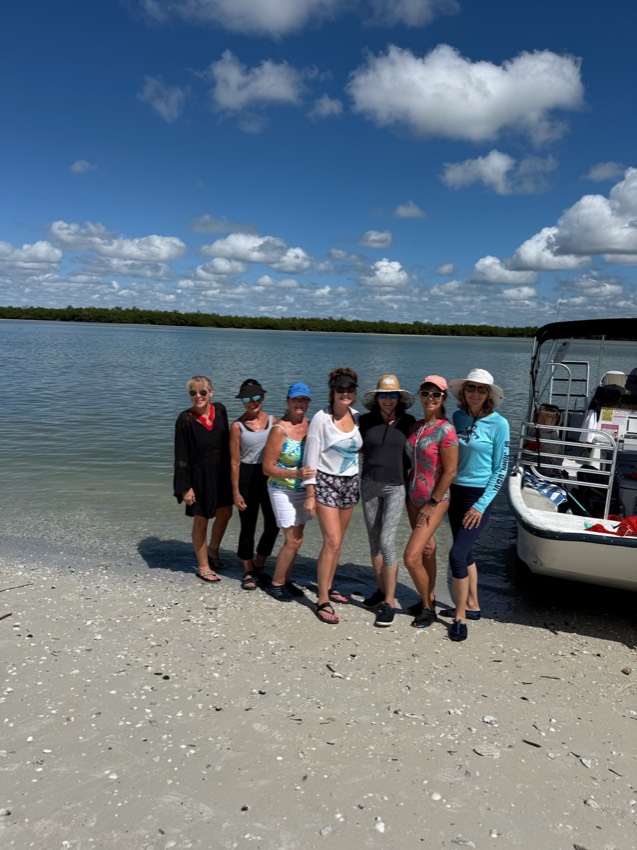
Keewaydin Island’s outer bar faces the open Gulf, a long low ridge of sand that only shows itself fully once the tide drops. We could just as easily beach the boat on the calmer bay side and call it good, but the outer bar is where the fresh material actually piles up, dropped by the same surf that keeps public beaches picked over by mid-morning. It’s a longer walk from the ladder, and we make it anyway, most trips, because that’s where the better shells sit.
The hand-off at the ladder is part of the routine now. A captain steps down first, checks the footing, and calls guests down one at a time rather than letting everyone crowd the transom at once. Then comes the same thirty-second brief every time: empty shells only, leave anything still living exactly where you found it, and watch your footing on the shell rubble near the waterline — it’s sharper than it looks barefoot.
Some mornings the outer bar just isn’t cooperating — a stronger blow overnight has already pushed water back over it before we arrive. When that happens we’ll shift the walk to Kice Island instead, a short run further south that fishes a falling tide almost as well and still keeps the group off the drive-up sand entirely. Either way, the point stays the same: get guests onto a stretch the public can’t reach on foot.
We’re also honest about who that walk suits. The ladder step-down and the stretch of soft sand before you reach the firmer bar isn’t easy footing for every guest, and if someone in the group would rather stay dry and comfortable aboard, we’re glad to keep the boat close and let them watch from the rail instead of pushing everyone down the ladder on principle. A shelling stop works best when it’s optional, not mandatory.
Before we ever release a group to spread out and hunt on their own, one of us usually walks the near stretch of the bar first, fast, just to get a read on how the wrack line is actually laying that morning — heavy with fresh material or thin and picked-clean from the last few days of wind. That two-minute scout shapes how long we let the stop run and which direction along the bar we point people toward first.
We also watch the clock as closely as the shells once everyone’s spread out, because the same tide that exposed this bar keeps climbing back the moment it turns. Fifteen minutes before we need to load back up, we’ll walk the group in from the far end first, so nobody’s still hunting the last stretch of sand as the water starts creeping back over the shelling grounds we just walked.