
🏝️ At a glance
- Access
- Boat only — uninhabited, no facilities
- Where
- South of Marco across Caxambas Pass, near Dickman's Point
- Vibe
- Wild, empty, low foot traffic = less-picked shells
- Best window
- Low tide, morning after a winter front
- Rule
- Empty shells only — live collecting banned in Collier County
A genuinely wild, empty island
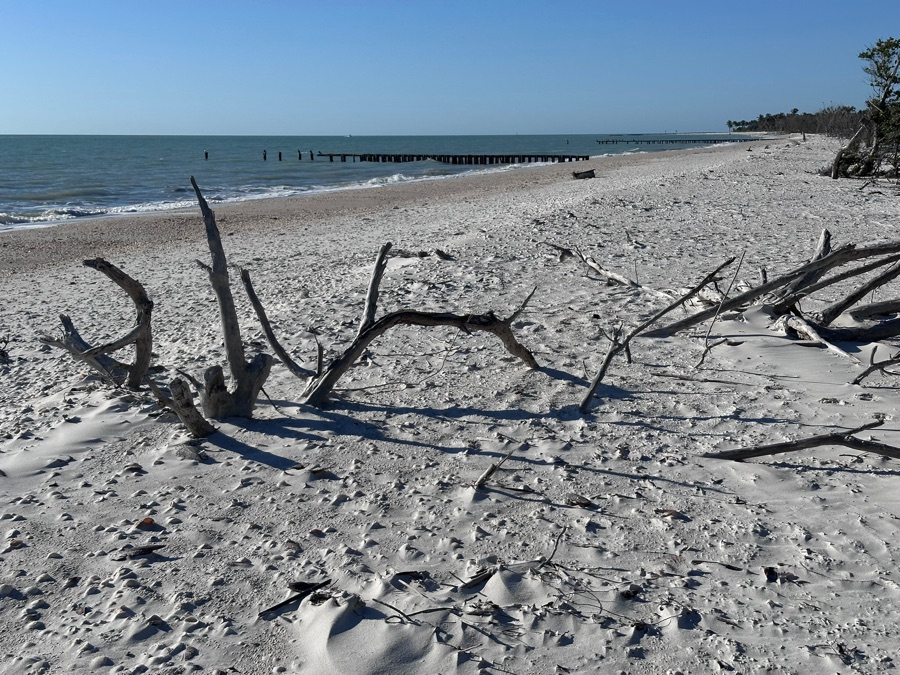
Most people on Marco never set foot on Kice, and that's the whole point. There's no bridge, no dock, no snack bar — nothing but dunes, sea oats, and a wide-open beach facing the Gulf. You bring your water and your sunscreen and you have the place largely to yourself. Because the only way in is by boat, the shell drifts don't get the dawn raid that public beaches do. When our captains land you here on a shelling tour, you're often walking a wrack line the tide laid down overnight that hasn't been touched. It feels like cheating. It isn't — it's just geography doing you a favor.
What washes up on Kice
Kice sits right at the mouth of the Caxambas Pass system and catches the current that funnels around the bottom of Marco. That moving water delivers a steady supply: lightning whelks, fighting conchs, lettered olives, cockles, and big pen shells standing up out of the sand like dark blades. You'll find the occasional horse conch too, especially on the southern point toward Cape Romano. After a winter front, the deeper-water finds turn up — a true tulip, an apple murex, now and then something special. We won't oversell it: the wild card shells are wild cards. But the everyday haul on Kice is honestly excellent.
Best tide and season for Kice
Like every island down here, Kice gives its best at low tide. A falling tide exposes the flats and the long point, peeling back sand and stacking shells along the new line. December through March is the sweet spot, when cold fronts march across the Gulf and stir up shells from deeper water. The morning after one of those fronts is when the beach really shows off. Our captains time the run to the tide so you arrive as the water's draining out — same way we read it for a post-front shelling trip anywhere in the Ten Thousand Islands.
| Factor | What to expect |
|---|---|
| Crowds | Almost none — uninhabited, boat-only |
| Facilities | None — bring everything you need |
| Best tide | Low / falling tide |
| Best season | December–March, after cold fronts |
| Signature finds | Whelks, conchs, olives, pen shells |
How we reach Kice Island
Kice is a short, beautiful run from Goodland or Marco, threading through the bottom of the bay and out toward Cape Romano. There's no public way to land there short of having your own boat and knowing the pass, which shoals up fast and unforgiving. That's the part to leave to a captain. We'll carry you across, drop you on the best stretch of beach for that day's tide, and keep an eye on the weather so the trip's relaxed start to finish. One rule travels with us: this is Collier County, empty shells only. If you flip a gorgeous shell and find a snail still home, it goes back in the water — that's how Kice stays this good.
From the Helm: Working Kice’s lee side when the wind swings west of Caxambas Pass
Before we even leave the dock at Goodland, we check one thing first: which way the wind is blowing, because that decides which side of Kice we work, not the tide chart taped by the wheel. A west wind stacks chop straight onto the Gulf-facing beach and turns an easy landing into a bouncy one, so on those mornings we already know we’re headed for the calmer bay side before the lines are even off the pilings.
On a clean morning we run the outside, easing along the edge of Caxambas Pass and reading the darker water for the drop where the bar starts, then cutting the engine and pushing the last stretch on the pole so we don’t grind the hull into sand that’s barely under us. That last hundred yards in near-silence, hearing only the pole and the water, is usually when someone spots the first shell from the boat before anyone’s stepped off.
A fresh-dead whelk off that outside bar sits heavier in your palm than a piece that’s been tumbling for a season, and it usually still carries a faint brine smell. Sun-bleached ones go light and chalky, easy to spot from three feet away, which is honestly the easier beachcomb — you’re just not walking home with as many of the good ones. Either way, it goes straight into the mesh bag, empty shells only, the rule we repeat at every rail briefing.
If the wind swings while a group is already spread out along the wrack line on the outside, we don’t rush anyone back in a panic. We start pulling in the outer edges of the group first, since that’s where the chop reaches the beach earliest, and we give everyone a five-minute call before the ladder goes back up rather than cutting the walk short without warning. It happens more on late-morning trips, when the sea breeze has had time to build against whatever the dawn forecast promised.
When the wind won’t cooperate from the start, we duck the boat around into the mangrove creek that cuts along Kice’s bay side and work that quieter flat instead. It’s slower going — fewer big showy pieces, more of the small stuff hiding under the mangrove roots — but it keeps guests dry and out of the wind, and it’s still Kice, still untouched by foot traffic most days. We’d rather hand you a calmer version of the island than a rough one.
Whichever side we land on, the island itself does the rest of the work — that’s the part guests remember longest, more than any single shell. If Kice sounds like the kind of quiet morning you’re after, our shelling tours run there straight out of Goodland, and if you’re still weighing which island fits your trip best, the full shelling beaches guide lays out everywhere else our captains go before you commit to one.
🧭 Captain’s call
- Our first read
- Wind direction off the Gulf before we pick a side of the island
- Plan B
- Tuck into the mangrove creek on Kice’s bay side when the outside kicks up
- What we carry
- A mesh shell bag and a push-pole for the last skinny stretch