
☀️ At a glance
- Biggest risk
- Reflected UV off open water plus a cooling breeze that hides the burn until it’s done
- Best coverage
- UPF 50+ long sleeves and a wide-brim hat beat sunscreen alone
- Sunscreen
- Reef-safe, mineral-based, reapplied every couple hours and right after wading
- Eyes
- Polarized sunglasses cut glare and help you spot shell beds and wildlife
- Shade on board
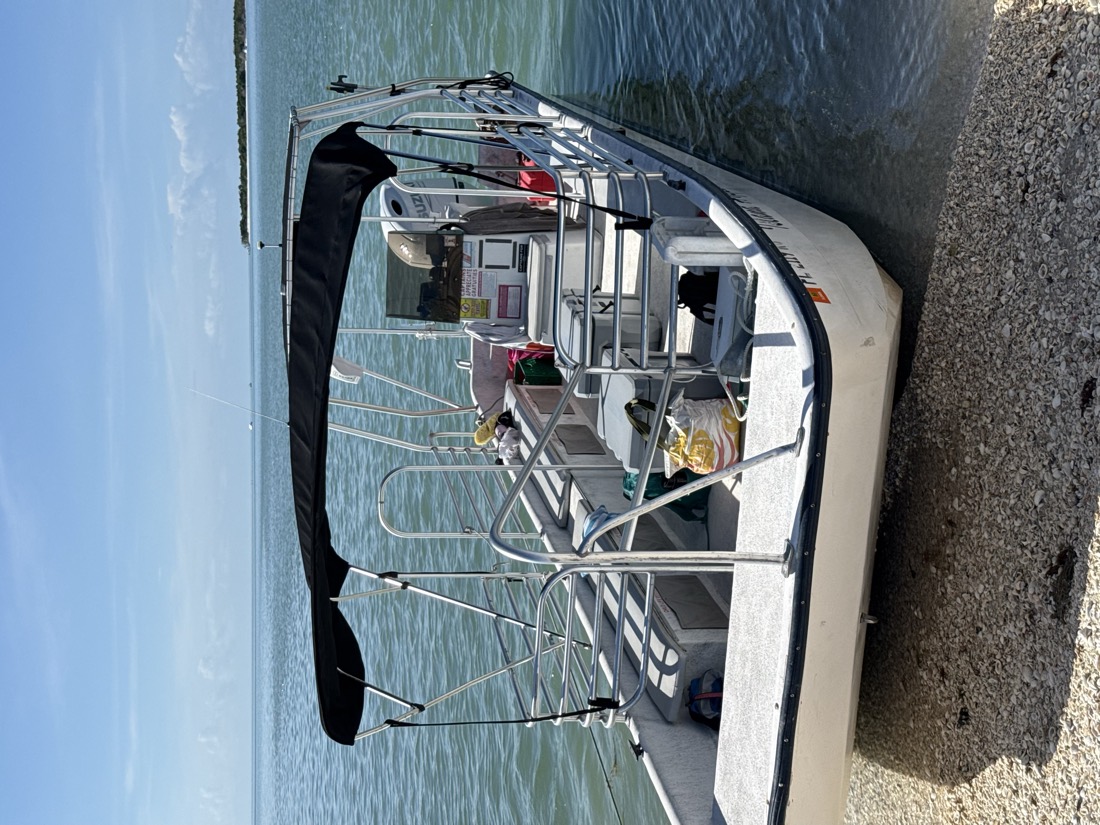
- Our tiki boat runs a shaded roof; open shell flats have none
- Season
- Southwest Florida sits near the Tropic of Cancer — strong sun even in January
Why You Burn Faster on the Water
You can be soaking wet, wind in your face, feeling nothing but cool relief, and still walk off the boat with a burn you never saw building. That’s the trap of sun on the water instead of sun on the beach. The Gulf doesn’t just let the light through — it bounces a good share of that UV right back up at you off the surface, so you’re catching rays from above and below at the same time, all trip long. Add the breeze that comes with running at cruising speed and your skin never gets the hot, prickly warning it would give you on dry sand. You feel fine right up until you’re not, and by then the damage is already done.
Southwest Florida doesn’t make it easier on you. Marco Island sits only a couple hours’ drive north of the Tropic of Cancer, which means the sun climbs higher overhead here than it does across most of the country — even in the dead of winter, a January afternoon on open water can burn exposed skin faster than most visitors expect coming from up north. And once you step off the boat onto one of the outer shell flats, there’s no tree line, no shade structure, nothing but open sand and glare bouncing straight back up at your face. If a shelling tour is on your list, that stretch of wading barefoot in ankle-deep water is exactly where sun protection matters most, because it’s the one part of the day the boat can’t shade you from.
Coverage That Actually Works: UPF, Hats & Polarized Sunglasses
Sunscreen gets all the attention, but the more reliable fix is simpler: cover the skin so there’s less of it left for the sun to reach in the first place. A UPF 50+ long-sleeve shirt blocks the large majority of UV that hits it, and unlike sunscreen, it doesn’t wear thin, rub off on a towel, or need reapplying every couple hours. Lightweight, quick-dry UPF fabric breathes fine in Gulf humidity, and by mid-afternoon it’s usually kept you noticeably cooler and more comfortable than bare, sun-baked skin ever manages. A wide-brim hat handles what a ball cap can’t — it shades your ears, the back of your neck and the top of your scalp, three spots people forget about right up until they’re peeling a week later.
Polarized sunglasses round the setup out, and they’re not just a comfort item. Glare bouncing off open Gulf water is sharp enough to squint through an entire trip, and a good polarized lens cuts that glare enough to actually see below the surface — which matters if you’re hoping to catch a bottlenose dolphin rolling alongside the boat on a dolphin tour, or scanning a sandbar for a shell bed before you ever step off. If you want the fuller picture on dressing for a Gulf day beyond just sun gear, our what to wear by season guide covers what changes between a breezy December morning and a sticky August afternoon.
Choosing (and Reapplying) Reef-Safe Sunscreen
Coverage handles most of your skin, but your face, neck, hands and any bare patch still need sunscreen — and the kind you reach for actually matters out here. Reef-safe, mineral-based sunscreens built around zinc oxide or titanium dioxide sit on top of the skin rather than absorbing into it, which means they tend to hold up better once you’re wading than chemical formulas built around ingredients like oxybenzone or octinoxate. Since a morning on the water usually means walking through shallow flats and wet sand, a sunscreen that survives real contact with saltwater and sand is worth the little bit of extra cost.
Reapply more often than the fine print on the bottle suggests. Every couple of hours is a reasonable baseline for open water, but the real trigger is any time you’ve been wading, swimming or wiping sweat off with a towel, because sunscreen doesn’t survive that kind of contact nearly as well as the label implies. Our captains see the same pattern almost every trip: the guests who slather on SPF once at the dock and never touch it again are the ones who come back sunburned across the shoulders, the part in their hair and the tops of their feet — three spots that are easy to miss and brutal to have missed.
Sun Protection for Kids, Grandparents & Sensitive Skin
Kids, grandparents and anyone with sensitive or fair skin need a slightly different plan than the standard advice, because their skin burns faster and the day tends to run longer than anyone expects. For younger kids, a rash guard with built-in UPF plus a hat with a chin strap solves most of the problem before sunscreen even enters the picture, since little ones are notoriously bad at holding still for reapplication and even worse at telling you their neck is burning until it already has. For grandparents or anyone managing thinner, more sun-sensitive skin, the same rule applies twice as hard: coverage first, sunscreen as the backup, not the other way around.
This is one more reason families gravitate toward our tiki boat tours — the shaded roof gives everyone a real place to cool off between stretches in the open sun, and it’s a genuinely family-first trip built around that kind of comfort, not a party cruise. Whatever boat you’re on, a little planning before you leave the dock — UPF layers packed, hats already on, sunscreen applied instead of just carried — saves everyone from spending the second half of a great morning uncomfortable.
Shade on Board & Timing Your Trip
The boat itself is part of your sun strategy, not separate from it. Our tiki boat runs a shaded roof you can duck under for the whole ride, which is a real advantage over an open center-console if midday sun is your main concern, and it’s one of the reasons both young families and older guests tend to gravitate toward that trip. But shade on the boat doesn’t follow you the moment you step off onto a sandbar or shell flat, so treat the ride out as your window to reapply and adjust rather than your only line of defense for the day.
Timing helps too. A sunset cruise runs during the lowest, gentlest sun angle of the day, which is worth considering if you or someone in your group burns easily, or if you’d simply rather trade the noon glare for golden light over the water. Whichever tour you choose, the formula stays the same: dress for coverage before you ever leave the dock, keep sunscreen within reach, and use whatever shade the boat gives you, because once you’re out past Goodland with open water on every side, there’s genuinely nowhere else to hide from it.
| Layer | What It Covers | Best For |
|---|---|---|
| UPF 50+ shirt | Torso, arms, shoulders | All-day coverage that never wears off |
| Wide-brim hat | Face, ears, neck, scalp | Spots a cap leaves exposed |
| Polarized sunglasses | Eyes | Cutting glare and spotting wildlife or shell beds |
| Reef-safe mineral SPF | Face, hands, any bare skin | Skin coverage can’t reach; reapply every couple hours |
| Boat shade / tiki roof | Whole body, on the ride | Breaks between wading or sun exposure |