
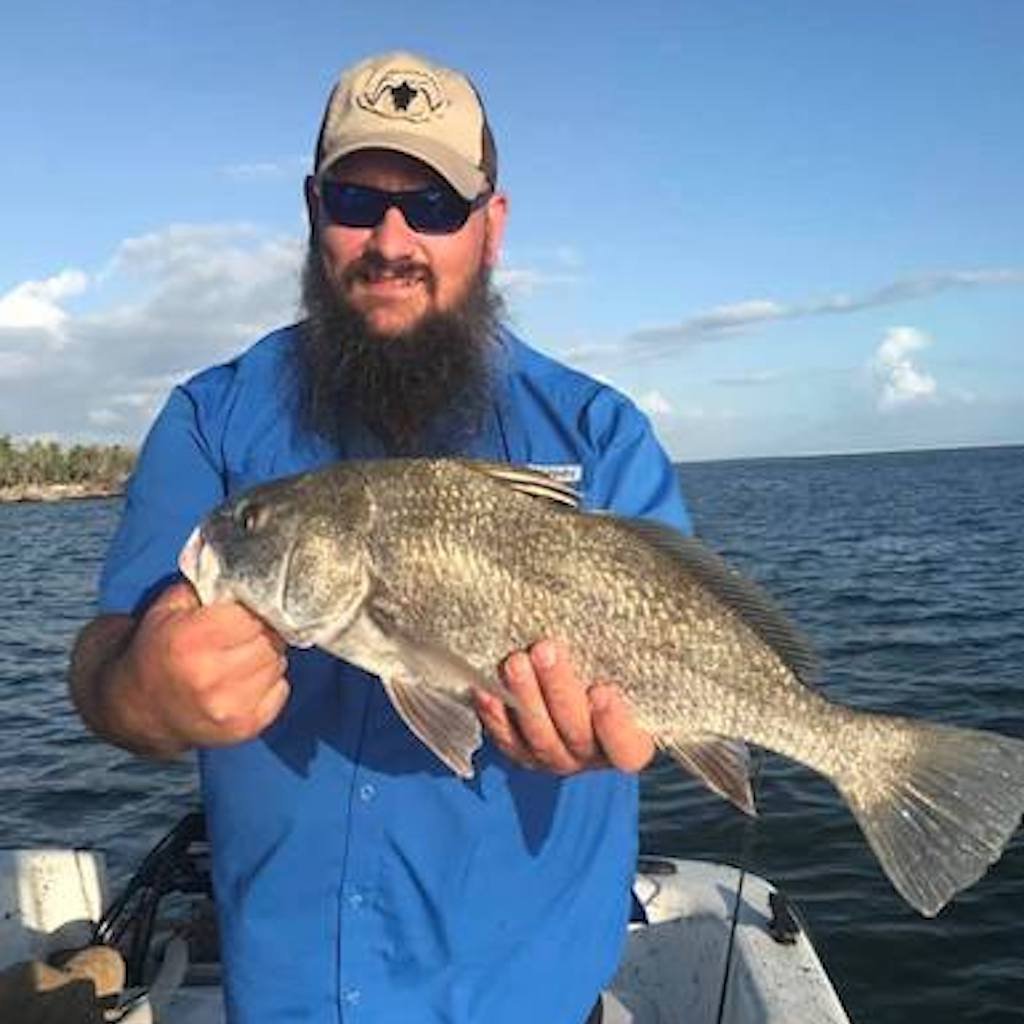
🎣 At a glance
- Scientific name
- Lutjanus synagris
- Look for
- Yellow-pink longitudinal stripes and a dark spot below the front dorsal
- Size
- Typically 8 to 12 inches — smaller than mangrove snapper on average
- Where
- Nearshore hard bottom, ledges & reef rubble off Naples and Cape Romano
- Table fare
- A regulated, seasonal keeper — your captain confirms current rules
- Best for
- Steady action and kid-friendly bites, a change of pace from mangrove roots
How to Identify a Lane Snapper
Flip your catch over and look for the giveaway: lane snapper (Lutjanus synagris) wear a row of yellow stripes running the length of a rosy-pink to silvery body, and—this is the tell every mate on board checks first—a dark, roughly diamond-shaped smudge sitting low on the flank, tucked just under the soft part of the dorsal fin. The stripes alone can fool you, since plenty of snapper cousins wear them, but that spot doesn’t move and doesn’t fade even after a fish has been in the cooler a while. Lane snapper also run a touch more slender through the body than a mangrove snapper of the same length, with a forked tail and a mouth built for picking crustaceans and small baitfish off the bottom rather than ambushing bait in open water. Most of what you’ll boat run 8 to 12 inches, occasionally a bit better, which makes them an easy, satisfying fish to identify boat-side even for someone holding a rod for the very first time.
Table fare is part of the reputation too. Lane snapper carries a mild, flaky white fillet that most anglers rate right up with any other snapper in the Gulf, and because it runs smaller than a lot of what we target, a few fish make an easy, manageable haul for a family dinner rather than a freezer project. None of that changes the ID game, though — the stripes and the spot are still your fastest, most reliable check before anything goes in the cooler.
Where Lane Snapper Stack Up Near Naples
Where a mangrove snapper wants structure it can hide inside—prop roots, dock pilings, a downed tree—lane snapper want structure it can hover over instead. Your captain runs to nearshore hard bottom, live rock, artificial reef and the scattered ledges a short hop off Naples, Marco Island and out toward Cape Romano, water that’s often only a few miles from the pass and well inside a comfortable half-day run. These spots hold bait, and lane snapper stack on them in numbers, often mixed in with grunt, porgy and the occasional mangrove snapper that wandered off structure to feed. It’s genuinely different water than the mangrove-lined bays and passes most inshore days start in, which is exactly why we like sending a boat there when the tide and the day’s plan allow it — a change of scenery and a change of bite in the same trip. For the fuller rundown on this kind of bottom and wreck fishing, our nearshore wreck and reef fishing guide walks through it in more depth.
Cape Romano itself is worth knowing by name if you’re planning a trip — the half-submerged dome-house ruins out there, toppled by Hurricane Ian back in 2022, sit near some of that same hard-bottom structure lane snapper favor, so a run out to see the ruins and a stop to drop a line over structure on the way often go hand in hand. It’s one of the small perks of a nearshore day: a good stack of fish and a genuinely wild, only-here piece of scenery in the same trip.
Lane Snapper vs. Mangrove Snapper
Guests who’ve fished with us before usually already know the mangrove snapper from our full catch list—it’s the workhorse of the passes and residential canals, gray-green, sharp-toothed and cagey around structure. Lane snapper is its brighter, smaller, more cooperative cousin, and telling them apart on the deck takes about two seconds once you know what to look for. Here’s the quick comparison our mates use.
| Feature | Lane Snapper | Mangrove Snapper |
|---|---|---|
| Color | Rosy-pink to silvery with yellow stripes | Gray-green to reddish, duller stripes |
| Tell-tale mark | Dark spot below the dorsal fin | No consistent body spot |
| Typical habitat | Nearshore hard bottom and ledges | Mangrove roots, docks and passes |
| Average size | Smaller, often 8 to 12 in | Runs larger on average |
| Bite and fight | Eager and steady, great for kids | Wary, needs finesse near structure |
Neither fish is better across the board — they’re just different tools for different water. On a day we’re working mangrove roots and dock shade for bigger, warier mangrove snapper, lane snapper mostly stay out on the open hard bottom. On a nearshore day built around structure and steady action, lane snapper are often the stars of the box, with a mangrove snapper or two mixed in as a bonus.
Can You Keep a Lane Snapper?
Yes, lane snapper is a regulated, seasonal keeper species in Florida waters, which means size, bag and season can and do change — your USCG-licensed captain stays current on the rules and will tell you exactly what’s legal to keep the day you’re on board. Every guest fishing aboard a Sand Dollar charter is covered under the boat’s own commercial vessel license, so nobody needs to buy a separate Florida saltwater fishing license to fish with us. What we won’t do is publish hard numbers here that go stale the moment the state updates them — ask your captain dockside and you’ll get the real answer for that trip. That regulated, seasonal status isn’t a formality, either — it’s a big part of why lane snapper stocks stay healthy enough to keep stacking up on the same nearshore spots trip after trip, season after season. If a fish is undersized, out of season or just not one we’re keeping that day, we’ll walk you through a quick, fish-safe release so it swims off strong. For the full etiquette on handling a catch you’re not keeping, see our guide to holding a fish for a photo before you let it go.
How Our Captains Target Lane Snapper
Lane snapper aren’t picky, which is exactly why they’re such a good fish to hand a kid a rod for. Small strips of shrimp or cut bait on a light knocker rig or a simple Carolina rig, dropped straight down to the structure your captain has already marked, is usually all it takes — you’ll feel a quick rattle-tap-tap on the line rather than the thump of a bigger fish, and the trick is a patient, steady lift instead of a hard hookset. Some days a small jig worked slowly just off the bottom will out-fish bait, especially when the fish are stacked thick and competing for every scrap that drifts down. If you’re curious how bait choice changes the day, our live bait vs. artificial lures guide breaks down when each works best. Either way, lane snapper reward patience over horsepower, which makes for a relaxed, steady bite that keeps everyone on the boat—beginners included—busy and smiling. It’s the kind of fishing built for a relaxed Naples fishing charter where the goal is bent rods and full coolers, not white-knuckle battles, and it pairs naturally with a stop over structure on your way back in from a bigger-fish push offshore.