
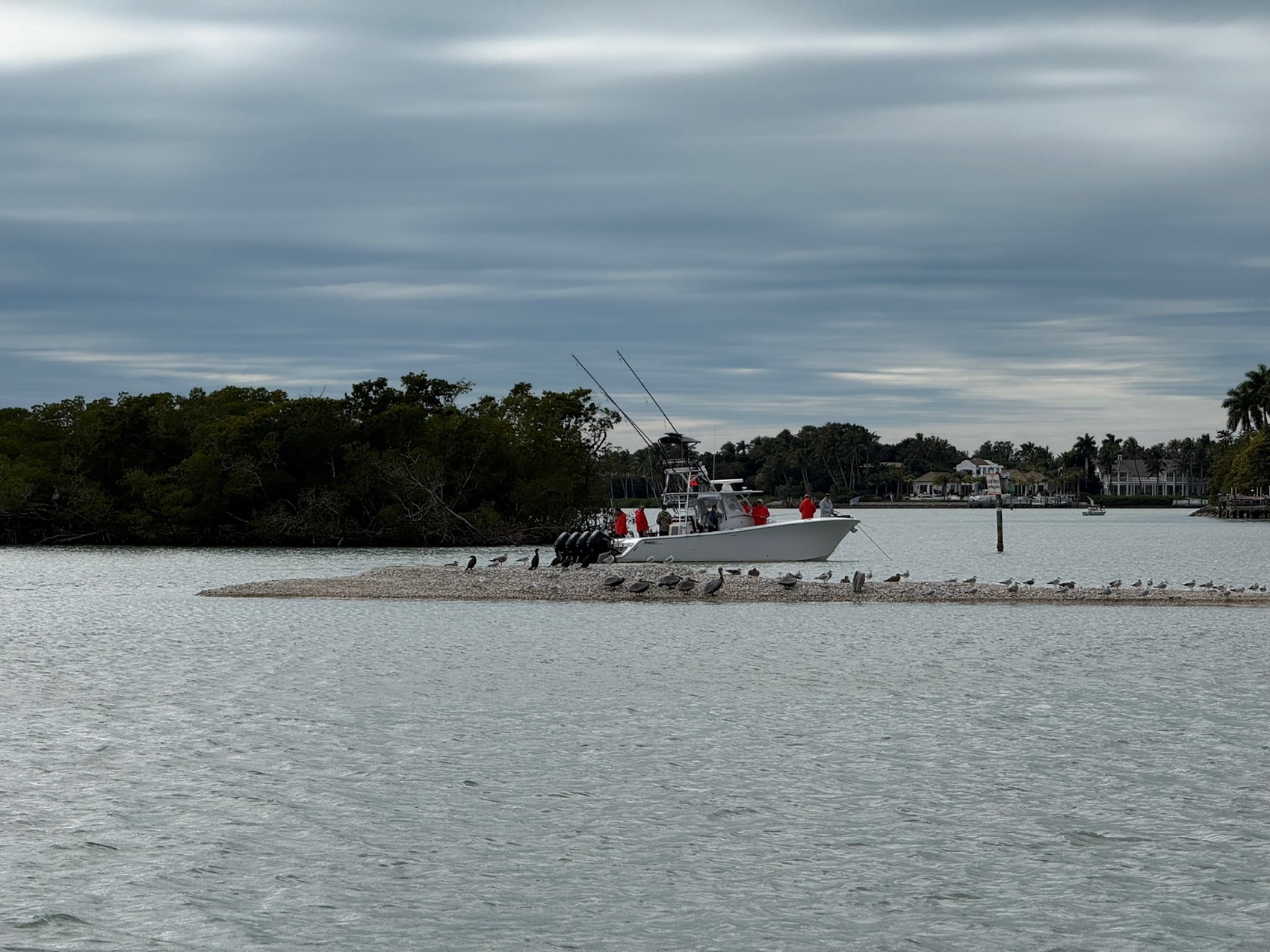
The same question comes up on almost every trip within minutes of a hookup: "what is it, what is it?" Long before the net comes out, one of us is already calling it from the wheel. A flash of silver with a dark stripe running down the side means snook. A coppery shoulder with a black spot near the tail means redfish. A fish that goes airborne and shakes its head like it is trying to throw the hook means tarpon before it ever fully clears the water — a habit built from the same species showing up along the same shorelines season after season.
Each species gets a different plan from us, not just a different name. Snook want to be cast tight to a shoreline right at the edge of a falling tide, where the current pushes bait past the mangrove roots they are holding against. Redfish tail up onto skinny, sunlit flats on a rising tide, especially with some wind at your back pushing water onto the grass. Trout scatter over deeper grass flats and reward a slow drift far more than an aggressive cast. We are constantly re-sorting which technique fits which fish before a single leader ever gets tied on.
Tarpon change the whole rhythm of a morning. Once rolling fish start working a pass on an incoming tide, conversation on the boat drops, rods come out of the holders, and everyone watches the surface for the next roll. Landing one here is catch-and-release only, and the rules around them shift by season, so we always fish that species inside whatever the current regulations allow rather than chasing a number. The fight itself, more than the fish in hand, is usually what guests remember longest from a day out with us.
Leader material matters more with these fish than most people expect walking onto the dock. A wind knot or a nick from an oyster shell can cost you a fish that took twenty minutes to find in the first place, so we retie far more often than a shore angler ever would bother to. We also treat a falling tide differently species to species: the same oyster bar holding redfish stacked tight against it on an outgoing tide can go quiet an hour later once the water drops below the structure they were using for cover.
None of this replaces actually standing at the rail, which is the whole point of pairing this species guide with real time on the water. Our fishing guides page goes deeper into the seasonal and tactical side of things, but the fastest way to learn snook from redfish at a glance is still to stand next to one of us on a fishing charter while we call it out loud, then watch the fight confirm it before the fish ever comes over the gunwale.