
🎣 At a glance
- Always released
- Tarpon, goliath grouper & many sharks
- Golden rule
- Wet your hands, never the gills, support the belly
- Air time
- As short as possible — think one quick photo
- Revive
- Hold boat-side facing the current until it kicks free
- Why
- It's the conservation ethic every local guide lives by
Why we release
This fishery is special because people protect it. Some of the most exciting fish out here — the rolling silver kings, the boulder-sized goliaths, the sharks that cruise the passes — are catch-and-release only or fully protected, so they go back no matter what. But our captains release plenty of keeper-legal fish too, because a healthy breeding fish put back today is what fills the flats next season. When you fish with us, releasing strong isn't a rule we tolerate; it's the whole point. A fish that swims off hard is a better trophy than one in a cooler.
It also keeps the action coming on every inshore charter we run. The grass flats, oyster bars and passes stay loaded with fish precisely because the people fishing them give back.
How to release a fish the right way
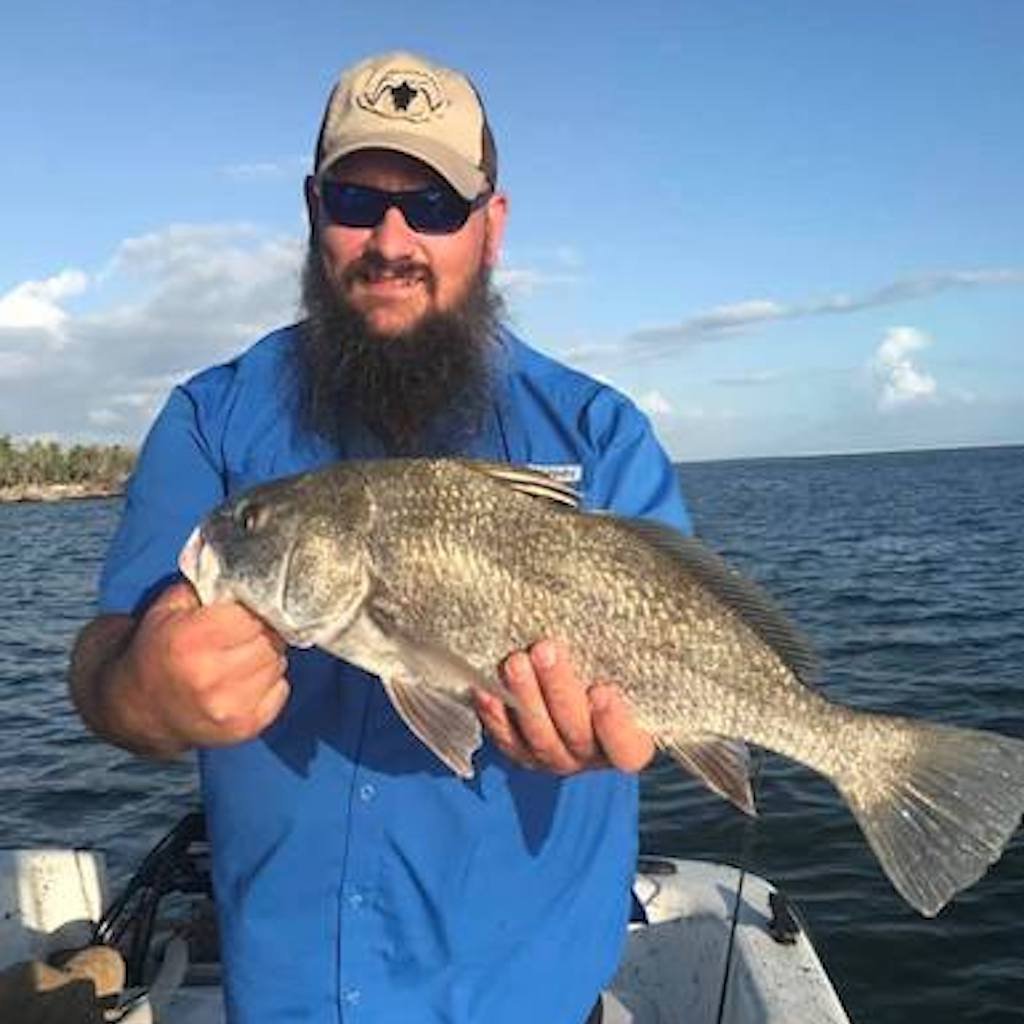
The difference between a fish that swims off and one that floats belly-up usually comes down to a few seconds and a few habits. Keep the fish in the water as much as you can, handle it with wet hands so you don't strip its protective slime, and never hold it by the gills or jaw alone — cradle the body and support the belly horizontally. Get the hook out fast (we pinch our barbs and carry good pliers), snap your photo while you're still leaning over the side, and then revive it.
| Do | Don't |
|---|---|
| Wet your hands first | Grab with dry hands or a towel |
| Support the belly, hold horizontal | Hang a big fish vertically by the jaw |
| One quick photo, then back in | Pass it around the boat for ten minutes |
| Revive until it kicks off on its own | Toss it back limp and motionless |
To revive, hold the fish boat-side facing into the current or gently move it forward so water flows over its gills. When it clamps down and powers out of your hands, you've done it right.
Which fish are catch-and-release
Tarpon are catch-and-release only here — you'll fight a hundred-pound silver king, get the leader to the boat, grab a photo and let it roll away. Goliath grouper, those car-tire-mouthed giants under the bridges and wrecks, are fully protected and never come out of the water. Many sharks around Naples and Marco are protected too, with strict handling rules. Sizes and seasons for everything else are regulated, and your captain knows the current rules and handles all the licensing — the vessel license covers every paying guest. Want to see how we build a trip around healthy fish? Our tarpon fishing guide shows the release game at its best.
From the Helm: the water-temperature call before we fight a summer tarpon off Caxambas Pass
Before we ever let a bait sit at Caxambas Pass, our captains glance at the temperature gauge on the console. Above roughly 84 degrees, a hard-fighting tarpon or snook builds up lactic acid fast, and a long fight can be harder on the fish than the hook ever was. That single number changes the whole plan for the morning — heavier leader, quicker pressure, and a captain who pushes you to horse the fish in rather than let it run its usual show. It’s a habit born from too many warm, still afternoons watching a green fish struggle boat-side longer than it should have.
We rig differently once release is the plan and not just the hope. Circle hooks, mashed nearly barbless, replace anything a fish could swallow deep, and a short length of heavy fluorocarbon lets us turn a redfish or snook away from the mangrove roots fast instead of playing tug-of-war for five minutes. A landing net stays clipped by the gunwale for anything with teeth or sharp gill plates, but for tarpon we skip the net entirely — a hand under the jaw and a hand at the tail, the fish still half in the water, is the grip our captains prefer.
Here’s what surprises most guests: sometimes the best photo is no photo at all. If a tarpon comes up green — still thrashing, gills flared, fighting the hook hard — we’ll ease it boat-side, back the hooks out in the water, and let it swim off without ever coming aboard. It isn’t the trophy shot people picture beforehand, but a fish released strong on the first try beats one revived for several minutes after a rushed photo. Our mates keep a phone ready for the fast in-water shot instead, since that’s the version everyone actually gets to keep.
On a falling tide, we time the release itself. A tired fish let go against a hard outgoing current at the pass has to fight the water just to breathe, so our captains often idle upcurrent a boat-length first, or simply wait out a slower stretch of the tide before letting go. It’s a small thing that costs us a minute and costs the fish nothing extra. The same patience applies inshore — a redfish revived over a calm grass flat swims off steadier than one dropped straight into a ripping pass current.
This habit runs through every trip we run, whether you’re chasing a single line-burning tarpon or working an inshore slam of snook, redfish and trout in one morning. It’s less about any single fish and more about the version of the sport we want to hand down — a fishery healthy enough that the same snook might tail up on the same mangrove point again next season. Book one of our fishing charters and you’ll notice the pace right away: less rushing to the cooler, more care spent making sure whatever comes over the rail swims off strong, however the tide happens to be running that particular day.
🧭 Captain’s call
- Our trigger
- Surface temp above roughly 84°F shortens every fight
- The swap
- Barbless circle hooks and heavy fluorocarbon once release is the plan
- The release
- Timed to the slack, not fought against a hard outgoing tide