
🎣 At a glance
- On the flats
- Blacktips & bonnetheads, often year-round
- Nearshore (summer)
- Bigger sharks as the water warms
- Rules
- Many species are protected, catch-and-release
- Handling
- Safe, quick, guided — the captain manages every fish
- Great for
- Kids & anyone wanting a hard, memorable fight
Sharks on the flats: blacktips & bonnetheads
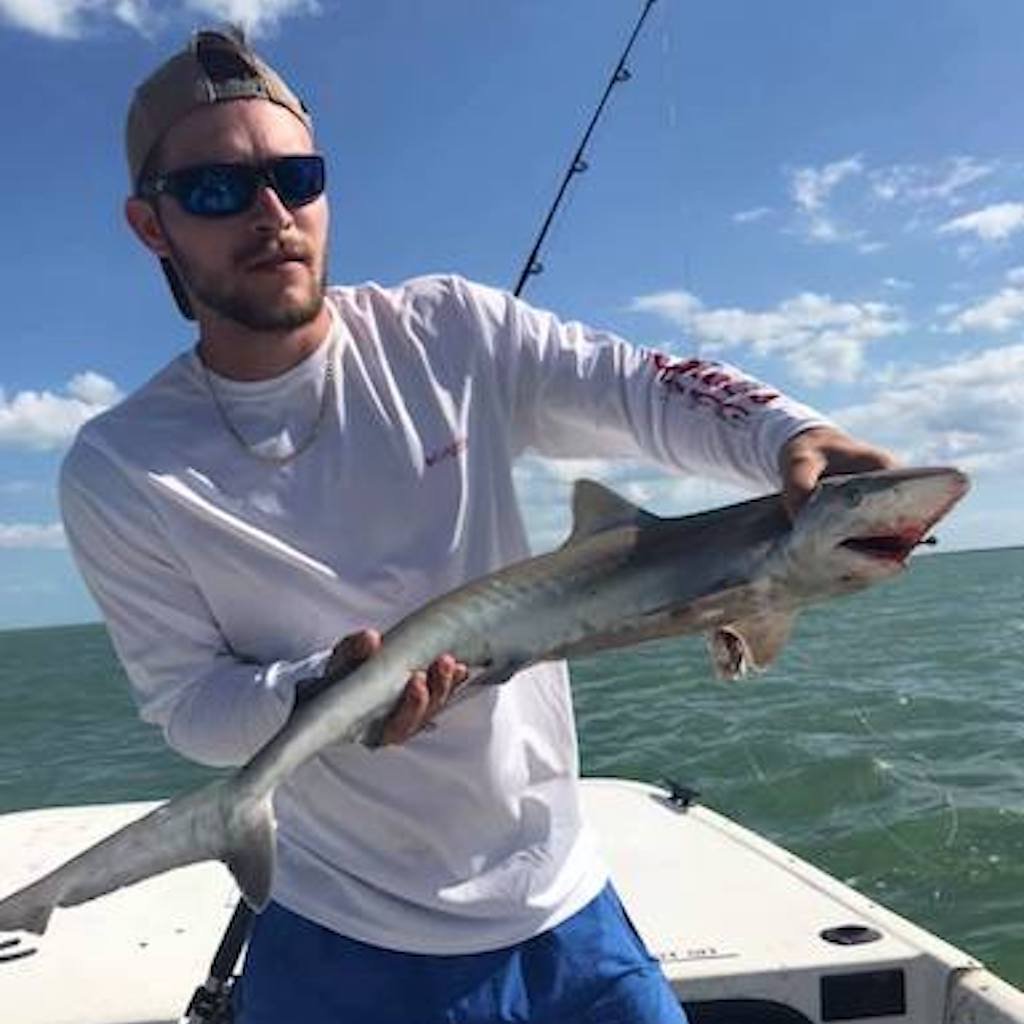
You don't have to run offshore to tangle with a shark here. Right on the backcountry flats, two species show up often. The blacktip is the speedster — a sleek, hard-charging shark that often goes airborne when hooked, cartwheeling across the surface. Pound for pound it's one of the most exciting fights inshore. The bonnethead is the smaller, shovel-nosed cousin of the hammerhead, common over the grass flats where it hunts crabs. Bonnetheads are a fantastic first shark for kids — manageable size, willing bite, and a face nobody forgets. Both prowl the same shallow water where you're chasing reds and trout, so a shark hookup is often a happy surprise mid-trip.
Bigger sharks nearshore in summer
When the Gulf warms up through the summer, the bigger players move within reach just off the beaches and passes. These nearshore sharks pull harder, run longer, and test your arms (and your drag) in ways the flats fish don't. It's a different intensity — a long, dogged battle that can have you sweating and grinning at once. Because these fish are powerful and many are protected, this is squarely guided territory; our inshore and nearshore trips put you on them with the right gear and a captain who's done it a thousand times.
| Shark | Where & when | The fight |
|---|---|---|
| Blacktip | Flats & nearshore, often year-round | Fast, jumps, acrobatic |
| Bonnethead | Grass flats, year-round | Manageable — great for kids |
| Larger nearshore sharks | Off beaches & passes in summer | Long, powerful, dogged |
Safe handling and the rules
Here's the honest, important part: many shark species in Florida are protected and must be released, and the rules differ species to species. That's exactly why you fish sharks with a guide. Your captain knows which sharks are legal to keep (most you'll release), how to handle each one without harming it or you, and how to get the hook out fast and send the fish back strong. Sharks are released boat-side or with the right tools — never dragged onto the deck for a long photo session. We keep it quick, safe and respectful of the fish. You'll still get the photo; you just won't stress the animal.
Why sharks make a great family catch
There's a reason "we caught a shark" is the story kids tell for months. The fight is real, the fish is genuinely cool, and a manageable bonnethead or modest blacktip is well within a child's ability with a captain coaching every step. It's a safe, supervised thrill — the captain handles the business end, your kid handles the reel and the bragging rights. If you've got curious kids, our family fishing charter is built for exactly this. Want a shark story of your own? Book a fishing charter and let's go find one.
From the Helm: Sharks Off Big Marco Pass: How Water Clarity Decides If We Run
We love the moment a shark shows up uninvited — a kid reeling in something else entirely, rod bent one way, and suddenly the whole rod doubles over the other direction as a blacktip cuts across the line of retrieve. It’s usually not the trip we planned; it’s the trip that finds us, and we’ve learned to let it happen rather than rush past it to get back to the target we came for.
Whether we go looking for sharks on purpose, though, depends a lot on water clarity and temperature that morning. Clean, green water with light wind puts us over the sandy potholes off Big Marco Pass, working scent into the current and watching for shapes cruising the edge of the drop-off. After a heavy rain, when runoff’s pushed murky, tannic water through the pass, we shift the whole plan toward the surf-adjacent bait schools instead, where clarity holds up better. A stiff wind out of the west also stacks up chop right at that pothole, so on those mornings we’ll work the calmer lee side of the same drop-off rather than fight the surface all day.
Who’s aboard shifts the approach too. A boat of kids and first-timers gets shorter waits and lighter tackle so there’s steady action even if it’s a smaller bonnethead instead of something bigger; anglers who specifically want a real tug get longer soaks on cut bait and more patience for a slower morning that might produce one memorable fish instead of five easy ones.
Boat position matters as much as the bait. We’ll circle up-current of a scent slick rather than anchor blind, watching the birds working overhead as much as the depth sounder, because gulls diving on bait often tip us off to a shark working the same school from below before we ever see a fin.
When the pothole’s quiet, plan B is running the scent slick out into the deeper edge of the channel rather than staying shallow and hoping. Deeper water holds temperature better through the day, and a slick that drifts along a channel edge covers far more ground than one sitting still over a static piece of bottom.
What actually surprises guests is how often the biggest fish of the day shows up while they’re reeling in something small and unrelated — the sudden weight, the drag singing, the boil right at the transom. It’s rarely the fish anyone was rigged for, which is exactly what makes it one of the best stories from a day on the water.
If you want a morning built around that kind of surprise, a fishing charter gives you the range to chase clean water wherever it’s sitting that day, the same read that shapes how we fish the nearshore structure a few miles further out.