
🎣 At a glance
- What it is
- Atlantic tarpon (Megalops atlanticus), the “silver king”
- Tell-tale
- Large chrome scales; upturned mouth; spectacular leaps
- Where
- Passes & the outer 10k Islands south of Marco Island
- When
- Peaks late spring through summer — conditions vary year to year
- Rule
- Strictly catch-and-release in Florida; your captain handles everything
How to identify a tarpon
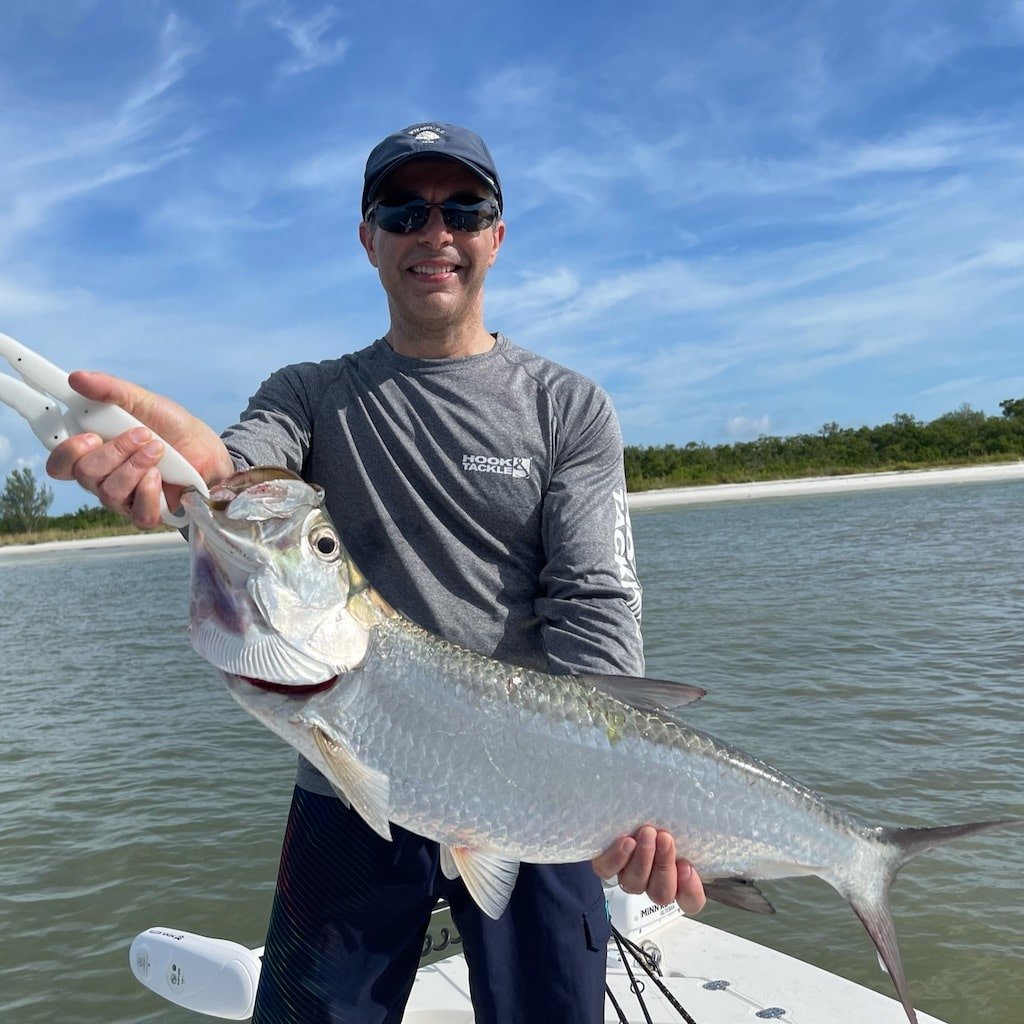
There's no mistaking a tarpon. They're big — adults often run well past a hundred pounds — and clad in oversized, mirror-bright scales that look like polished armor. The mouth is large and upturned, set in a bony, scoop-shaped jaw, and a single long ray trails off the back of the dorsal fin like a whip. In low light a rolling tarpon shows as a slow silver wheel breaking the surface as it gulps air, because tarpon can actually breathe air from a primitive lung.
They are living fossils, a species that has cruised these waters essentially unchanged for tens of millions of years. Seeing one roll beside the boat in the Ten Thousand Islands is a genuine goosebump moment.
Where the silver king shows up
Tarpon are travelers. Around our waters they stage along the deep passes and roll through the outer islands south of Marco, following bait and tide. The strong moving water of a pass on the right stage of tide is a classic place to find them rolling. Because their movements shift with season, weather and bait, we keep the detailed playbook in our tarpon fishing guide — that's where the seasonal timing and zones live.
What you need to know here: this is big-water, advanced fishing best run on a private charter dedicated to chasing them, not a casual add-on to a family flats trip.
What it takes to fight a tarpon
Tarpon are the heavyweight bout of inshore fishing. The strike is jarring, and the first jump comes seconds later — the fish goes airborne and tries to throw the hook, which is why anglers “bow to the king,” dropping the rod tip when it jumps so the line stays slack enough to hold. Then comes a long, punishing tug-of-war that can last well over an hour with a big fish. It is physical, thrilling, and unforgettable.
Every tarpon goes back. They're strictly catch-and-release in Florida and far too important — and too magnificent — to do otherwise. We fight them carefully, revive them boat-side, and watch them swim off strong. On a charter the vessel license covers everyone, so there's nothing for you to buy; just bring your arms.
| Fish | Signature move | Harvest |
|---|---|---|
| Tarpon | Clears the water in full leaps | Catch-and-release only |
| Snook | Blistering run for cover | Regulated & seasonal |
| Black drum | Dogged head-down pull | Regulated & seasonal |
Is tarpon fishing right for my group?
Be honest with yourself here. Tarpon fishing is a thrill, but it's demanding: long fights, big tackle, and no guarantee a fish eats on a given day. It's a poor fit for small kids or anyone wanting steady action. If your crew wants near-constant rod-bending, start with spotted seatrout or redfish instead. But if you want to test yourself against a true giant, book a dedicated fishing charter and let's go hunt the silver king.
From the Helm: how we rig for tarpon along Big Marco Pass on a push tide
When the spring wind lays down out of the southwest and the tide starts pushing hard into Big Marco Pass, our captains make the call before a single rod comes out of the rocket launcher on one of our fishing charters: this is a tarpon morning, not a snook morning. We’d rather run light and quiet once the flood’s really shoving into the pass — that stretch right before the current tops out — than fight a tide already sliding back out, because that’s when bait gets pinned against the pass mouth and the silver kings stack up to feed. If the wind swings onshore instead, we scrap the plan and slide inside to calmer water instead.
For tarpon we rig heavier than almost anything else we carry aboard: a 6/0 to 8/0 circle hook tied to fifty or sixty pound fluorocarbon, free-lined behind a small egg sinker so a live threadfin herring or scaled sardine can swim naturally down into the strike zone. We skip the popping cork here — tarpon sitting in a pass are usually looking down, not up, and a cork just telegraphs where the bait is sitting. Circle hooks aren’t optional for us; they find the corner of the jaw on their own and spare the fish the deep-hook damage a straight J-hook can cause.
You’ll usually feel it before you see it — a slow, deliberate thump-thump as the tarpon inhales the bait, nothing like a snook’s sharp strike. We tell you to let the rod load and the line come tight on its own before you ever lift; set the hook too early against a circle and you’ll pull it clean out of the fish’s mouth. Then the drag starts singing, the fish goes airborne close enough that you can watch water sheeting off its scales, and every other rod in the boat comes up out of the way.
Tarpon fishing here is strictly catch-and-release, and how we handle the fish at the boat matters as much as how we hook it. We keep big tarpon in the water, easing a hand under the jaw and idling the engine just enough to push fresh water over the gills while it settles. We won’t hoist a fish that size out over the gunwale for a photo, and we hold on until it kicks free under its own power, not a second before. A tired tarpon released too soon is a tarpon that may not make it, so we’d rather you wait the extra minute at the rail.
If that push tide never quite fires — slack water, a moon working against us, bait that just isn’t showing at the mouth — we’ll run south toward the outer islands instead and look for rolling fish, tarpon porpoising lazily near the surface on their own schedule rather than ambushing at a pinch point. It’s a slower game, more sight-fishing than staking out a pass, but it keeps the morning alive when the tide goes quiet. Some mornings we’ll tuck into the kind of ambush structure tripletail favor instead, just for a change of pace.