
🎣 At a glance
- Species
- Atlantic tarpon (Megalops atlanticus), the "silver king"
- Best window
- Summer months around the passes & Ten Thousand Islands backcountry
- Odds of hooking up
- Good on a guided summer charter when fish are rolling on a moving tide
- Odds of landing
- Lower — most jumps throw the hook, and that’s the nature of the fight
- Gear & skill needed
- None going in — circle hooks are required by law and your captain rigs, positions and coaches you
- Rule
- Catch-and-release only, every tarpon, every trip
So, How Hard Is It to Catch a Tarpon?
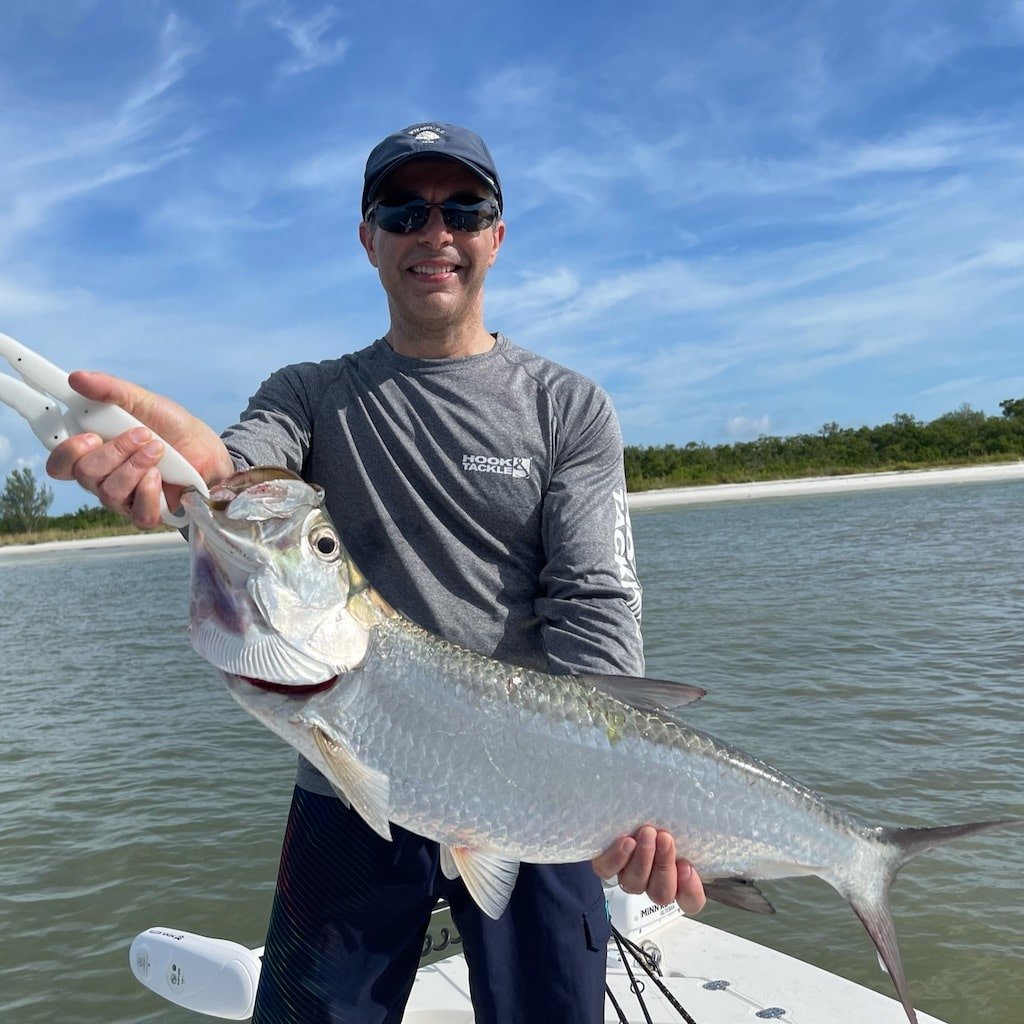
Ask five captains "how hard is it to catch a tarpon" and you’ll get five honest answers that all land in the same place: hooking one is very achievable, landing one is a different sport entirely. Around Naples, Marco Island and the Ten Thousand Islands, tarpon roll along the passes and backcountry channels all summer, and on the right tide our captains put beginners tight to fish they’ve never targeted before in their lives. That’s the good news. The harder truth is what happens in the next ten seconds — a tarpon’s whole design is built to make you lose it, and most anglers, first-timers and lifers alike, do.
This page exists because the other tarpon pages on this site — the tarpon species profile and our library of fishing guides — answer what a tarpon is and where to find one. Neither answers the question you’re actually asking before you book: can I, a person who has never fought a hundred-pound fish, actually catch one? The honest answer is yes to the hook-up, and it depends to the fight.
Hooking a Tarpon vs. Landing One
Here’s the mechanism, not just the folklore. A tarpon’s mouth is a hard, bony bucket built for swallowing baitfish whole, not for holding a hook deep the way a snook or redfish’s softer mouth does. Add in the fish’s signature move — launching completely clear of the water and shaking its head mid-air, a fighting style anglers call "greyhounding" — and you’ve got a fish that’s mechanically built to throw hooks. Most tarpon that get away do so in the first few jumps, and it happens to seasoned guides just as often as it happens to someone holding a rod for the first time. That’s not a knock on your technique. It’s the fish.
| Factor | Works in your favor | Works against you |
|---|---|---|
| Hook type | Circle hooks (required by law) tend to set in the corner of the jaw and hold better than old-style J-hooks | Even a good hook set can still pull free during a violent jump |
| Your technique | "Bowing" the rod toward the fish the instant it jumps, so the line stays slack in the air | Keeping the rod tip up and the line tight during a jump — the classic beginner reflex |
| Boat handling | Your captain chasing the fish to keep the angle and pressure in your favor | A long first run that puts you into another boat’s path or heavy structure |
| The fish itself | A tired, shorter fight after multiple jumps | Raw size — tarpon here regularly run well over 100 pounds |
The single biggest lever you control is what anglers call "bowing to the fish" — the instant a tarpon jumps, you drop the rod tip toward the water so the line goes slack instead of staying tight right when the fish is shaking hardest. Keep the rod up during a jump out of pure instinct, and you’ll feel the hook pop free almost every time. It’s a strange thing to teach your body to do — every reflex says lift the rod when a hundred-pound fish leaves the water in front of you — but it’s the one piece of technique that actually moves the odds in your favor, and your captain will be coaching you through it in real time.
The other mistakes we see are less about strength and more about instinct. New anglers tend to horse the fish — cranking hard and hauling the rod straight up — which is exactly backward the moment a tarpon jumps. Others stand up too fast or lock their knees and get pulled off balance by a strong first run. None of that is something you need to practice beforehand; show up ready to listen for the ten or fifteen seconds that matter most in each jump, and the rest of the fight takes care of itself.
What Your Captain Handles for You
Before your line ever hits the water, most of the hard part is already done. Your captain rigs the leader and circle hook required under Florida law for bait fishing, chooses live bait or a lure suited to that day’s tide, and idles the boat into position along Gordon Pass, Capri Pass or a rolling stretch of backcountry without spooking the fish. You don’t need your own fishing license either — a licensed charter’s vessel license covers every paying guest aboard. (If you’re curious about the license question in more detail, we cover it on the blog.) Your job, honestly, is smaller than most beginners expect: hold the rod, keep pressure on, and follow your captain’s cues when the fish jumps.
Most trips use stout spinning or conventional tackle matched to fish that can run well past a hundred pounds, with a leader tough enough to survive a bony jaw and rough scales. None of that gear is something you need to own or understand walking in. You’ll get a quick rundown on the drag setting and how to hold the rod before the first bait ever goes out, and after that, it’s mostly about feel and following instructions in the moment.
When and Where Beginners Get Their Shot
Tarpon show up around Naples, Marco Island and Goodland on a predictable calendar, even if the individual fish never are. Summer is the season locally — warm water and the right tide stages pull big schools through Gordon Pass, Big Marco Pass and Capri Pass, and into the backcountry channels of the Ten Thousand Islands, where you’ll often see them rolling on the surface to gulp air before you ever see a rod bend. Moving water matters more than the calendar date; our captains time trips around the tide, not just the month, chasing the stretches where tarpon are actively feeding rather than just passing through. For the specifics on exactly when to book, the seasonal tarpon guide breaks down the month-by-month window in more depth than we will here.
Moon phase plays a role too. New and full moons push stronger tidal flow through the passes, which tends to stage more bait — and more tarpon — in a smaller area for a shorter window. Your captain factors that into trip timing right along with the calendar, which is part of why a guided trip beats guessing on your own if landing a tarpon, or even just watching one roll boatside, is the goal.
Why Every Tarpon Goes Back — and Why That’s Part of the Story
Every tarpon you hook here goes back in the water, no exceptions. Florida treats tarpon as a catch-and-release fishery for practical purposes, and your captain handles the release the same careful way every time — keeping a big fish in the water, working the hook free quickly, and getting it swimming again before it’s ever fully boatside. For the full rundown on how and why we release everything we catch, our catch-and-release guide goes deeper into the practice across every species we target, not just tarpon.
Which brings us back to your actual odds. Most guests who book a summer fishing charter with us during a strong tarpon push get at least one jump — often several. Whether that fish stays pinned for the whole fight or throws the hook on jump number three, you’ll be talking about it on the ride home either way. The miss is part of the tradition, not a consolation prize.