
🎣 At a glance
- Pier catches
- Snook, sheepshead, Spanish mackerel, pompano, even goliath grouper
- Pier upside
- Free, walk-up, no boat needed, social
- Pier limit
- One fixed spot — you fish where the fish happen to be
- Charter upside
- Range, variety, structure, guide knowledge
- Best of both
- Pier for a casual cast, charter to truly target fish
What you can really catch off the pier
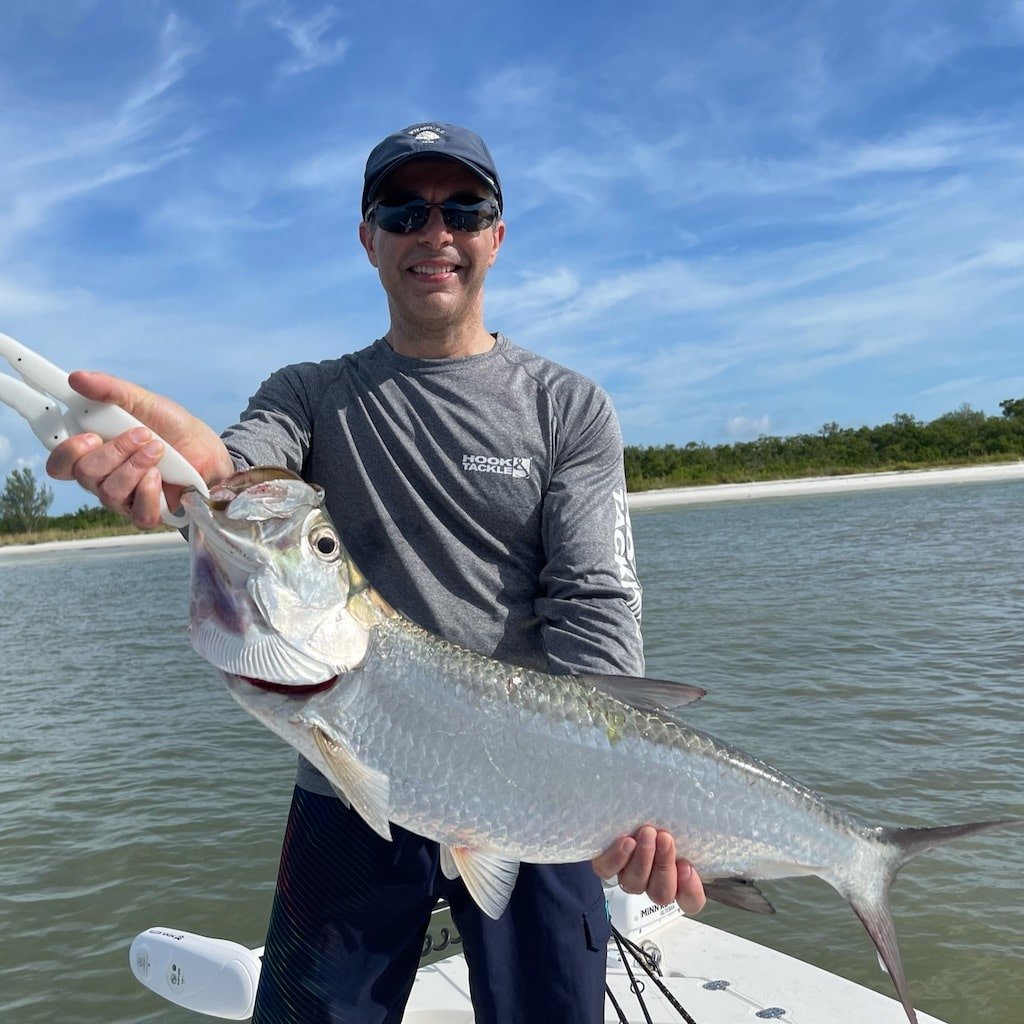
Don't underestimate the Naples Pier — it pokes out into the Gulf far enough to reach real fish. Snook stack along the pilings, especially around the lights at night and during the warmer months. Sheepshead nibble the barnacle-crusted posts in the cooler season, Spanish mackerel blitz through on bait schools, and pompano cruise the trough. The pier's wildest card is the goliath grouper — these giants lurk under the structure and occasionally inhale a bait, giving some lucky angler the fight (and the broken line) of their life. That's a protected, release-only fish, but hooking one is a story for years.
The catch, literally, is that you're stuck in one place. You fish where the pier happens to put you, and if the bite's not there today, you can't move to it.
| Naples Pier | Boat charter | |
|---|---|---|
| Cost | Free to fish | Paid trip |
| Access | Walk up, no boat | Captain & boat provided |
| Range | One fixed spot | Passes, flats, mangroves, nearshore |
| Variety | Whatever swims by | Target multiple species & zones |
| Guidance | You're on your own | Captain reads tide & spots |
| Best for | Casual, social casting | Serious, consistent fishing |
What a boat opens up
A boat changes the whole equation. Instead of waiting for fish to pass one piling, you go to them — Gordon Pass on a moving tide, the seagrass flats where trout feed, the mangrove edges where reds and snook ambush bait, and nearshore structure for snapper and mackerel. Your captain runs to whichever zone is firing that day and reads the tide to time it right. That's how you stitch together real variety and consistent action, the kind a fixed pier simply can't match. The full menu lives on our inshore fishing page.
The honest trade-offs
We're not here to talk you off the pier. If you want a free, low-key hour with a rod and a Gulf view, the pier is a beautiful way to spend it, and you might just hook something memorable. But if you're traveling to actually catch fish — to put bent rods in your kids' hands and fillets in the cooler — a boat is worth it. You trade a little money for range, variety and a guide who knows the water cold. New to all of it? A beginner charter is the easiest leap from pier-casual to boat-confident.
Which should you pick?
Pick the pier for a spontaneous, no-cost cast when you've got a free hour and a relaxed mood. Pick a charter when fishing is the point of the day, when you want options, or when you want a captain to do the reading so you can do the catching. Ready for the version with range? Book a fishing charter and we'll take you well past where the pier ends.
From the Helm: Past the Pier Pilings: Why We Run for Doctors Pass on a Falling Tide
Before we ever untie a line, we run through the same quick math every guide keeps in his head: which way the wind’s blowing, how the tide chart reads over the next six hours, and who’s actually standing on the deck that morning. A boat full of first-timers with two kids under ten gets a different plan than four anglers who’ve fished plenty of piers before and want structure they can’t reach on foot. That calculus, more than any species list, is what separates a morning working a fixed rail from one aboard one of our charters.
On a stout falling tide we’ll often skip past the crowd entirely and run for the mouth of Doctors Pass, where the outgoing current squeezes down to a seam not much wider than a driveway. That seam moves with the moon — an hour later it’s shifted thirty yards down the beach — and no fixed piling can chase it. We idle up-current, cut the engine, and hold our position right where the moving water folds into the still, watching the sounder light up along that exact seam.
If that seam’s gone quiet — too much boat traffic stacked on it, or the tide gone slack early — our plan B isn’t to run further offshore, it’s to tuck in behind the jetty rocks and work the eddy on the shadow side, downsizing the bait and slowing the retrieve to match water that’s barely moving at all. Sliding fifty yards behind the rocks costs us two minutes, not a relocated afternoon — that’s the whole case for fishing off a boat instead of a rail bolted to the sand.
What surprises most guests isn’t how far we run — plenty of our best water sits within sight of the pier’s pilings — it’s how often we’ll pull off a spot that looks perfect after five casts because the bait pattern or the sounder says otherwise. The patience in this game lives in the running and repositioning, not in anchoring down and waiting it out. Guests used to bank fishing expect us to grind a spot; instead we’re usually already idling toward the next seam before the last cast even lands.
We also keep half an eye on how the tide’s behaving elsewhere in the system, because a pass that’s dead here might be firing thirty minutes away on the exact same tide stage. That’s a big part of why we build trips around how the tide moves through this whole stretch of coast, not just what a single chart says for a single spot. Whichever window you book, the goal’s the same: put you where the current’s doing the work for you instead of the other way around.