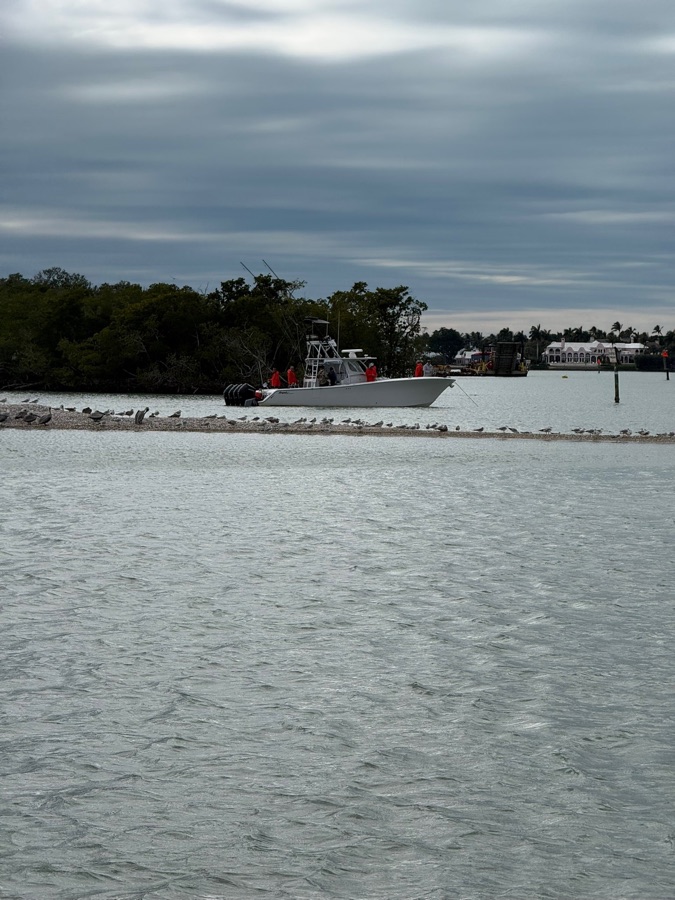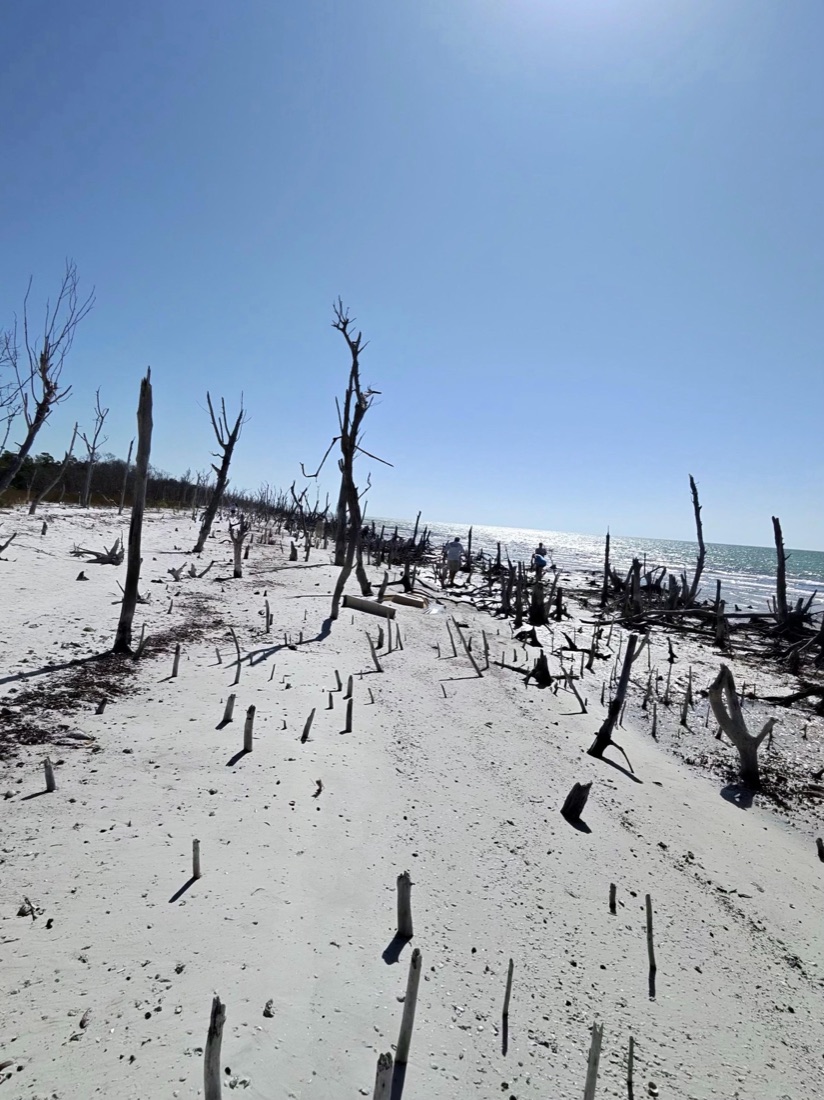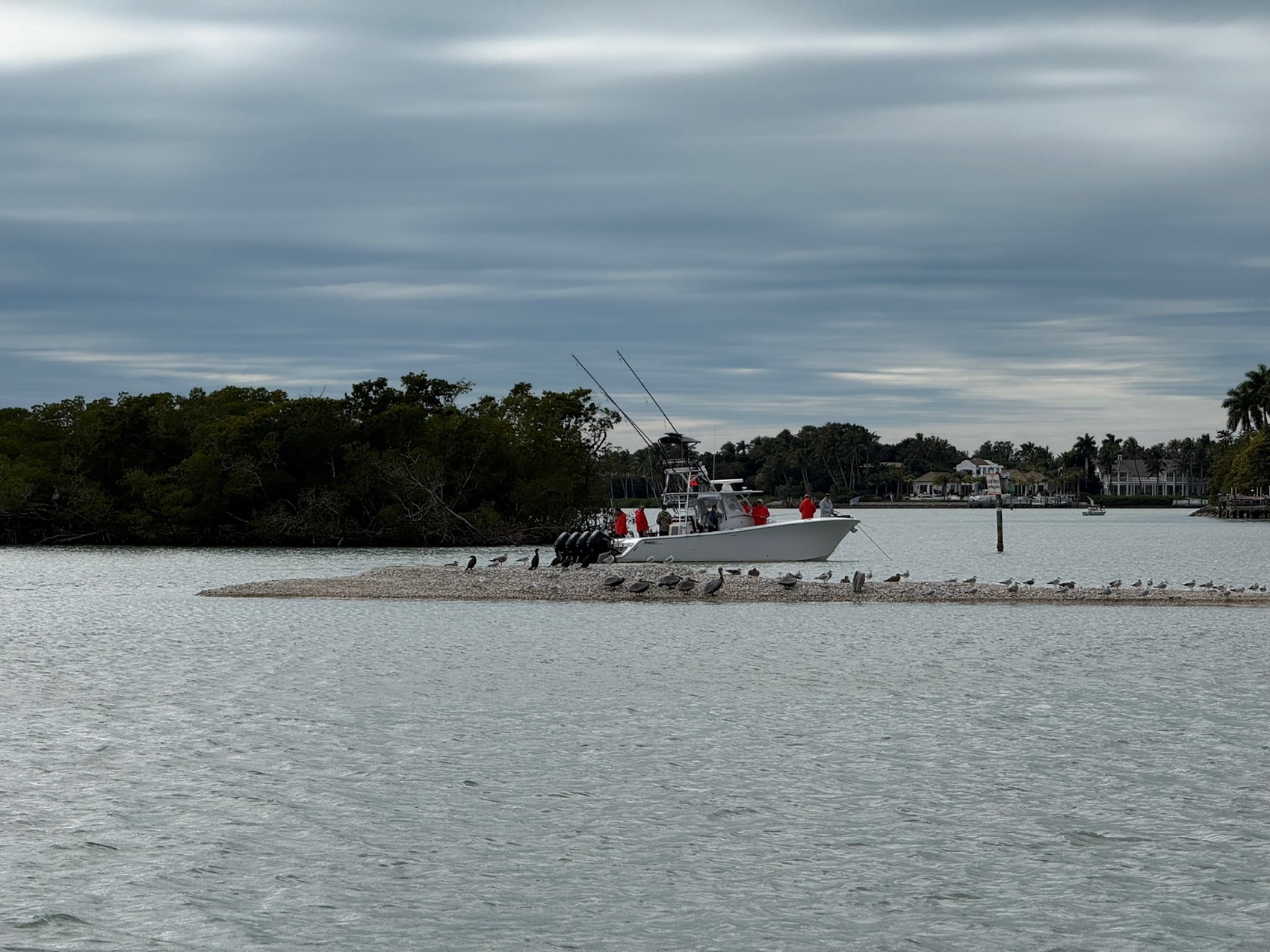
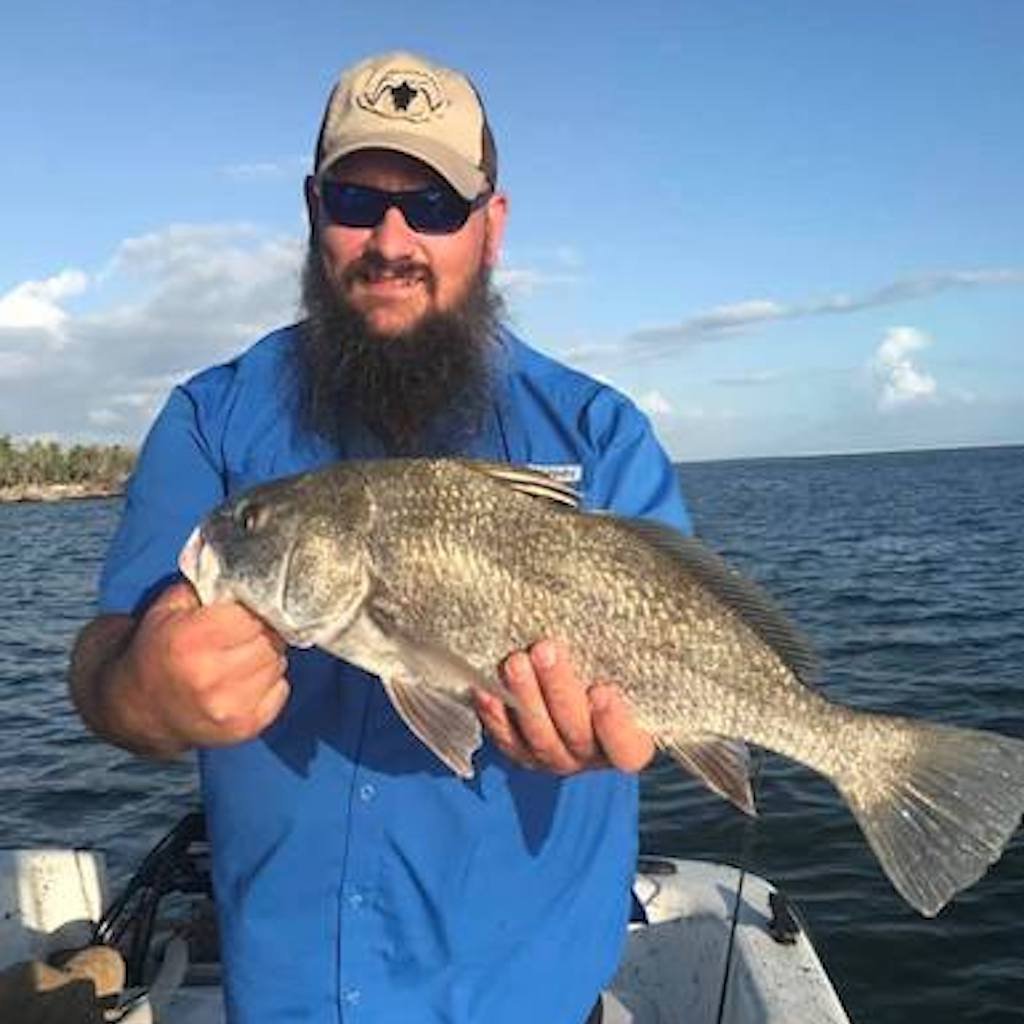
A falling tide changes everything about where we point the boat for inshore fish. As water drains off the grass flats along the edge of Rookery Bay, it pulls bait and shrimp out through sandy potholes — bare patches in the grass barely bigger than a car — and predators stack up waiting in them. Our captains watch the actual water color and current pull more than the tide chart’s clock time, since the same tide stage can hit those flats at a different hour depending on the wind that week.
We work those potholes by drifting rather than anchoring, letting the boat’s natural drift carry a bait or lure across each bare spot instead of staking out one piece of structure and waiting on it. A single pothole rarely holds fish for long once the tide’s moved past it, so covering three or four in a drift usually out-produces committing hard to the first one that looks promising.
Live shrimp free-lined or under a popping cork is our default here, but on a stronger falling tide we’ll switch to a soft plastic jig worked with a slow hop along the bottom, since the current alone provides enough action that an angler doesn’t have to work the rod as hard. The switch is about matching effort to what the water’s already doing for you, not about one bait outfishing the other.
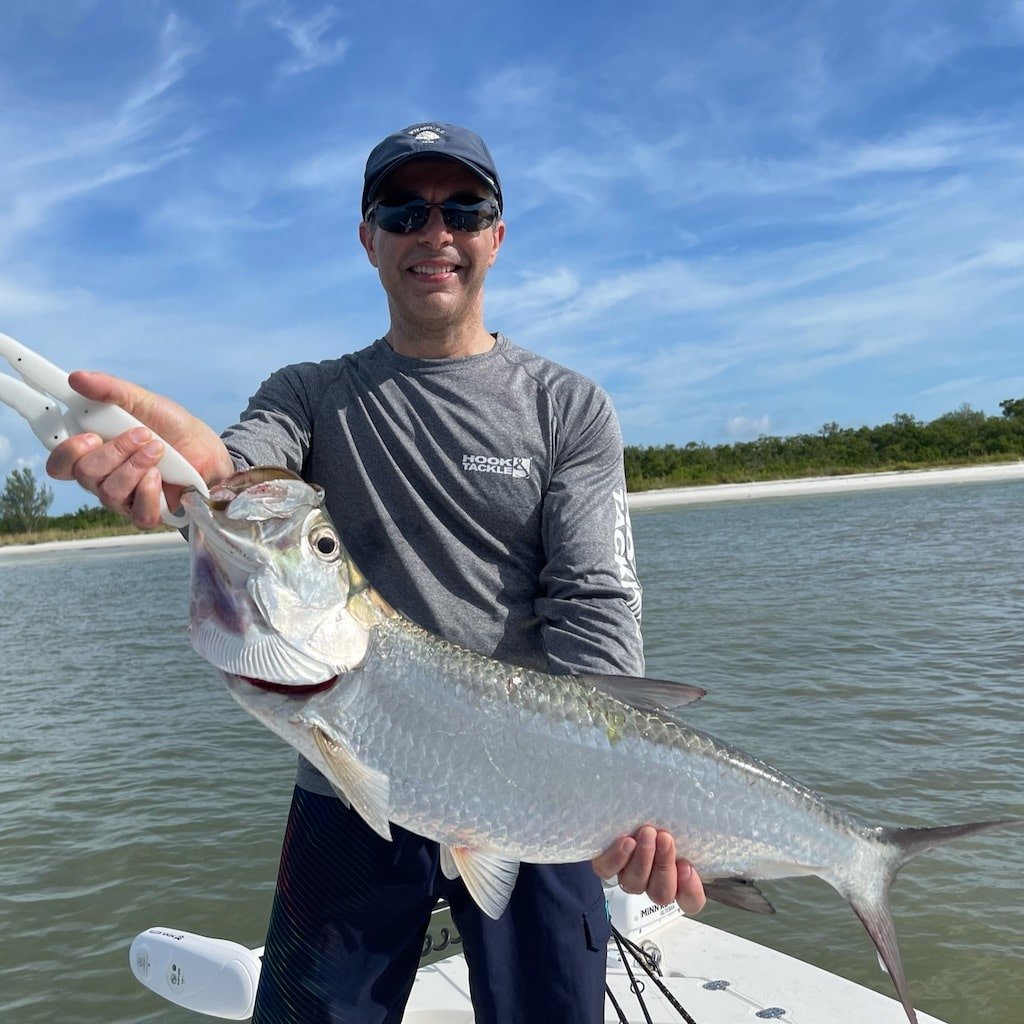
The bite we’re actually waiting for is subtle — a soft tap-tap through the line rather than a hard strike, because snook and trout often mouth a shrimp before committing to it in skinnier water. Setting the hook too early on that first tap usually pulls the bait away before the fish has it; we coach guests to feel for the second, harder pull instead, and most people only need to feel it explained once before their hands know the difference.
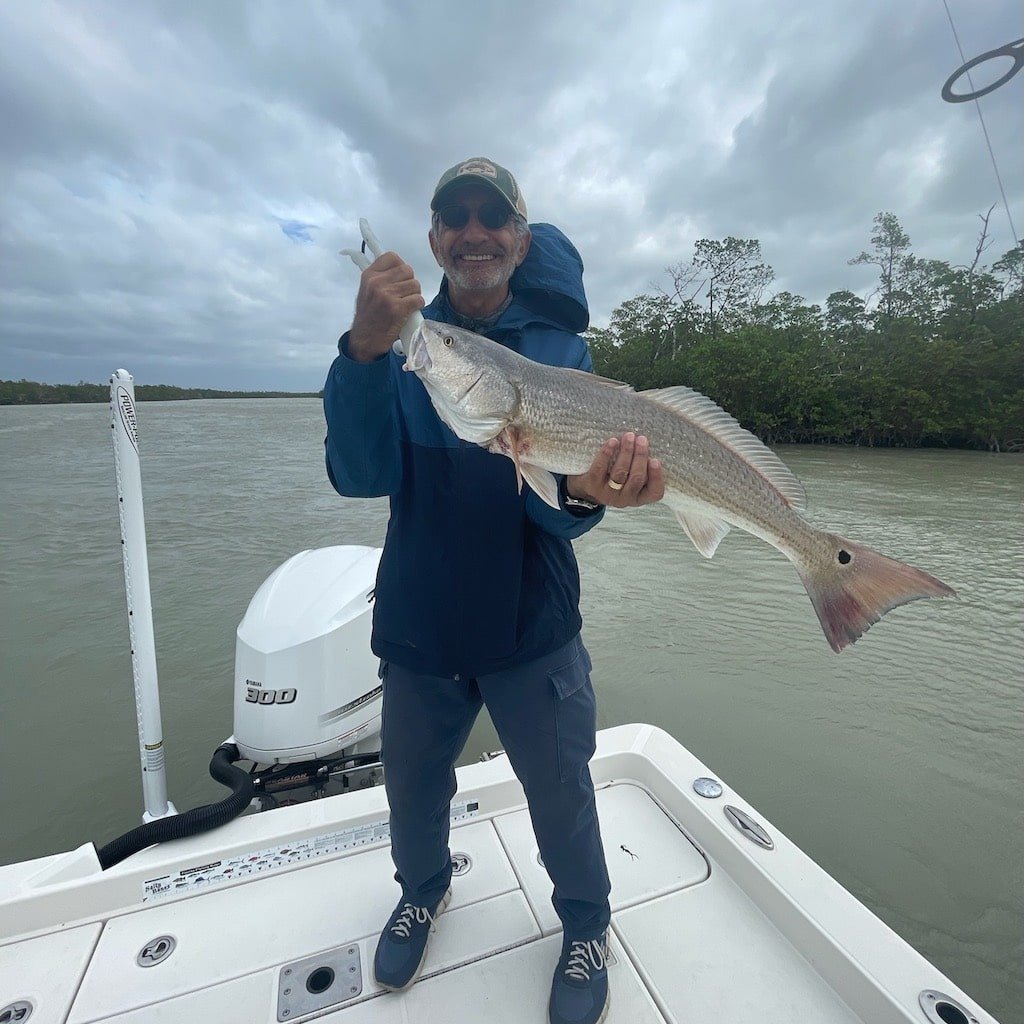
When the potholes along Rookery Bay’s edge go quiet, we’ll shift the drift toward the nearby oyster bars instead, since falling water pulls the same bait past hard structure just as reliably as it does across open sand. Snook and redfish stay catch-and-release here under seasonal rules, so whatever structure produces, what goes in the cooler is only ever the legally keepable trout or mangrove snapper pulled from that day’s mixed bag.
Guests curious about the wading-bird and osprey activity that tends to stack up over the same falling tide can find the fuller picture in our wildlife guide — the same current pulling bait past our potholes is usually what’s pulling birds down onto the flats around us. It’s one more reason we watch the whole flat, not just the rod tip.