
🌊 At a glance
- What it is
- Karenia brevis, a naturally occurring algae bloom
- How often
- Timing varies bloom to bloom; late summer into winter is common in SW Florida
- Patchy or Gulf-wide
- Patchy — one pass can be affected while another stays clear
- Captain's move
- Run the Ten Thousand Islands maze to find clean water
- Eating your catch
- Skip anything from visibly affected water; healthy fish from clean water are considered safe when cleaned properly
- Charter impact
- Rarely cancels a trip — usually just changes the game plan
Does Red Tide Affect Fishing Here?
Yes, red tide can affect fishing around Naples, Marco Island and Goodland — but not the way most people picture it from the news. We've got a full breakdown of what red tide actually is, where it comes from and how long a typical bloom lasts over on our Naples & Marco red tide explainer, so we won't repeat the science here. What matters for your fishing charter is simpler: a bloom can discolor a stretch of beach, thin out the bite in one specific spot, or push certain species to relocate — but it almost never shuts down the entire Ten Thousand Islands at once.
Your captain isn't guessing at any of this. On any morning a trip is on the books during bloom season, we check the same water-quality data the state publishes before deciding where to run — not whether to run. That distinction is the whole point of this page, and it's the honest difference between fishing from a fixed spot on shore and fishing from a boat that can go find better water.
Why Red Tide Is Patchy, Not Everywhere at Once
Red tide doesn't blanket the Gulf Coast evenly. Karenia brevis blooms ride wind and current, so concentrations can be thick off one beach and barely detectable two miles down the shoreline the same afternoon. A stretch of sand outside Marco Island might be dealing with dead bait and that telltale tickle in your throat while a backcountry creek off Goodland stays gin clear the same morning.
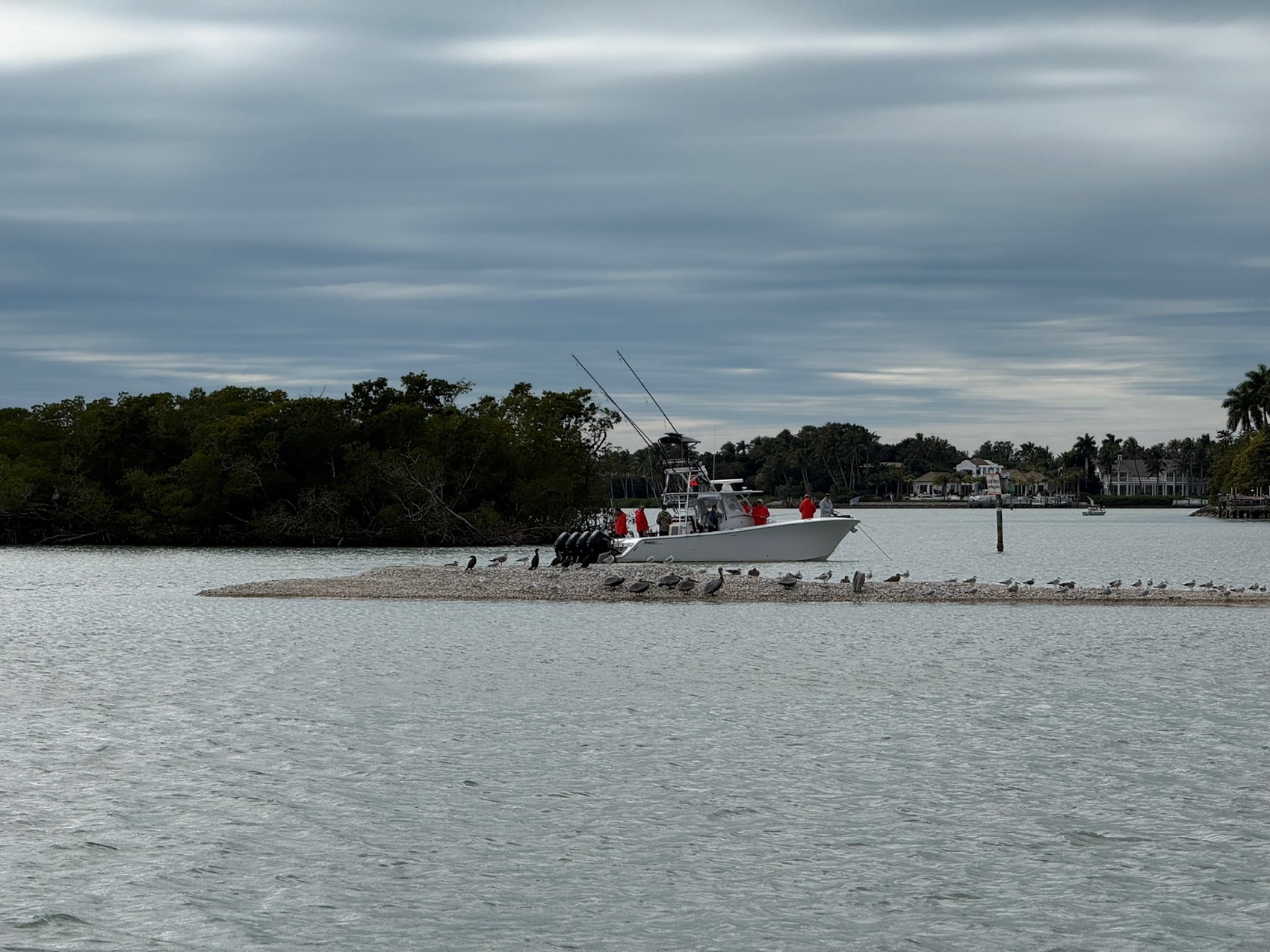
That patchiness is the whole reason a fishing charter out of Marco Island or Goodland has an advantage a surf or pier angler doesn't have. You're not locked to one shoreline for the day. Behind Marco Island and Naples sits the Ten Thousand Islands — a genuine maze of mangrove islands, passes and hidden bays stretching for miles toward Everglades City. If one pocket of water is affected, your captain has dozens of others to choose from, most of which a beach angler simply cannot reach on foot.
How Your Captain Finds Clean Water
Before your trip, your captain checks the state's red tide sampling data — the same cell-count reports Florida Fish and Wildlife publishes — alongside what the boat actually saw on the water the day before. That combination matters more than any single forecast. A report can say a bloom is present somewhere in the county and still miss that one particular pass is completely clear that morning.
From there it's local knowledge doing the real work. Our captains grew up running this water and know which mangrove creeks tend to stay clean when the Gulf side is affected, which passes flush hard on an outgoing tide, and which backcountry pockets the bait and the fish retreat to. It's the same instinct that pays off after a cold front slows the bite — read the conditions that day, then go where the fish actually are instead of where you assumed you'd be fishing when you booked three weeks ago.
Is It Safe to Eat Fish During a Red Tide?
This is the question we get the most, and we'll give you the honest, FWC-aligned answer instead of a marketing one. Don't harvest anything — fish, shellfish or bait — from water that's actively showing red tide symptoms: discolored water, dead fish, or that sharp respiratory tickle in your throat. Filter-feeding shellfish like clams and oysters concentrate the toxin and should never come from an affected area, full stop.
Finfish are a different story. Fillets from a healthy, normally-behaving fish caught in clean water and cleaned properly — skin and guts removed, since that's where toxins concentrate — are considered safe to eat under state guidance. Your captain makes that call on the water in real time. If a fish looks lethargic, swims oddly, or comes from a stretch we know is affected that day, it goes back over the side or it doesn't go in the cooler. We'd rather you release a fish than second-guess dinner. It's the same plain approach we take with whiting, pinfish and the other bottom-of-the-cooler regulars you'll likely reel in on a Ten Thousand Islands trip: if it's not right, it's not going home with you.
Will Your Charter Get Cancelled for Red Tide?
Almost never for red tide alone. In our years running fishing charters out of Marco Island, Goodland and Naples, a bloom has changed the game plan far more often than it's cancelled a trip outright. Expect your captain to swap a beach-adjacent spot for a backcountry pass, run a little farther into the islands, or start the morning somewhere different than the group before you — not to cancel on you.
The exception is genuinely poor respiratory conditions right at the dock, which is uncommon and something we'd tell you about before you ever climb aboard. If you're on the fence about booking during bloom season, just ask us. We watch this water every single day, and we'd rather tell you exactly what this week looks like than have you guess from a headline. For the bigger picture on blooms, tides and timing, browse more planning guides in the fishing guides hub, or just give us a call and ask about this week's water.
| Question | Surf or Pier Angler | Ten Thousand Islands Charter Guest |
|---|---|---|
| If this stretch of water is affected | Stuck fishing it, or driving to find another spot | Captain runs to a different pass, creek or bay |
| Respiratory irritation on shore | Can be significant right at the waterline | Boat can move away from the worst of it |
| Species still biting | Limited to whatever's local to that one beach | Wider range across mangrove creeks, passes & open bays |
| Trip likely cancelled? | Depends entirely on personal plans | Rarely — the plan shifts, the trip doesn't |