
🎣 At a glance
- What it is
- A maze of mangrove islands, oyster bars & creeks south of Marco
- Launch from
- Goodland / San Marco Marina
- Headline fish
- Snook & redfish, plus trout, sheepshead, juvenile tarpon
- What drives it
- Tide and structure — moving water on bars & points
- Vibe
- Sheltered, wild, scenic; fishable in rough Gulf weather
What the Ten Thousand Islands are
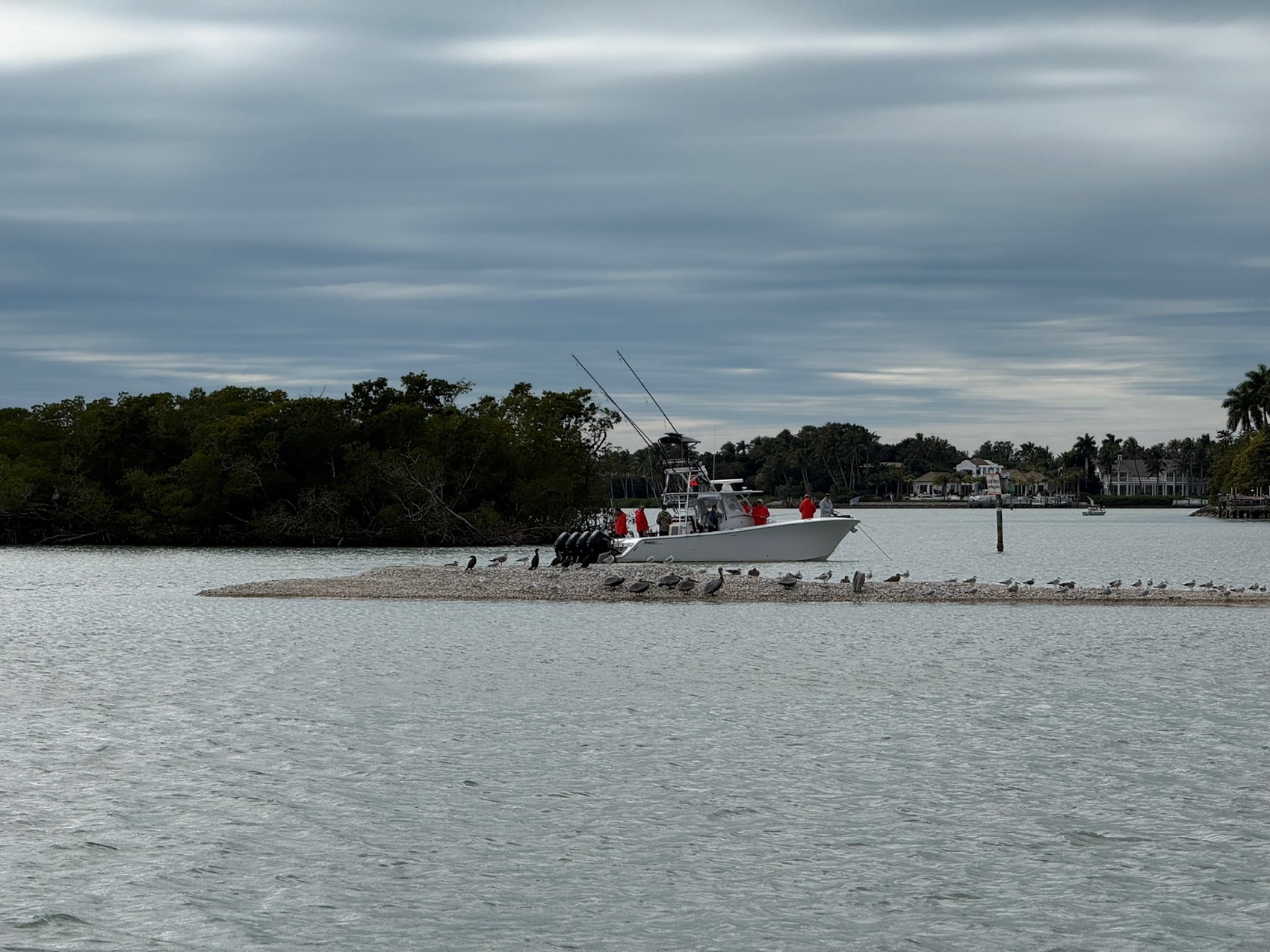
The Ten Thousand Islands aren't really ten thousand neat islands — they're a sprawling, shifting maze of mangrove keys, oyster bars, shell mounds and tidal creeks that fills the coast from Marco south toward the Everglades. Most of it sits inside protected reserve and refuge water, so it stays wild: no condos, no jet-ski crowds, just birds, dolphins and the occasional other skiff. We launch into it from Goodland and the San Marco Marina, then thread the creeks the tide just refilled. It's the kind of backcountry where the scenery alone is worth the trip — and then the fish bite.
What you'll catch back there
This is snook and redfish country, plain and simple. Snook stack up in the shade under the mangrove roots and ambush bait swept past on the current. Redfish nose along the oyster bars and tail in the shallows on a low tide. Mix in spotted seatrout over the deeper grass, sheepshead around the oyster and structure, and rolling juvenile tarpon in the back lakes, and you've got the makings of an inshore slam on a single tide. It's productive, varied fishing in water that feels a hundred miles from anywhere.
Reading tide and structure
Here's the secret to the backcountry: it's all about moving water meeting structure. A creek mouth draining a back bay on a falling tide funnels bait — and predators stack up to eat. An oyster bar that's exposed at dead low becomes a redfish highway as the water floods back over it. Points, bends and bars all create the current breaks where fish wait. Our captains time the runs to the tide, working the islands the water just refilled, and the difference between slack water and a hard-moving tide can be night and day. That tide-reading is the whole craft, and it's why a backcountry trip with a local who knows the maze beats wandering it blind.
| Structure | Best tide | Likely fish |
|---|---|---|
| Mangrove shoreline | Moving, shaded side | Snook |
| Oyster bar | Falling to low | Redfish, sheepshead |
| Creek mouth | Strong falling | Snook, trout, tarpon |
| Deeper grass / holes | Either, with flow | Trout, juvenile tarpon |
The Ten Thousand Islands reward local knowledge more than almost anywhere we fish. Let us run you back into the maze on a Naples and Marco fishing charter and read the tide for you — the fish, the birds and the solitude all come included.
From the Helm: Working the Ten Thousand Islands backcountry: choosing Gullivan Bay’s oyster bars over open water
Picking where to fish the Ten Thousand Islands starts with a question, not a location: how much wind is out there today, and how’s the water temperature trending? On a blustery morning we’ll tuck out of open Gullivan Bay and work its fringing oyster bars instead, where the mangrove line breaks the chop and bait stacks against structure. On a calmer, warmer day we might run wider, working points and bay mouths where fish range further to feed. The call gets made at the dock, before a single rod ever comes out of the rack.
Once we’re committed to a bar, we work it on the moving water — a bar sitting high and dry at dead low, or fully drowned at high tide, won’t produce much of anything. We want current breaking across the oyster rock hard enough to disorient bait, with redfish and snook stacked on the downcurrent side waiting for an easy meal. Our captains idle up the current side first and let the trolling motor do the quiet work, easing within casting range instead of running the outboard straight at fish that are already keyed up and jumpy.
If a bar goes quiet — and even a good one can, once the moving water shuts off — we don’t sit and wait it out. We’ll pick up and run into Coon Key Pass instead, working the creek mouths where fresh water dumps out of the mangroves as the ebb drains the backcountry down toward its skinniest water of the day. It’s a different bite entirely, more about precision casts tight to the bank than working open structure, and it often salvages a morning that started slow.
What surprises most guests back there is how tight the fishing really is. You’re not casting to open water; you’re dropping a lure inches off a mangrove root or the exact seam where two currents meet, sometimes with branches close enough to brush the rod tip. Missing that seam by a foot can mean nothing all morning, while hitting it dead-on can turn into fish after fish. It rewards patience and a good arm more than horsepower.
Rod choice changes back there too, more than most guests expect. In the open bay we’ll hand out a longer spinning outfit for distance, but the moment we duck into a tight mangrove creek we’ll swap to a shorter rod with more backbone, since long casts do nothing when a fish is holding six feet off the transom. Heavier braided line helps as well — there’s no room to let a redfish run toward a mangrove root and cut the leader, so we set the drag tighter and lean on horsepower over finesse the second the water gets skinny.
That precision, more than anything, is why we love running this backcountry with people who’ve never fished skinny water before — watching a first correct cast connect is half the fun for us too. If you want to see how this same backcountry fishes after a cold front rolls through, our winter bite guide walks through that pattern, and our fishing charters page can get a backcountry morning on your calendar.