
🎣 At a glance
- What really changes
- Water temperature, not just the air temperature
- Who goes quiet
- Snook & trout slow way down and hunker in deep, stable water
- Who keeps eating
- Sheepshead, black drum & redfish stay active through the cold
- Best move
- Fish deep holes & residential canals, slow the retrieve, downsize bait
- Best timing
- The day before the front often out-fishes the days after it
- Recovery
- Bite typically firms back up within a few sunny days
Why fish go quiet after a cold front
Every fish in the Ten Thousand Islands is cold-blooded, so when a front drops the water temperature several degrees overnight, its whole metabolism slows down with it. Snook feel it first and worst — they are a subtropical species living near the northern edge of their range here around Marco Island and Naples, and a hard enough freeze has historically pushed local snook populations into real cold stress. After a front, snook stack up in the deepest, most stable water they can find and barely move, which is why anglers fishing the same dock or mangrove shoreline that was loaded the week before can suddenly come up empty. The fish did not leave. They went quiet, dropped into deeper holes, and stopped chasing anything that costs them energy.
Your captain reads this the same way every winter: check the water temperature, not just the air temperature, before deciding where to start the day. A brisk overnight air-temp drop that only knocks the water down a couple of degrees is a non-event. A slow-moving front that drags cold air over the flats for two straight nights and drops the water several more degrees is the one that shuts things down. That distinction, more than anything else in the forecast, decides where we point the boat.
The day before: the pre-front feeding frenzy
The single best window around a cold front is not after it — it is the day before it arrives. Falling barometric pressure seems to trigger a last feeding push across nearly every species in the backcountry, from snook and redfish to trout and jacks. If the schedule and conditions line up, our captains will run that window hard, because it is often the most consistent bite of the whole cold snap. Bait gets pushed tight against mangrove points, predators pin it there, and for an hour or two before the wind and rain show up, the water can feel like it is boiling.
That pre-front bite is also the reason a trip booked the same week as a forecasted front is not automatically a wash. We would rather run you out ahead of the front and put you on the frenzy than have you cancel and miss it entirely.
Who keeps biting when the water crashes
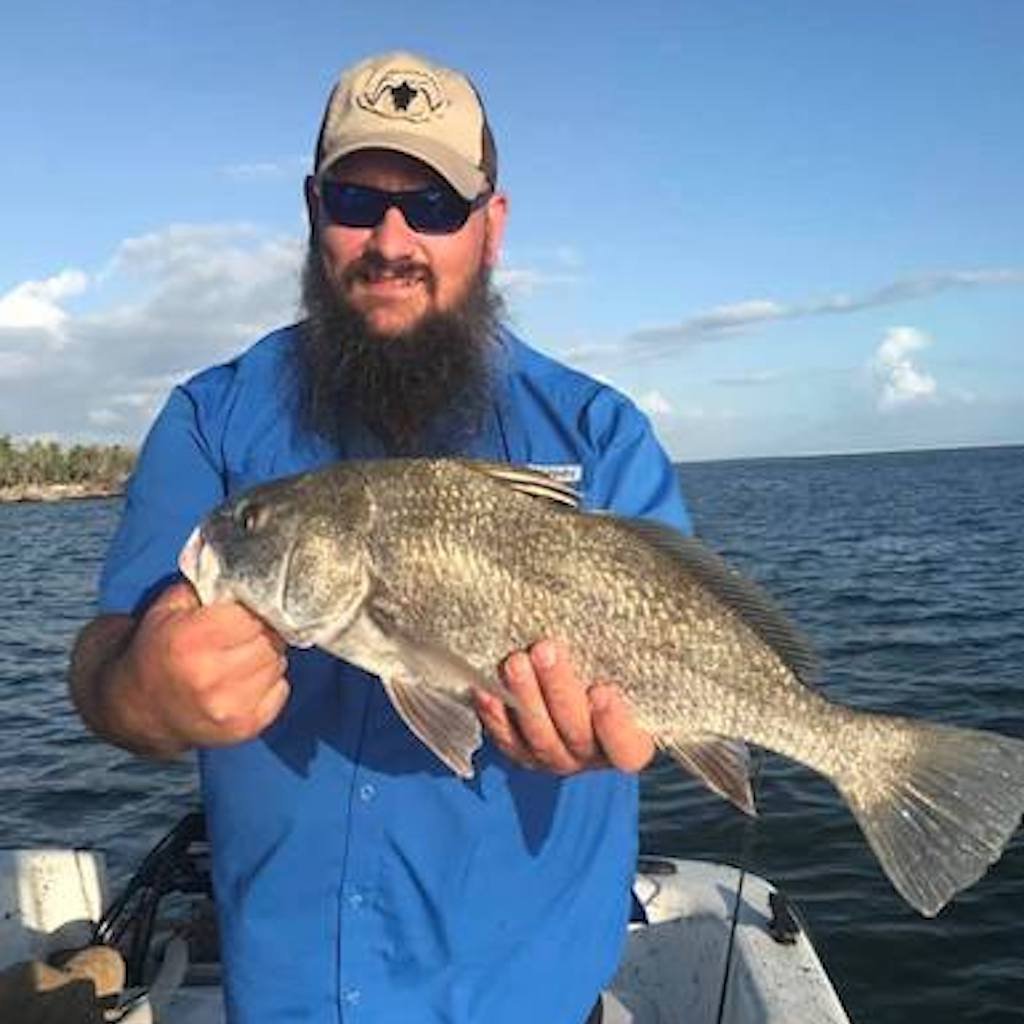
Not every species reads the thermometer the same way. Snook and, to a lesser extent, spotted seatrout are the ones that go quiet fastest after a real cold snap. Tarpon tend to slide out of the shallow backcountry and stage in deeper, warmer water until things settle — and remember, tarpon here are catch-and-release only regardless of the season. Sheepshead, on the other hand, practically wait for cold water. They are a true winter species in Southwest Florida, and a hard front barely slows the bite we cover in our winter sheepshead run guide. Black drum and redfish sit in between: both tolerate the cold better than snook and will keep eating around structure, though they may feed less aggressively and hold tighter to cover for a few days.
This is exactly why we do not treat a cold-front forecast as a reason to scrap the trip. It is a reason to change targets. If you booked expecting a snook-heavy day, your captain will pivot toward the species that actually want to eat in that water temperature, and you will still go home with fish in the cooler and stories to tell. For a broader read on what is realistically biting in a given week of winter, our winter fishing report for Naples lays out the seasonal picture a cold front simply shifts for a few days.
| Species | After a hard cold front | Where to find them |
|---|---|---|
| Snook | Goes quiet, deep & sluggish | Deep holes, residential canals, warm backwaters |
| Redfish | Slows some, stays catchable | Oyster bars, mangrove edges, sunny flats |
| Black drum | Keeps feeding through the cold | Deep passes, dock pilings, channel edges |
| Sheepshead | Barely fazed — a true winter fish | Dock pilings, bridge fenders, oyster bars |
| Spotted seatrout | Slows down, groups tighter | Deep grass flats & potholes |
| Tarpon | Mostly stages out of the shallows | Deeper passes; catch-and-release only |
Where captains go: deep holes & warm canals
Water holds heat far better than air, and depth is the difference-maker. The shallow flats that were red-hot before the front lose their warmth fast once the sun goes down and stay cold well into the next afternoon. Deeper holes in the backcountry channels, the passes, and the residential canals threaded through Marco Island and Isles of Capri hold their warmth overnight, and that is where the fish that can move will go. Dark mud bottom in a canal also soaks up afternoon sun faster than a bright sand flat, which is part of why an unglamorous residential canal can quietly out-fish a picture-postcard flat for a few days after a front.
Your captain also slows everything down to match the fish. Retrieves get slower, jigs get lighter, and live bait fished still on the bottom usually beats anything worked fast through the water column. Even bait behaves differently in the cold — pinfish and striped mullet both get sluggish and harder to net after a hard front, so we may switch up the bait plan along with the location. None of this is guesswork; it is the same seasonal playbook Marco Island captains have leaned on for years, adjusted in real time to whatever the thermometer says that morning.
How long until the bite bounces back
Most cold fronts here are not multi-week events. Once the wind lays down and the sun gets a few clear days to work on the water, temperatures usually climb back into a comfortable range within a matter of days, and the bite firms back up close to where it left off. Shallow, dark-bottom flats warm first on sunny afternoons, so an afternoon trip in the days right after a front can outperform an early morning trip, which is the opposite of the usual summer pattern. Tides matter here too — a strong incoming tide pushing warmer Gulf water onto a flat that has been baking in the sun all day can turn the bite back on almost overnight. If you want to understand how tide movement and water clarity stack on top of temperature, our guide to reading tides inshore in Southwest Florida walks through exactly that.
The bottom line for anyone eyeing a charter around a cold snap: a front changes the plan, it does not cancel the trip. Book a fishing charter knowing your captain will read the water temperature, the tide and the forecast together and put you on whichever species is actually feeding that day.