
🎣 At a glance
- What
- A cool-season staging event where spawning sheepshead gather tight on hard structure
- When
- Roughly December through March, often thickest right after a hard winter cold front
- Where
- Dock pilings, bridge fenders & nearshore rockpiles around Marco Island & Goodland
- Best bait
- Live fiddler crabs, fresh shrimp & scraped barnacles on small hooks
- The bite
- A quick tap-tap — famous for stealing bait from anglers who set too late
- Rule
- Seasons, sizes & bag limits are regulated and can change — your captain confirms what’s legal that day
What Is the Winter Sheepshead Run?
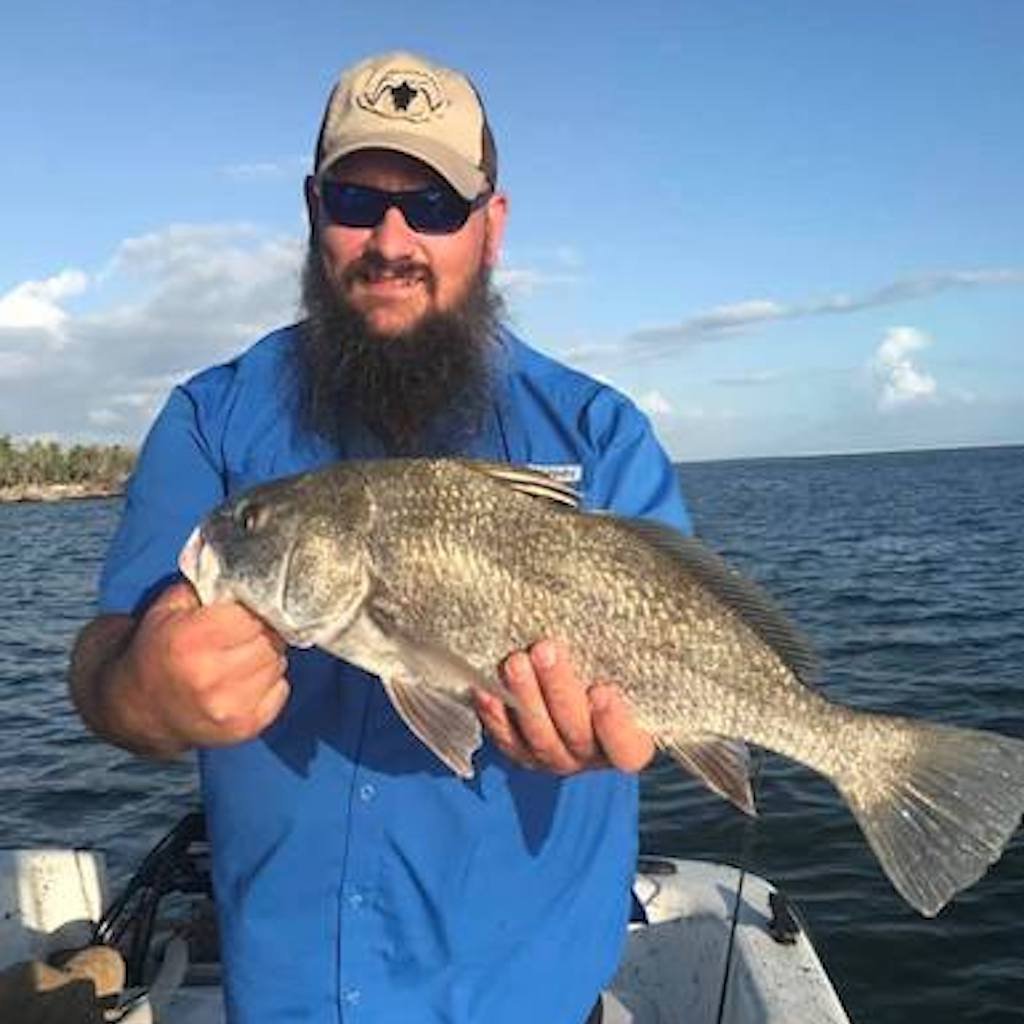
Every fall, once the water off Marco Island and Goodland slides out of the mid-80s and into the 70s, sheepshead start behaving differently. Instead of scattering thin over grass flats and scattered rubble the way they do all summer, the biggest fish in the population — the true spawners — pull tight onto hard structure and stay there. That shift is the winter sheepshead run: a predictable, cool-season staging event where convict fish gather in numbers, in one place, for weeks at a time. It isn’t a migration in the striped-bass sense — these fish live in our waters year-round — it’s more like a family reunion on the same dock pilings, year after year, once the water finally cools enough to trigger it.
For anglers, that behavior change is everything. A sheepshead scattered across an acre of flat grass is a needle in a haystack; a sheepshead stacked three-deep against a piling with forty of its closest relatives is a target. That’s why our captains treat the run as one of the most reliable stretches of the entire cool season — if you want a shot at a genuinely big, regulated keeper rather than a scrappy juvenile, this is the window. For the full rundown on identifying the fish itself — those unmistakable human-like teeth and prison-stripe bars — see our sheepshead ID and technique guide; this page is about the seasonal event, not the species.
When Does the Run Happen Around Marco & Goodland?
There’s no single opening day. The run builds gradually as the Gulf cools, typically starting to show in December, building through January and February, and often holding strong into March before the fish scatter back out to spawn and disperse. The sharpest triggers are winter cold fronts — the kind that drop water temps fast and send snook and tarpon looking for warmer holes. Sheepshead do the opposite: a hard front often pushes more fish onto structure, not fewer, and the days right after a front passes and the wind lays down are frequently when our captains find the thickest schools. If you’re planning a winter trip and want the bigger picture on what else is biting during these same cold snaps, our winter fishing guide covers the whole cool-season lineup, sheepshead included.
Because the window is broad rather than a single magic week, this isn’t a fish you have to time down to the day the way you might chase a specific spawn elsewhere. Any charter booked between December and March has a real shot at running into staged fish, and the specific spot our captains pick that morning usually matters more than the exact date on the calendar.
Where to Fish the Run: Docks, Bridges & Nearshore Structure
Sheepshead are creatures of hard edges, and during the run that preference gets extreme. Dock pilings around Goodland and the back bays hold fish tight against the barnacle-crusted wood, right where current sweeps food past at eye level. Bridge fenders and pilings do the same job on a bigger scale — the fenders around Marco’s bridges create current breaks that concentrate bait and, in turn, concentrate sheepshead. Nearshore rockpiles, old rubble and artificial structure add a third option, especially for guests who want to fish somewhere a little less crowded than a public dock. Seawalls and residential canals round it out, particularly on falling tides that pull crustaceans off the rock and concrete. Our bridge-and-dock fishing guide goes deeper on reading this kind of structure if you want the full playbook before your trip.
What all four of these spots share is vertical structure sitting in moving water — current is what stacks the bait that stacks the fish. Your captain will usually check two or three spots in a morning rather than anchoring on the first piling, since sheepshead schools can thin out fast once a spot gets fished hard. That mobility is part of why a guided trip pays off during the run: knowing which dock had fish yesterday, and which one the tide favors today, is the difference between a slow morning and a cooler with a few keepers in it.
| Structure | Best Tide | Typical Depth | Why Sheepshead Stack There |
|---|---|---|---|
| Dock Pilings | Falling tide | 3–8 ft | Current sweeps barnacles & bait past at fish level |
| Bridge Fenders & Pilings | Any moving tide | 6–15 ft | Current breaks concentrate bait in tight seams |
| Nearshore Rockpiles | Slack to light current | 8–20 ft | Hard rubble hosts the crustaceans sheepshead root out |
| Seawalls & Canals | Falling tide | 4–10 ft | Barnacles & small crabs wash off the wall as water drops |
Rigging & Bait for the Winter Bite
Sheepshead earned the nickname “convict fish” for their black-and-white prison stripes, but ask any angler who’s fished them and they’ll tell you the real reason for the reputation is the bite. Those human-like front teeth are built to crush barnacles, crabs and shrimp, and the same dexterity that lets them crack a shell also lets them strip a hook clean before you ever feel it load up. Light spinning tackle, a small hook — think size 1 to 1/0 — and just enough weight to hold near the structure without dragging out of the strike zone is the standard winter setup on our boats. Live fiddler crabs are the gold standard bait when our captains can get them, with fresh shrimp and scraped-off barnacles working as reliable backups on any given morning.
The bite itself is famously subtle — a quick tap, sometimes two, and then nothing, which is exactly why so many first-time sheepshead anglers walk away swearing the fish stole their bait without ever biting. It usually did. The trick our captains teach is to set the hook on the first solid tap rather than waiting to feel a full pull, since waiting is how you end up reeling in a bare hook. It takes a few misses to get the timing down, but once it clicks, the winter run rewards that patience with some of the best light-tackle action of the entire cool season — steady bites, real structure, and a genuine shot at a big, regulated keeper.
Keeper Rules, Cleaning & What to Expect
Sheepshead are regulated like every other species Florida charters target, with size, season and bag rules that are reviewed and can change — so we won’t publish specific numbers here that might be out of date by the time you read them. What matters for your trip: your captain knows the current rules cold, checks every fish against them in real time, and will tell you on the water exactly what’s a legal keeper that day and what needs to go back. One perk worth knowing before you book — Florida law lets a licensed charter’s vessel license cover every paying guest aboard, so nobody needs to buy an individual saltwater fishing license just to fish the run with us.
Sheepshead that do go in the cooler are genuinely good eating — firm, white, sweet meat that holds up well to a simple pan-fry, which is part of why so many locals target the run specifically for the table rather than just the sport of it. Ready to feel that tap-tap for yourself before the season winds down? Our fishing charters run the docks, bridges and nearshore structure the run depends on all winter long, and our full library of seasonal fishing guides can help you plan the rest of your cool-season trip.