
☀️ At a glance
- Season
- Roughly the cooler months — tendencies, not fixed dates
- Top targets
- Sheepshead, redfish, trout, black drum, pompano
- The pattern
- Cold fronts concentrate fish in warm backwater
- Best bait
- Live shrimp around docks & structure
- Rules
- All harvest is regulated & seasonal; your captain handles it
The winter pattern
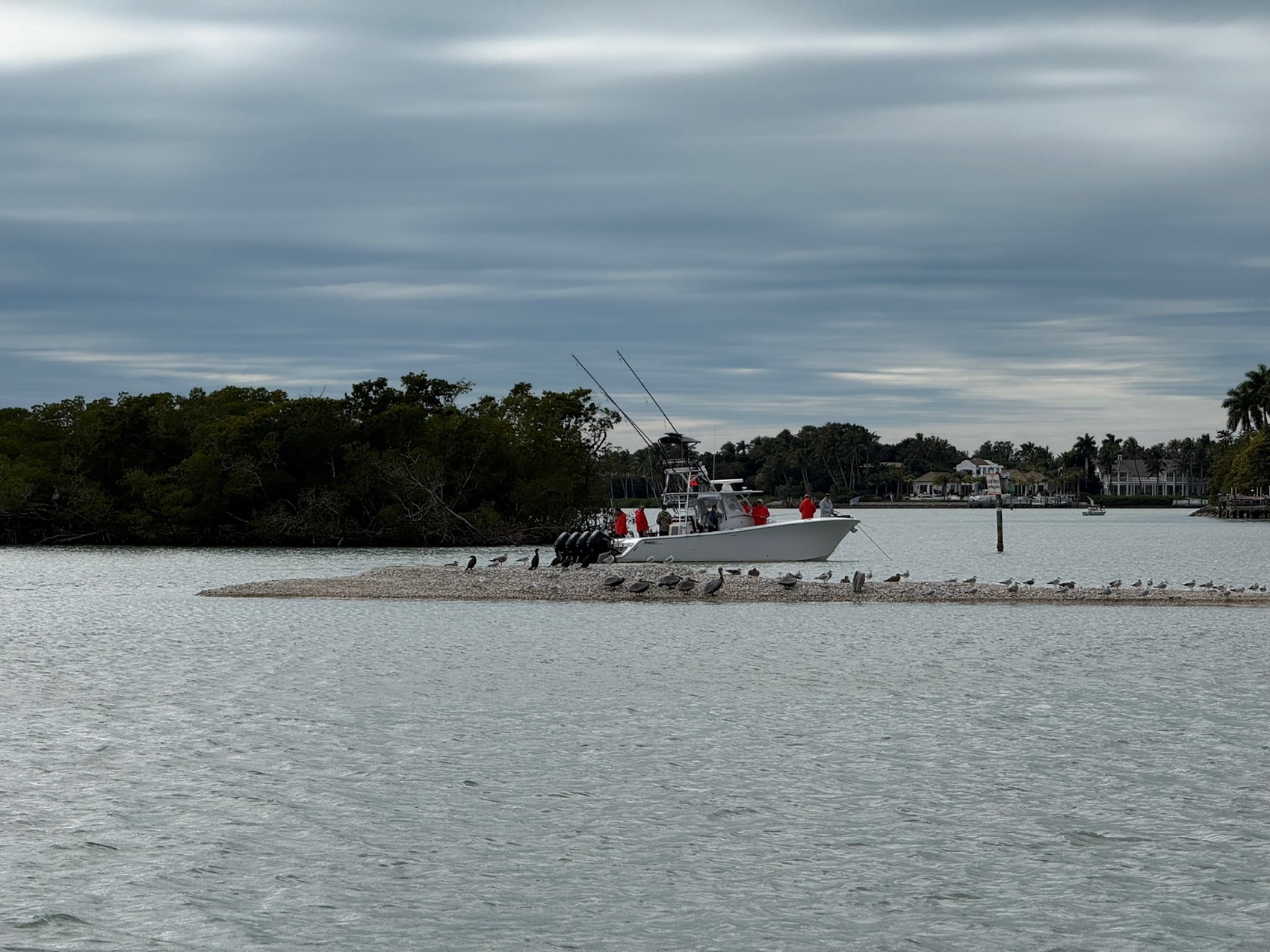
Here's what winter does to our water: a cold front blows through, the temperature drops, and fish do what you'd do — they go somewhere warmer. That means the deeper, darker mud-bottomed creeks and protected bays that hold heat through a cold night. Fish stack into those pockets, and the bite turns on once the sun warms the shallows back up mid-morning. That's why winter is when patient, local knowledge pays off, and why we love running the sheltered Ten Thousand Islands and Naples Bay this time of year. For the full year, see our Naples fishing calendar.
What's biting now
Winter is a numbers-and-variety season more than a trophy season, and that's a feature, not a bug. Redfish school up and tail in the warming shallows on calm afternoons. Seatrout bunch in the deeper grass and holes. Black drum grub around structure, and pompano show along the sandy passes and beaches. And then there's the sheepshead.
| Fish | Where | Go-to bait |
|---|---|---|
| Sheepshead | Docks, bridges, structure | Live shrimp on a small hook |
| Redfish | Warming shallows, oyster bars | Shrimp, cut bait |
| Seatrout | Deeper grass & holes | Shrimp under a cork |
| Pompano | Sandy passes & beaches | Jig tipped with shrimp |
The cool-season sheepshead bite
If winter has a headliner, it's the sheepshead — the convict-striped fish with eerily human-like teeth that gathers thick around docks, bridge pilings and oyster bars when the water cools. They're notorious bait-stealers, so catching them is a fun little game of timing the bite, and a live shrimp on a small hook is the ticket. Their numbers and their excellent eating make them the quiet gift of the cool season. Whatever's biting, any harvest is regulated and seasonal, and your captain keeps it all legal so you can just fish. Come find out what winter has on tap with an inshore charter.
From the Helm: Winter fishing off Naples: working the sun-warmed side of a Dollar Bay canal
The moment that tells us a winter charter is going well is usually a quiet one: someone at the rail feels a distinct, stubborn thump-thump-thump on the line, nothing like the running strike of a snook or the head-shake of a redfish, and asks what on earth they’ve hooked. It’s almost always a sheepshead, and once you’ve felt that bite you never mistake it again — it’s more like a fish tapping the bait to test it than actually eating it outright.
Cold fronts are the whole story in winter. When one pushes through, water temperature in open bays and flats drops fast, and fish retreat into deeper canals and creek mouths where the swing is smaller. We’ll work the sun-warmed side of a canal off Dollar Bay on the first clear, cold morning after a front, because that thin layer of sunlit water often holds fish that vacated the open flats overnight.
If that canal bite is slow — sometimes it takes a full day or two after a front for fish to settle into a new pattern — we’ll shift toward Panther Key’s backwater instead and focus on structure: dock pilings, downed trees, anything holding warmth and a current break. Sheepshead especially favor hard structure over open bottom in cold water, so moving from a soft canal bank to something rigid and current-broken is often the fix.
Bait changes with the target too. We’ll switch over to small pieces of shrimp or a fiddler crab fished tight to structure for sheepshead, since their small, nibbling mouths make quick work of anything rigged too bulky. It’s a finer presentation than summer calls for, and detecting that light tap-tap take is as much the skill as the cast itself — miss the hook-set window by half a second and the bait’s already gone.
What guests don’t expect in winter is how technical the bite gets compared to summer’s blitzes. There’s no visible chaos to chase — no diving birds, no busting bait — just careful bait placement tight to structure and enough patience to let a light-biting fish commit. It’s a different kind of satisfying, more chess than reaction, and it tends to win over guests who assumed winter fishing here would be slow.
Redfish and trout stay catchable through the cold snaps too, just concentrated in fewer, better spots than they’d hold on a warmer day. The same fronts that slow this canal bite tend to push fish deep into the mangrove creeks off the Ten Thousand Islands, so that backcountry stays a solid backup all winter long. Front just came through, or one’s building? Either way, our fishing charters page can get a winter trip scheduled around it.