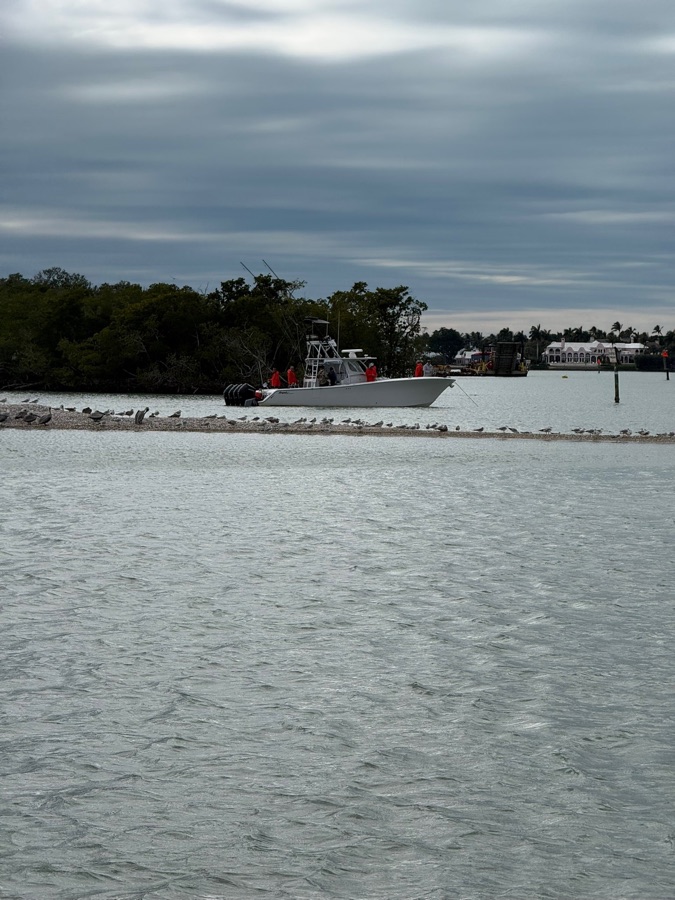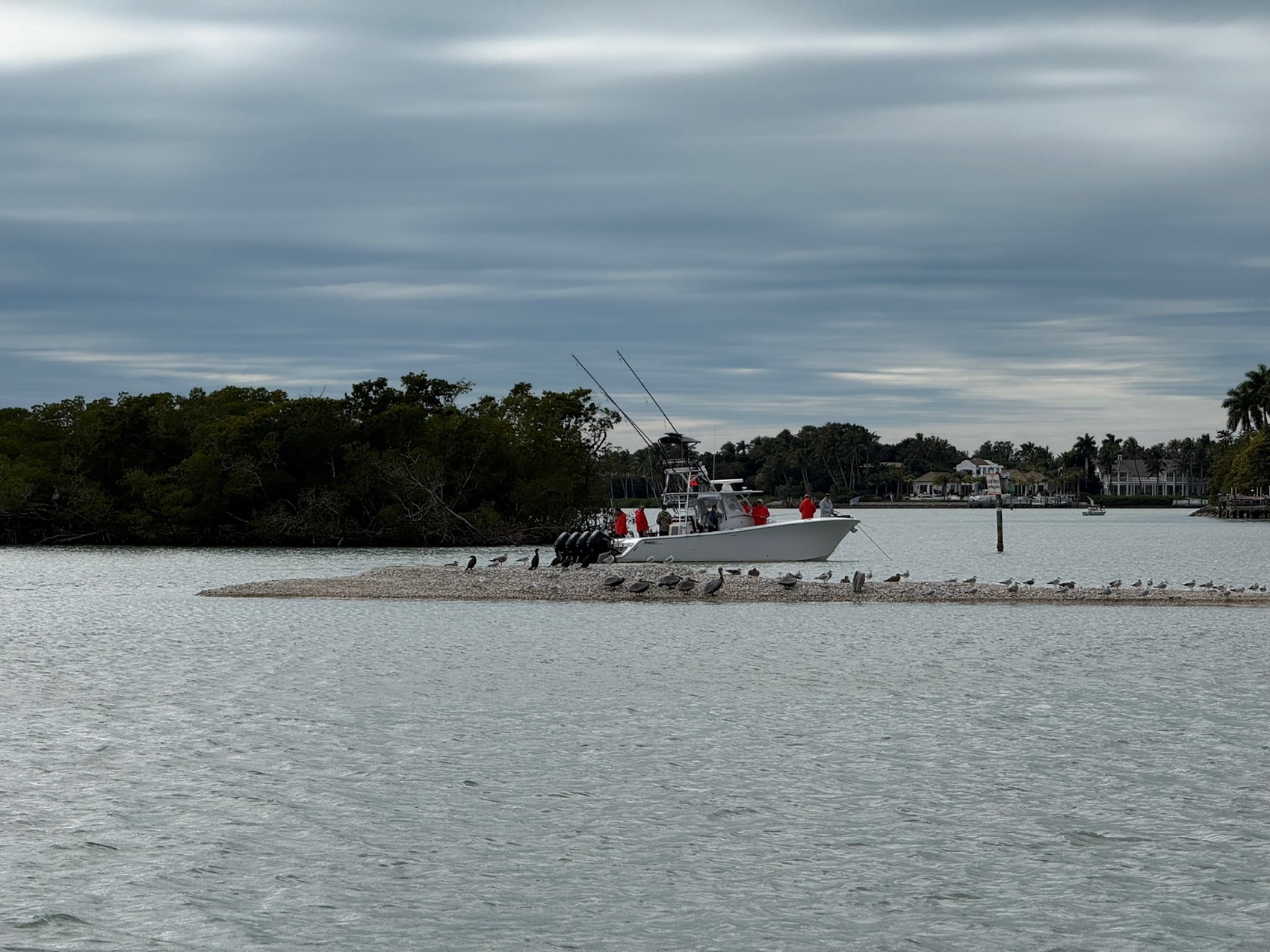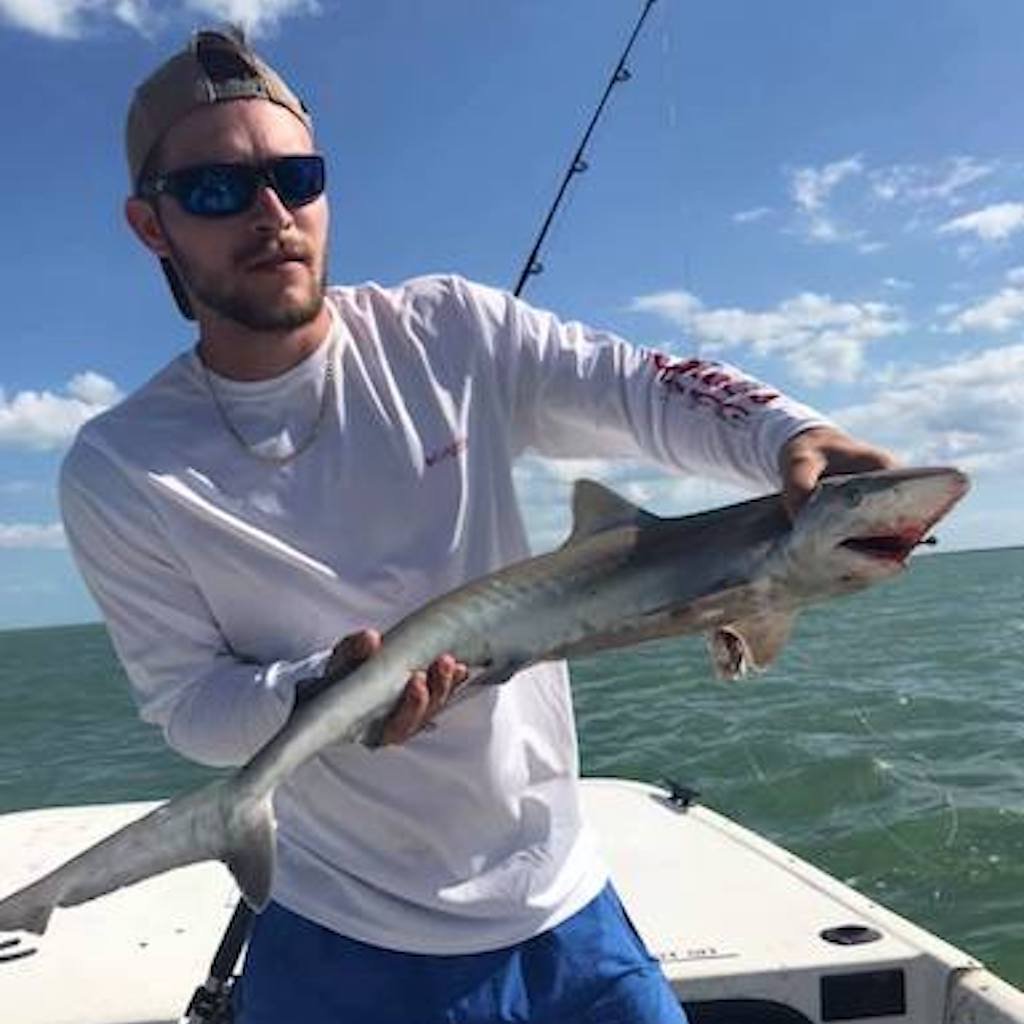
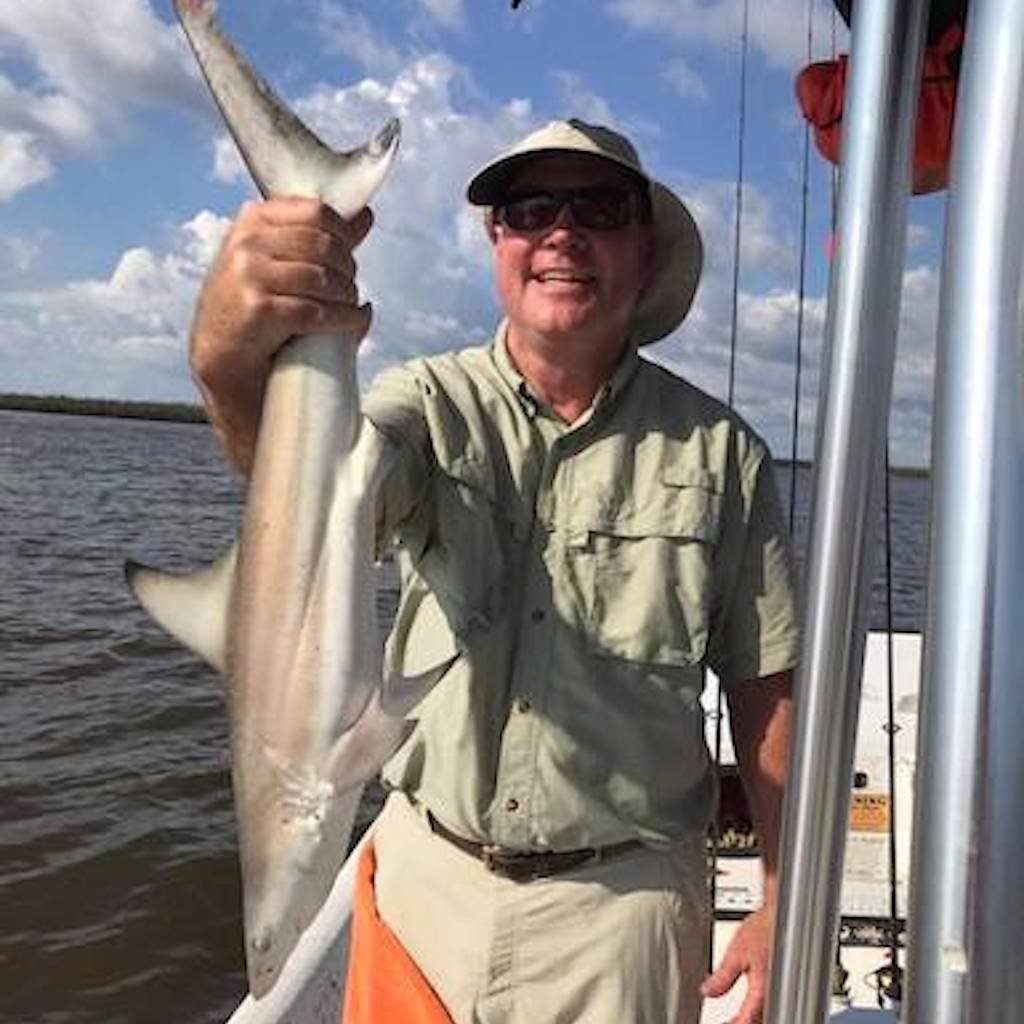
Leaving the Goodland dock, our captains have a choice to make before the throttle even comes up: run north through Big Marco Pass toward open water, or south through Caxambas Pass into the maze of mangrove islands beyond it. Most mornings we lean toward Caxambas, since it drops a boat straight into the tangle of Gullivan Bay and the creek systems around Panther Key without ever needing to cross open Gulf water first.
Caxambas itself moves fast on a big tide, with a channel that shifts against the shoals nearby more than a chart alone would suggest, so our captains run it by watching the water color and the set of the current rather than trusting a fixed line on the GPS. It’s the kind of pass a rental boat has no business guessing at on an outgoing tide. We like to make the run while the tide’s still building, before the shoals go slack — once that current eases off, the same stretch gets a lot harder to judge from a moving boat.
Once through, the maze opens into a genuine labyrinth — Gullivan Bay’s open flats give way to creek mouths threading back toward Panther Key, each one holding different structure depending on how much tide has moved through it that day. We’ll often run two or three of these creek systems in a single trip rather than committing the whole day to one, since a falling tide can shut down a creek mouth just as fast as it turned it on.
The moment our captains wait for out here is a nervous bait ball getting pushed against a shoreline, usually right where a creek mouth narrows — that’s almost always a sign something bigger is working it from underneath. We’ll idle close, cut the engine, and let guests get a cast in before the commotion moves on, rather than powering straight at it and pushing everything down.
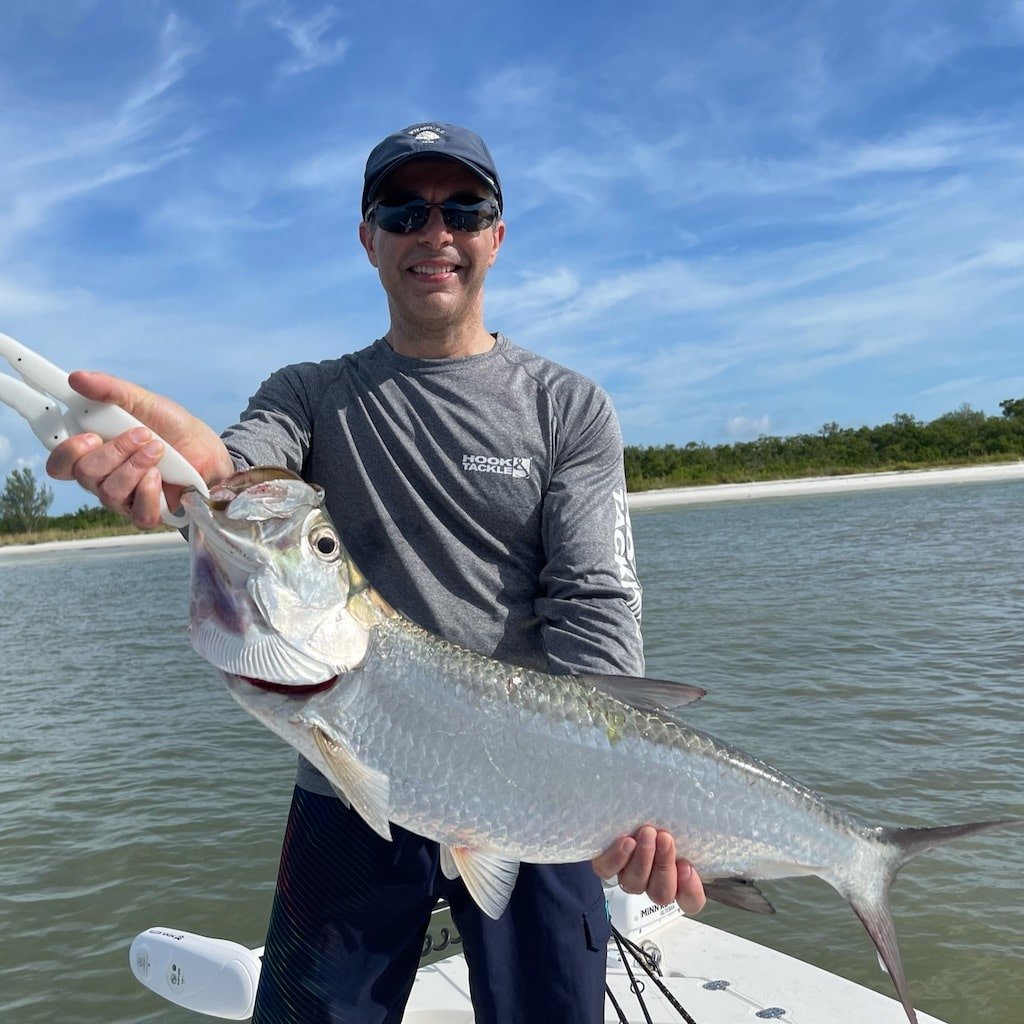
When Caxambas is running too hard to fish comfortably, our plan B usually means sliding north instead through Big Marco Pass to work the passes and grass flats closer to town — different water, same backcountry logic, just less current to fight. Snook, redfish and tarpon out here are seasonally regulated and catch-and-release where required, so the maze gives up plenty to see and feel even on days the cooler stays light.
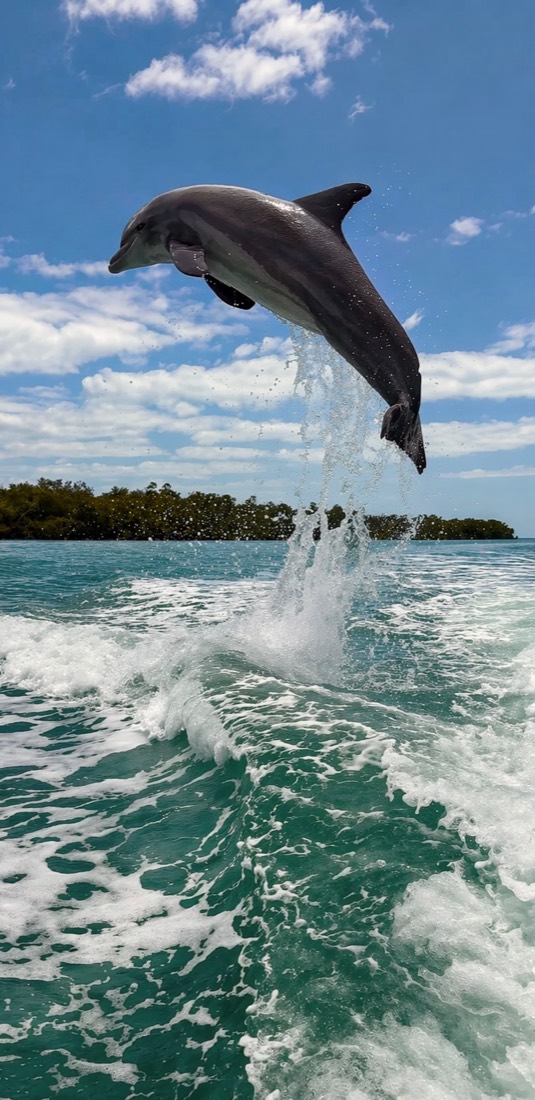
What a chart never quite captures is how the maze actually feels from the helm — the water darkens from Gulf green to a tannin-stained tea color the deeper you push toward Panther Key, and the mangrove walls close in tight enough on some creek mouths that a boat feels more like it’s threading a hallway than crossing open water. Guests aboard tend to go quiet through that stretch without anyone asking them to.
For a slower-paced look at this same stretch of islands without a rod in hand, our backwater fishing trips work many of the same creek mouths at an easier pace built for a mixed group. Either way, Goodland’s real advantage is what sits just past the dock: a maze most of the coast has to run a long way to reach.