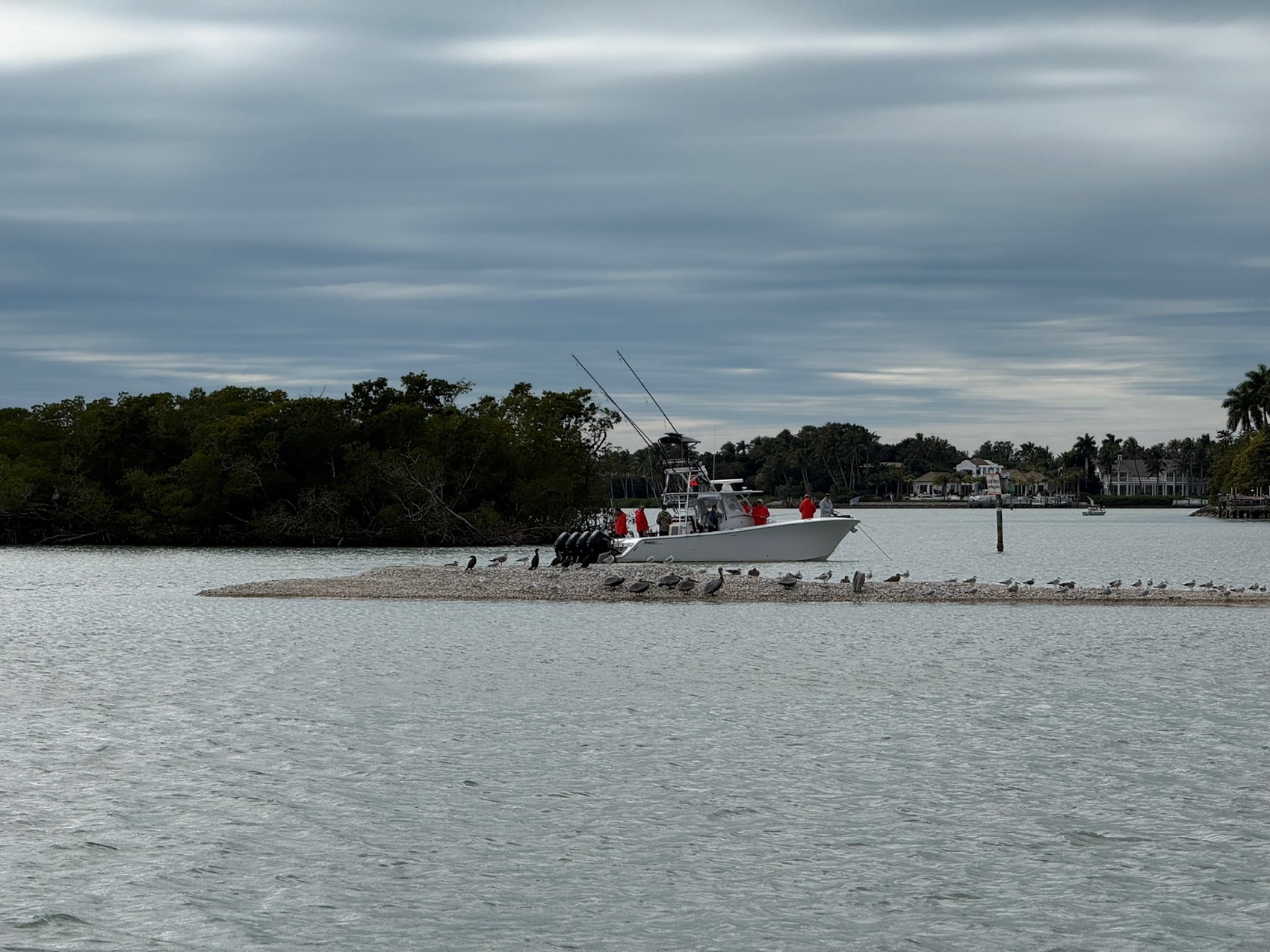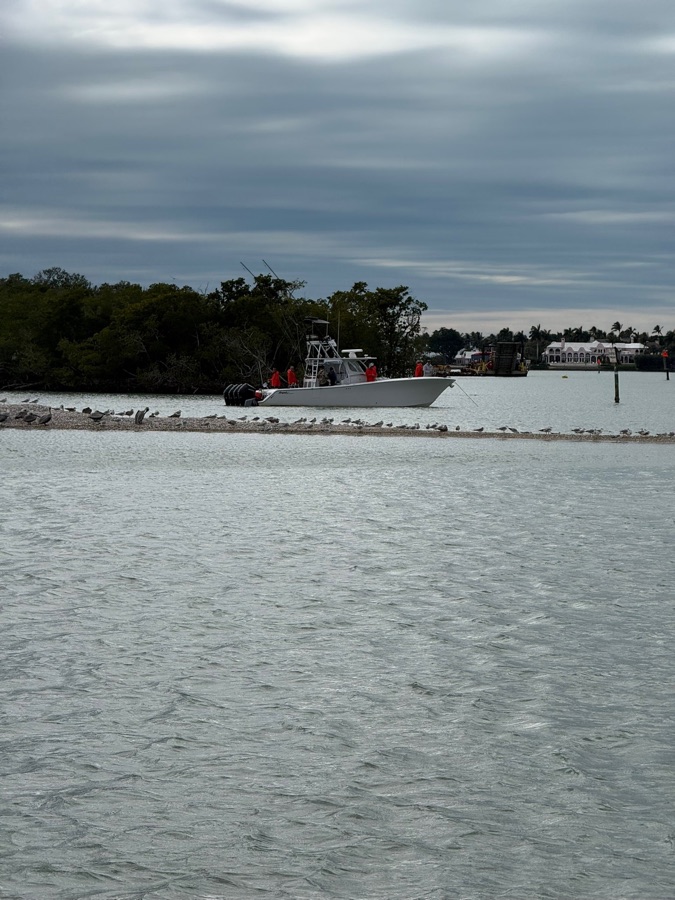
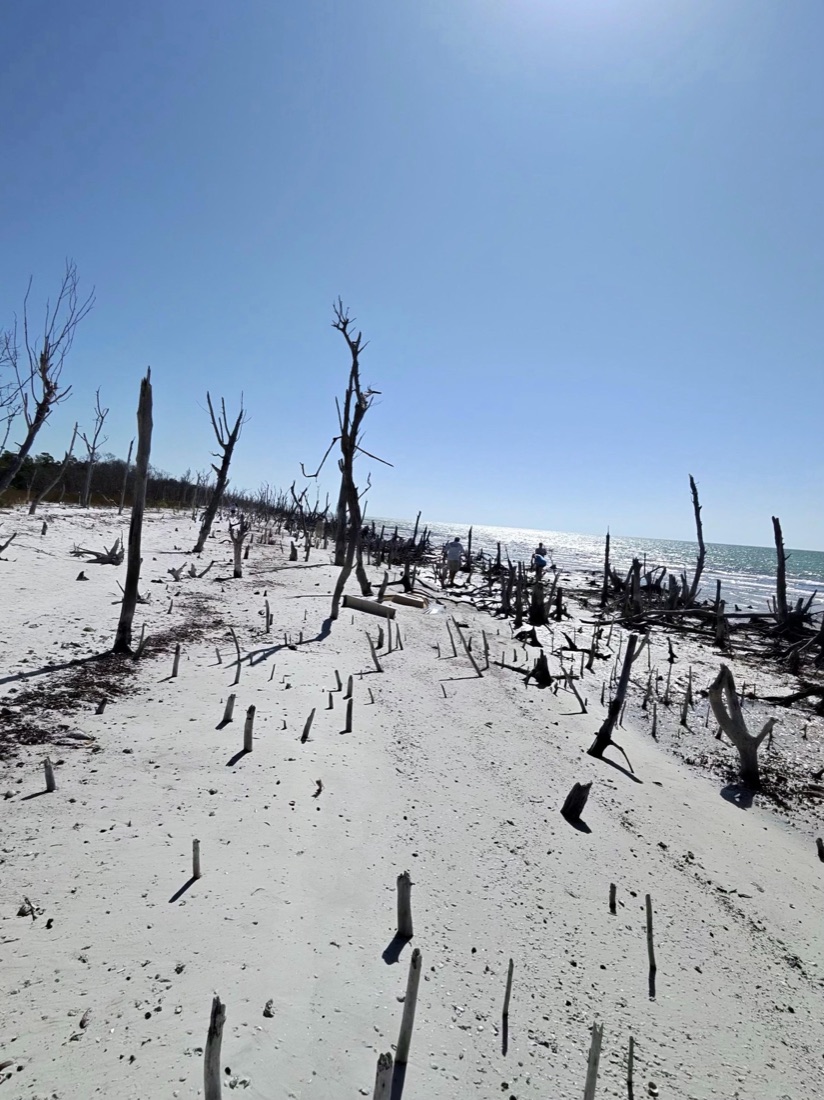
Some mornings the run out of Goodland tells you everything before a hook ever hits the water. A stiff north wind chopping up the open bays means the fish have already moved — not gone, just tucked into the lee — and that’s when our captains point the bow toward the mangrove creeks behind Coon Key instead of fighting the chop out front. The water back there stays flat glass even when the main bay is standing up in whitecaps, and that calm changes what the whole trip feels like.
Working into those creeks means trading speed for patience. We idle the tunnels at a crawl, reading the mangrove roots for shade lines and current breaks rather than running wide open between spots, because a snook or redfish holding tight to a root ball will spook off a fast prop wash long before it ever sees the boat. Guests aboard usually notice the quiet first — no wake, no engine roar, just the creek and the cast.
Our go-to rig back here is a weedless soft plastic worked slow along the shade line, or a live shrimp under a small popping cork once the current’s moving enough to carry the scent downstream. We pick the plastic on calmer water where a natural presentation matters more, and the cork when there’s current to work with — it’s less about which rig is better and more about which one matches what that particular creek mouth is doing that morning.
The moment we’re actually waiting for is the first push of an incoming tide flooding back over a dry creek mouth, because that’s when snook and redfish stack up to ambush whatever gets swept in with it. We’ll idle short of the mouth and let the boat sit, rods ready, until that water starts moving — rushing the cast before the tide turns usually means working water that hasn’t come alive yet.
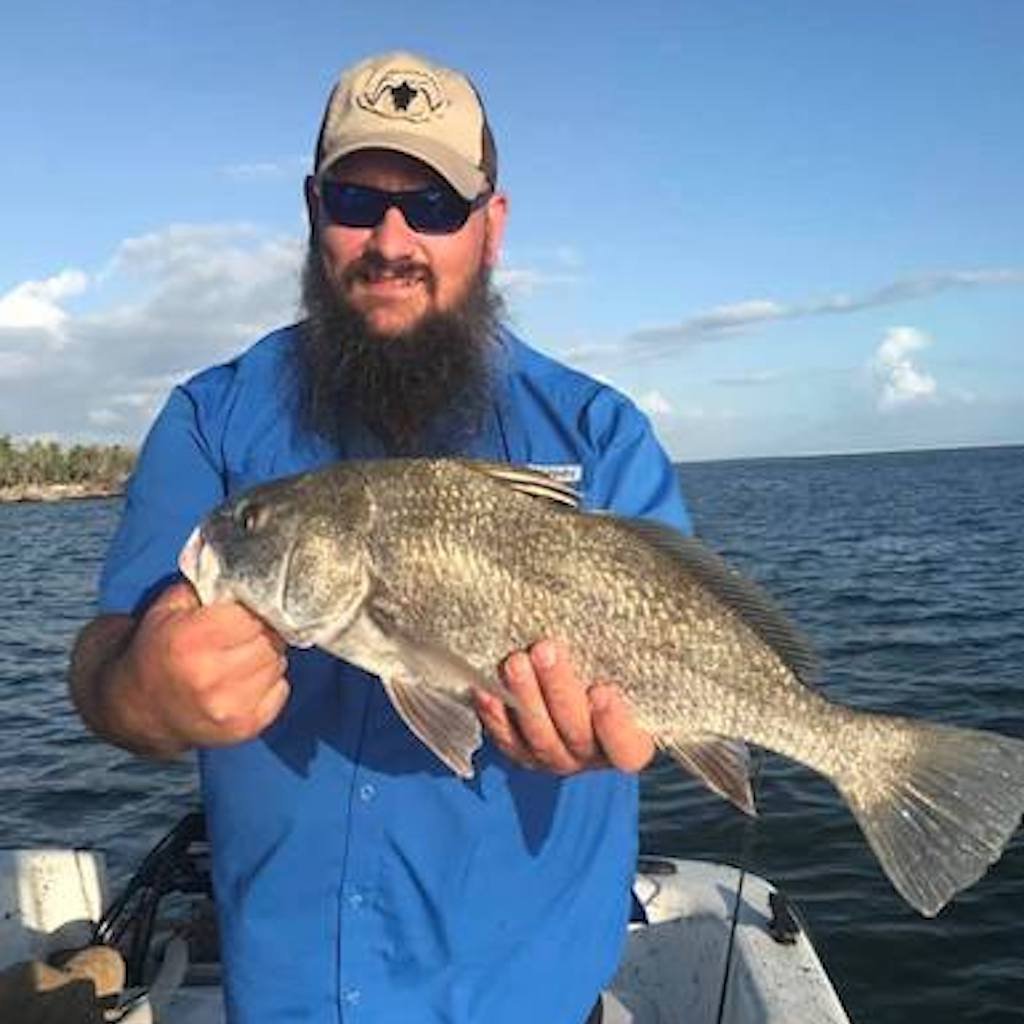
If Coon Key is slow, our plan B usually means sliding to a different creek system nearby rather than forcing the same spot — the backcountry is a genuine maze of these mangrove tunnels, and the fish tend to be somewhere in it even on a tough morning. Snook here stay catch-and-release on a seasonally regulated basis, so however the tide behaves, what comes over the rail mostly goes back in the water it came from.
For a crew that wants the open-water side of this same coast, our inshore fishing charters work the bays and passes just outside these creek systems — same fish, different water, a different read on tide and wind to match it. Either way, the call on which water we run starts the same place: what the wind and the tide are actually doing that morning, not what the plan says on paper.