
🗺️ At a glance
- What they were
- Six solar-powered concrete domes, built 1982 by Bob Lee
- Status now
- Toppled ruins — half-submerged pilings only, not standing
- What ended them
- Hurricane Irma (2017) took two; Hurricane Ian (Sept 28, 2022) took the rest
- Getting there
- By boat only, off the south end of the Marco coast
- Note
- They now sit in open water as the island eroded out from under them
The story of the domes
Back in 1982, oil producer Bob Lee built six self-contained, solar-powered concrete domes near the southern tip of Cape Romano as a futuristic vacation home. For its time it was genuinely ahead of the curve — rounded shells to shrug off wind, solar power, rain-water cisterns, the works. Over the decades the family sold it, the structures changed hands, and the Gulf went to work. The shoreline they stood on began eroding away, and the domes ended up perched in the surf on bare pilings, which is the image that made them internet-famous: pale alien pods rising straight out of the water. For years they were the single most-photographed landmark on this coast.
What remains today
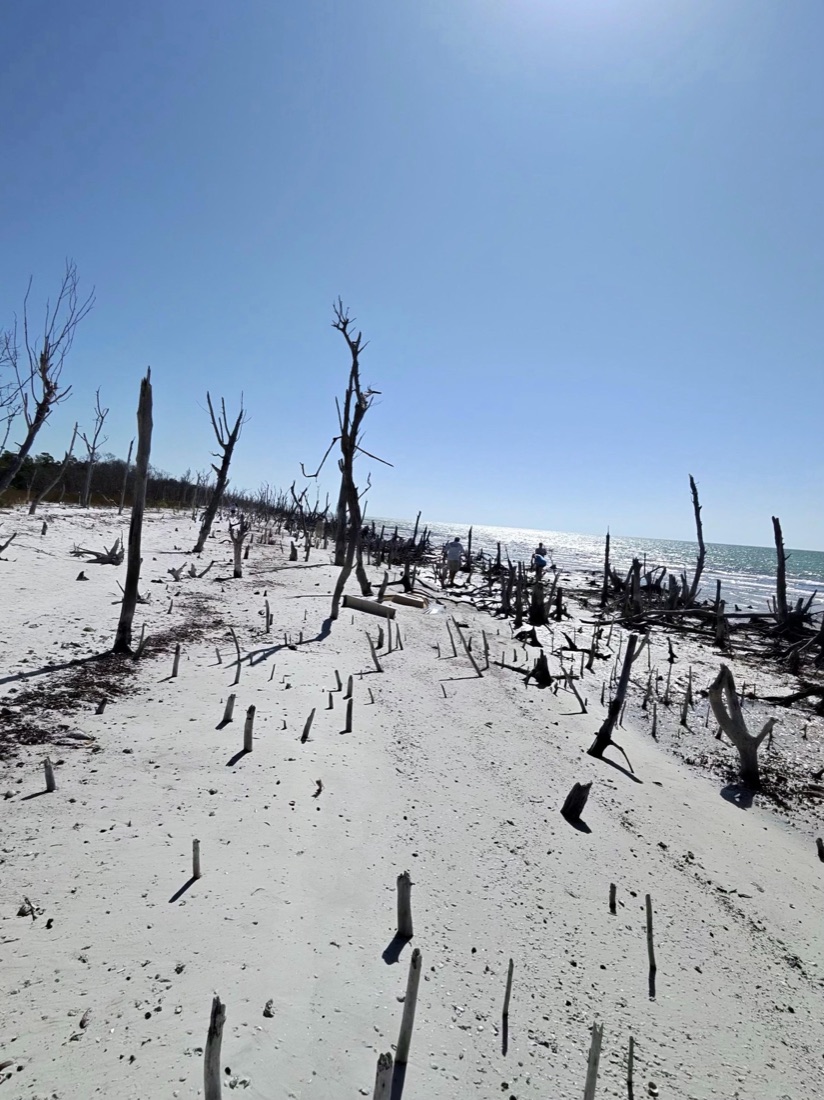
Storms finished what erosion started. Hurricane Irma knocked down two of the domes in 2017, and then Hurricane Ian — which made landfall on September 28, 2022 — toppled the survivors. So if a video or postcard shows the domes standing tall on their stilts, it’s from before that date. Today you’ll find a scatter of broken concrete and half-submerged pilings sitting in open Gulf water, the bones of the structures just breaking the surface. It’s honestly more haunting than the intact domes were — a clear mark of how fast this coastline changes. The reason they sit out in open water at all is that the barrier islet beneath them eroded away, a story we tell over on the Cape Romano shoals page.
How to see the dome ruins
There’s only one way to reach them: by boat. The ruins sit off the south end of the Marco coast, past Kice Island and around the wild edge of Cape Romano. We swing past them on the right tide as part of our island runs — you idle up, take in the strange half-sunk pilings, and get a real sense of the power of an Ian-class storm. We never land on or climb the ruins; they’re unstable and they sit in open, shifting water. Pair the visit with a beach landing and some shelling on the way, and it’s a genuinely memorable half-day. Browse the run on our dome houses boat tour rundown or come out on a shelling tour.
| Year | What happened |
|---|---|
| 1982 | Six solar domes built by Bob Lee |
| 2017 | Hurricane Irma topples two domes |
| Sept 28, 2022 | Hurricane Ian topples the rest — now ruins |
| Today | Half-submerged pilings in open water, boat-access only |
From the Helm: Idling the dome ruins at a low-tide crawl, engine barely above a whisper
Almost every guest steps up to the bow expecting the domes to look the way they do in the photos they found online, and it’s usually the moment we ease the engine to an idle that the reality lands — broken shells of concrete tilted at odd angles, rising out of open Gulf water with nothing else around them. We watch faces for that beat of recalibration on nearly every run, and we’ve learned to time the approach so the ‘they’re not upright’ disappointment gets replaced fast by something more interesting: what’s actually still standing out here.
We never idle in as tight to the ruins as the photos make you want to. Broken rebar and jagged concrete sit just under the surface on the down-current side, and a boat that swings the wrong way on an incoming push can find it the hard way. Our captains hold off a boat-length or two further than looks necessary and let the current, not the throttle, do the fine positioning — a habit built from watching how fast the bottom out there changes from one season to the next.
Morning light does the ruins more favors than midday glare, so on our earlier runs we’ll angle the approach from the east and let the low sun rake sideways across the broken domes. You get shadow and texture that way instead of a flat white blob of concrete under a high sun. We keep the throttle at a bare idle and coast the final boat-length in neutral, so the wake doesn’t rock anyone trying to line up a shot over the rail.
From the water you also notice what a land approach could never show you: pelicans and cormorants using the exposed rebar and concrete edges as loafing perches, barnacles crusting the waterline in a hard white ring, and the hollow slap of small waves working through what’s left of the structure. It’s a strange, almost industrial sound to hear in the middle of open water, nothing like the postcard hush most guests expect before we arrive.
On a stiff onshore wind day the ruins sit exposed with no real lee, and a rolly swell makes holding position for photos more trouble than it’s worth. When that happens we’ll swing the approach toward the calmer shoals side instead, or just hold a wider loop rather than fight chop right against the structure — the ruins aren’t going anywhere, and we’d rather give you steady footing for the shot than a bouncy one.
Seeing the domes from the water like this is part of what makes the run out to Cape Romano worth the distance, and it’s a stop we build into select private charters whenever the day’s wind and swell cooperate.