
🎣 At a glance
- Top target
- Mangrove snapper — mangrove edges, passes & dock pilings
- Also biting
- Spanish mackerel, redfish, and seasonal, regulated snook
- On the wrecks
- Goliath grouper — protected, catch-and-release, stays in the water
- Best departure
- Dawn — beat the afternoon thunderstorm build-up
- Water & weather
- Warm Gulf water, high humidity, near-daily afternoon storms
- License
- None needed — our USCG captain's vessel license covers every guest
Is July a Good Fishing Month?
July might be the most underrated fishing month on the Marco Island and Naples calendar. The passes and backcountry are stacked with feeding fish, the water is warm enough that everything is active from the first cast, and the pace of a summer charter is built for families who want rods bending fast rather than a long wait for one bite. Yes, the trade-off is heat and the daily thunderstorm build-up that rolls in off the Everglades most July afternoons — but that's exactly why our captains front-load the day. Book a fishing charter with a dawn or early-morning departure and you'll fish the calmest water and the best bite window of the day, then be back at the dock with a cooler of fish well before the sky turns. For the bigger picture on what July brings to Marco Island beyond the rod and reel, the Seasonal Guide breaks tides, weather and wildlife down month by month.
What's Biting in July
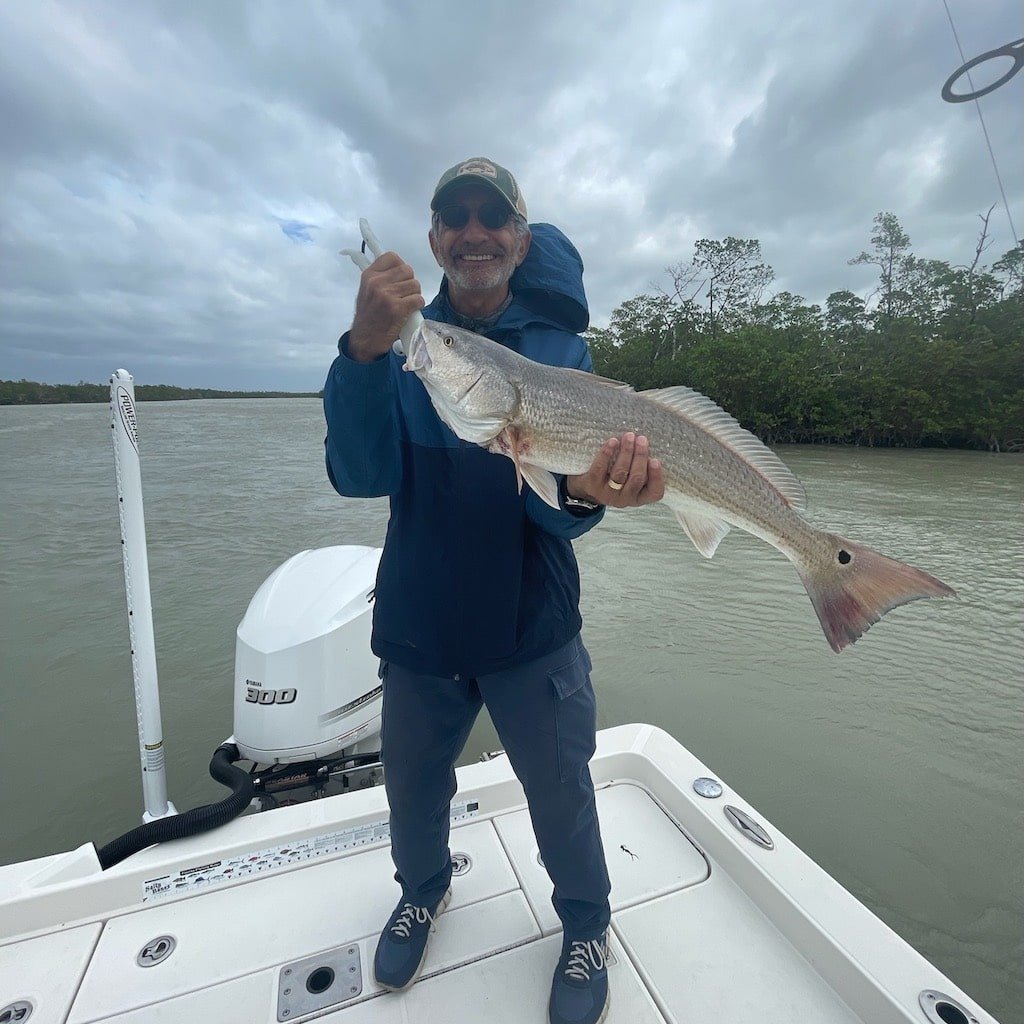
Mangrove snapper is the headline act in July. These scrappy, sharp-eyed little mangrove and reef dwellers school up thick around the passes, dock pilings and mangrove root systems this time of year, and they don't make you wait — a good mangrove edge can turn into a near-constant bite in minutes. They're also one of the best-eating fish in the Gulf, which makes them a favorite target for families who want dinner as much as they want the fight. Our mangrove snapper guide walks through exactly how our captains rig and present a bait for them. Spanish mackerel show up in fast-moving schools just off the beaches and passes, slashing through bait pods near the surface — a favorite for anglers who like to watch the strike happen. Snook and redfish are both around the mangrove shorelines and backcountry creeks too, though snook fishing is seasonal and regulated, so your captain will let you know on the day whether it's a keep-and-eat month or a photo-and-release one. Between the mangroves, the passes and the nearshore structure, the full July target-species list gives our captains plenty of options to put you on fish no matter which way the tide and wind are running that morning.
| Species | Where to find them | July likelihood | Notes |
|---|---|---|---|
| Mangrove snapper | Mangrove edges, passes, dock pilings | Excellent | Fast bite, great table fare, kid-friendly |
| Spanish mackerel | Nearshore, beaches, passes | Good | Fast-moving schools, exciting surface strikes |
| Snook | Mangrove shorelines, backcountry creeks | Fair to good | Seasonal & regulated — keep status varies by date |
| Redfish | Backcountry, mangrove flats | Good | Strong fighters in skinny water |
| Tarpon | Passes, nearshore structure | Present | Catch-and-release only |
| Goliath grouper | Nearshore wrecks & hard bottom | Present | Protected — catch-and-release, stays in the water |
Goliath Grouper on the Wrecks
Out on the nearshore wrecks and hard-bottom structure, July is also goliath grouper season — and it's one of the best surprises we can hand a kid on a rod. These are genuinely enormous fish, capable of stopping a rod cold the moment they feel the hook, and pulling one up from thirty or forty feet of water is an arm workout nobody in the boat forgets. Goliath grouper are protected in Florida, which means every one we catch goes right back in the water — there's no keeping, no exception, and our captains treat that rule as non-negotiable. That doesn't take anything away from the experience; if anything, watching a fish that size swim back down out of sight is its own kind of unforgettable moment. If wrecks and bottom structure are what you're after, ask about working a goliath grouper stop into your July trip alongside the inshore snapper bite — most mornings there's time for both before the heat sets in.
Why Dawn Departures Rule July
Southwest Florida runs on a very predictable summer weather script, and July leans into it hard. Mornings start calm, humid and often glassy on the water, the fish feed aggressively in that early window, and then — almost like clockwork — the Everglades heat up, the sea breeze collides with it, and towering thunderheads start stacking up over the mainland by early-to-mid afternoon. Our captains plan every July charter around that pattern. A dawn or early-morning departure gets you the best of the bite, the coolest temperatures of the day, and the smoothest ride out to the passes or nearshore structure, and it gets you back to the dock with plenty of daylight to spare before the storms roll through. It's not a rule our captains bend for a later start time in peak summer — safety and a good bite both point the same direction. If you're building out a full July visit around more than fishing, the July boat tours guide covers how that same afternoon-storm pattern shapes sunset cruises, shelling runs and dolphin trips too.
What to Expect on a July Charter
July fishing in Naples and Marco Island means warm Gulf water, high humidity and real Florida sun, so plan for it the way our captains do — light, breathable clothing, a hat, reef-safe sunscreen reapplied often, and more water than you think you'll need. Every charter runs under our USCG-licensed captain's vessel license, which covers every paying guest aboard, so nobody needs to buy an individual fishing license before stepping on the boat. Rods, tackle, bait and ice for the cooler are handled for you; all you're bringing is sun protection, snacks if you want them, and an appetite for a fast morning of bent rods. Most mornings in July, a two-to-four-hour inshore trip is plenty of time to load the cooler with mangrove snapper and give everyone aboard, kids included, several solid hookups before the heat and the first thunderheads start building over the mainland. Pair it with an early lunch back on Marco Island and you've still got the whole afternoon free — which, in July, is exactly when you want to be off the water anyway.