
🎣 At a glance
- Water temp
- Upper 80s°F — warm Gulf water at its peak for the year
- Weather pattern
- Peak hurricane season; afternoon storms are routine, tropical systems are the wildcard
- Top targets
- Snook, redfish, jack crevalle & the last of the summer tarpon, all keyed on migrating mullet
- Best tide
- Moving tide around the beaches and passes wherever the mullet schools are stacked that day
- Crowd level
- The quietest month on the water all year — light boat traffic, wide-open ramps and docks
- Rule
- Tarpon are catch-and-release only; our vessel license covers every paying guest
Is September a good month to fish Naples and Marco Island?
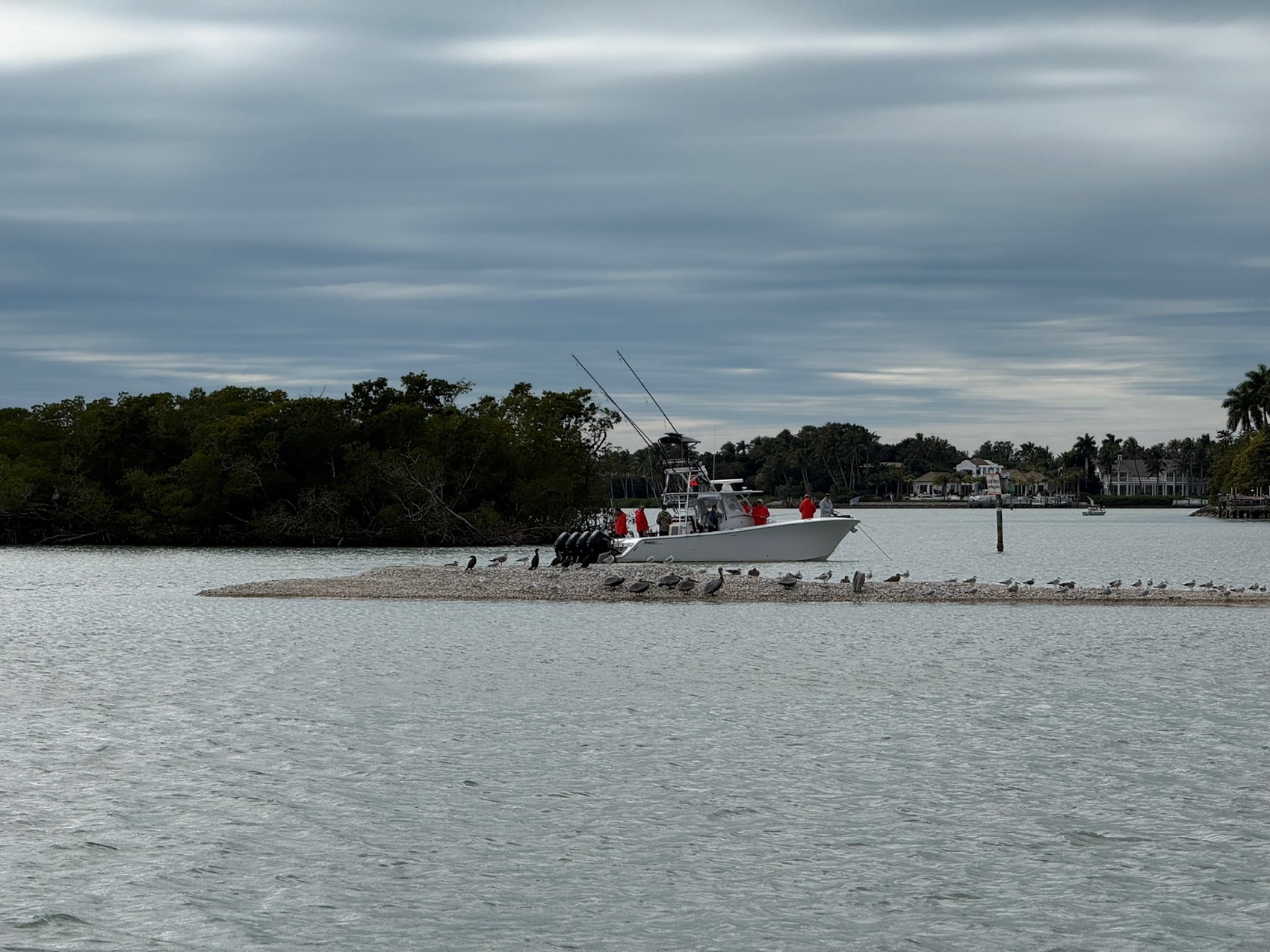
Here’s the honest read: September is a gamble, and it’s one worth taking. This is the month the fall mullet run gets going along Southwest Florida’s beaches, and when it’s on, it produces some of the most visual, explosive inshore fishing anywhere on the Gulf coast — predators blitzing bait right at the surface, close enough to the boat that you can watch the whole thing unfold. The catch is that September also sits in the thick of hurricane season, which means afternoon thunderstorms are a daily fact of life and the occasional tropical system can reshuffle a week’s worth of trips with little warning. That trade-off is exactly why September rewards flexibility over rigid planning. Our captains watch the mullet schools and the marine forecast together and build each day’s run around whichever beach or pass has bait pushing through it that morning. If you can hold your dates loosely, September gives you a shot at fishing most anglers never see. Our fishing charters run this pattern all month, and the parent Seasonal Guide covers how it stacks up against every other month on the calendar if you’re still choosing dates.
The fall mullet run: what it is and why it matters
The mullet run is the single biggest event on the Southwest Florida fishing calendar, and September is when it starts. As water temperatures ease off their summer peak and the days shorten, enormous schools of finger and silver mullet begin their annual migration south along the coast, hugging the beaches and funneling through passes like Gordon Pass and the cuts around Marco Island and Goodland. Every predator in the Gulf knows the schedule. Snook stack along the surf line and ambush the edges of the bait pods. Jack crevalle crash through the middle of a school in open-water feeding frenzies that churn the surface white. Redfish work the same bait wherever it pushes into skinny water near the mangroves, and the last of the season’s tarpon — big, silver, and still around this month — will blow up on a nervous school of mullet in a way that turns a good day into an unforgettable one. Timing shifts year to year depending on weather and water temperature, so there’s no fixed calendar date when it “starts” — our captains track the schools day to day rather than working off an old almanac. For the deeper dive on reading the run and the tackle it takes to fish it well, our mullet run guide is the page to read next, and our snook and tarpon species pages break down each fish’s piece of the show in more detail.
Hurricane season and why booking flexibility matters
September sits at the statistical peak of Atlantic hurricane season, and that reality shapes how we’d suggest you plan a trip this month more than anything else on this page. Most days are perfectly fishable — a hot, humid Southwest Florida morning with a building afternoon thunderstorm that our captains simply plan the day around, running earlier departures to beat the heat and the weather. But tropical systems do form and track through the Gulf this time of year, and when one is in the forecast, safety comes first and trips get rescheduled around it. The upside of that same quiet stretch of the calendar is real: September is the slowest month on the water all year, which means light boat traffic on the passes, open ramps, and a noticeably calmer, more personal experience than the winter snowbird crush or the spring break rush. If you’re booking a September fishing trip, build a day or two of slack into your travel plans if you can — it gives our captains room to move your trip to the best window instead of forcing a go/no-go call on a single fixed date. The September boat tours guide covers this same flexibility question across our whole tour lineup, not just fishing.
What’s biting: the September lineup
September’s target list is built entirely around the mullet run, and it reads like a highlight reel. Snook are the headline act, staged along the beaches and pass mouths waiting to ambush the bait as it funnels past — explosive surface strikes and a hard-pulling fight that’s the reason so many anglers plan their whole year around this month. Redfish work the same migration from the shallow side, pushing bait into the mangroves and cutting through schools that get trapped against the shoreline. Jack crevalle show up in numbers and hit almost anything that moves, making them a favorite when the goal is nonstop bent rods rather than a trophy on the wall. And the tail end of tarpon season lingers into September, so a big silver king busting bait on the surface is still a very real possibility, even as most of that run's peak has already passed. Sharks — blacktips especially — follow the same bait and add another layer of unpredictable, heavy-tackle action along the beaches. All of it is regulated by season, size and bag limits that shift year to year, and tarpon specifically are catch-and-release only regardless of size, so our crew will always confirm on the water exactly what’s legal to keep that day.
What to expect on board in September
September fishing runs hot, humid and, on the right day, absolutely electric. Mornings start warm and only get warmer, so our captains lean toward early departures to fish the cooler hours and beat the building afternoon clouds that are routine this time of year in Southwest Florida. Bring sun protection, plenty of water and a rain jacket you can stow and forget about — a passing shower is common and rarely stops the fishing for long. Because the whole month runs on the mullet migration rather than a fixed calendar, flexibility on timing matters more in September than in almost any other month: the school that’s stacked against a beach on Tuesday may have moved past a pass by Thursday, and our captains adjust the day’s plan accordingly rather than running the same milk route regardless of conditions. Florida requires a fishing license for most anglers, but our captain’s vessel license covers every paying guest aboard, so there’s no separate license to track down before you arrive. If a trip needs to move because of weather, we’ll work with you to find the best available window rather than losing the day. Beyond the fishing, September’s quiet water and warm evenings also make it a strong month for a sunset cruise or a laid-back private charter if you want to build a full trip around more than one day on the water.
| Species | Where They Stack Up | Water Type | Typical Approach |
|---|---|---|---|
| Snook | Beach surf line & pass mouths | Nearshore & passes | Topwater plugs or live bait cast near bait schools |
| Redfish | Mangrove edges where bait pushes shallow | Backwater & shoreline | Cut mullet or soft plastics tight to structure |
| Jack crevalle | Open-water feeding frenzies mid-school | Nearshore & passes | Topwater or bucktail jigs worked fast |
| Tarpon | Beaches & passes, tail end of the season | Nearshore | Live bait or large streamers, catch-and-release only |
| Blacktip shark | Following bait schools along the beach | Nearshore | Heavy tackle, cut bait on wire leader |