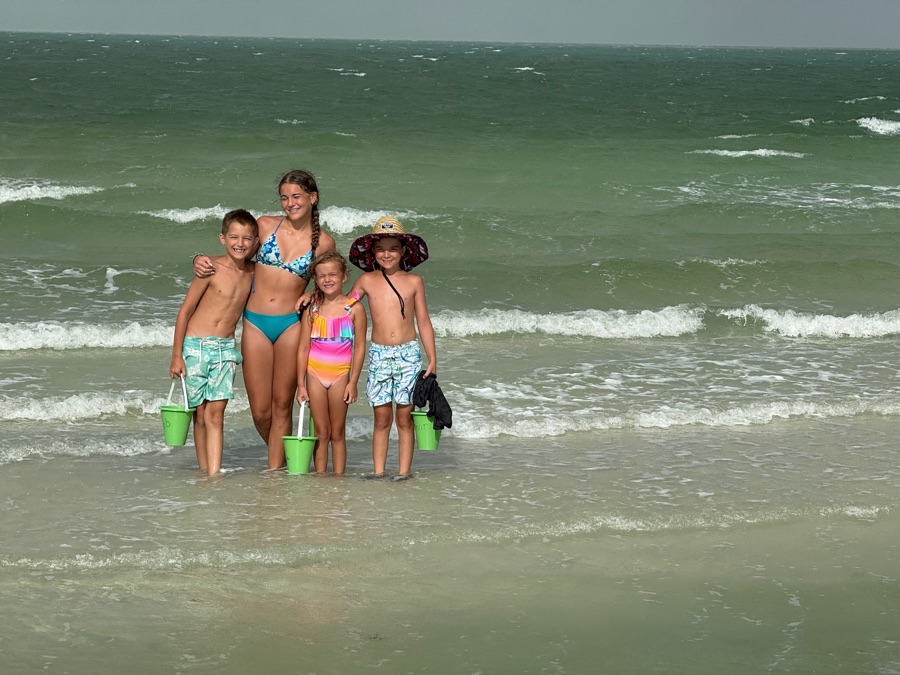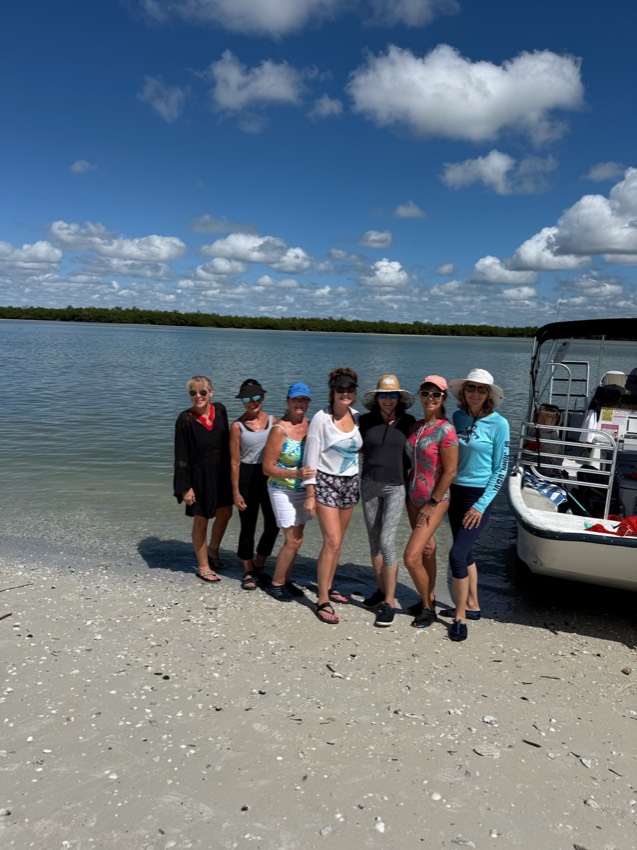
Ask a captain which sandbar we’re running to today and the honest answer is usually “depends what the wind’s doing.” A stiff onshore breeze chops up the open, exposed flats and turns a lazy float into a rocking one, so on those mornings we favor a tucked-in bar with mangrove or island cover breaking the fetch. On a calm, high-pressure day we’ll run further out to a wider, more open flat where the water’s clearer and there’s more room to spread out beach chairs and floats without bumping the next group nearby.
Tide stage decides the rest. We like an incoming tide best — the water’s still shallow enough to stand comfortably chest- or waist-deep, but it’s rising, not falling, so the sand stays cool underfoot and the current across the bar stays gentle instead of running hard through a nearby cut. Time it wrong on a big falling tide and a flat that was waist-deep at anchor-down can be ankle-deep an hour later, which is fine for wading but ends the swimming early and shortens the trip.
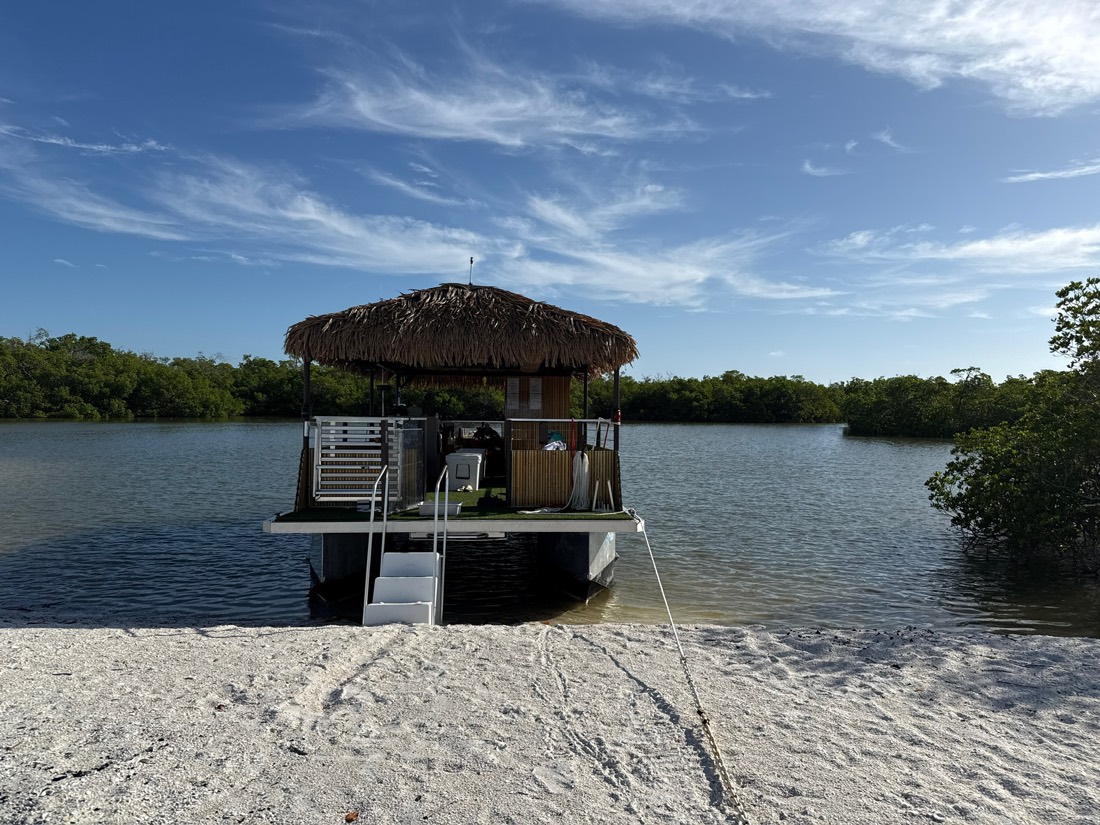
Once we’re anchored, your captain sets a second stern line or a sand anchor if there’s any current pull, so the boat sits steady while everyone’s in the water — not swinging on a single bow hook toward the swim ladder. It’s a small rig detail guests rarely notice, but it’s the difference between a boat that drifts toward swimmers and one that just sits, steady, the whole time you’re off the back of it.
The bars themselves shift season to season. A flat that was thigh-deep and wide last spring can build up sand or wash thinner after a summer of storms, so part of a captain’s job is simply keeping a running mental list of which bar is fat and which one’s gone skinny this month. We’ll often swing past a favorite on the way to a booked stop just to check it with our own eyes before we commit a full group to it, rather than trusting last month’s memory.
If the wind turns hard against every bar we’d normally pick, the fallback is simple: we run further into a protected cut and drift-anchor along its calmer edge instead, trading the wide-open flat for a narrower but still swimmable stretch of shallow water. It’s not the plan we advertise, but it keeps the day from getting bounced around by a front nobody forecast right.
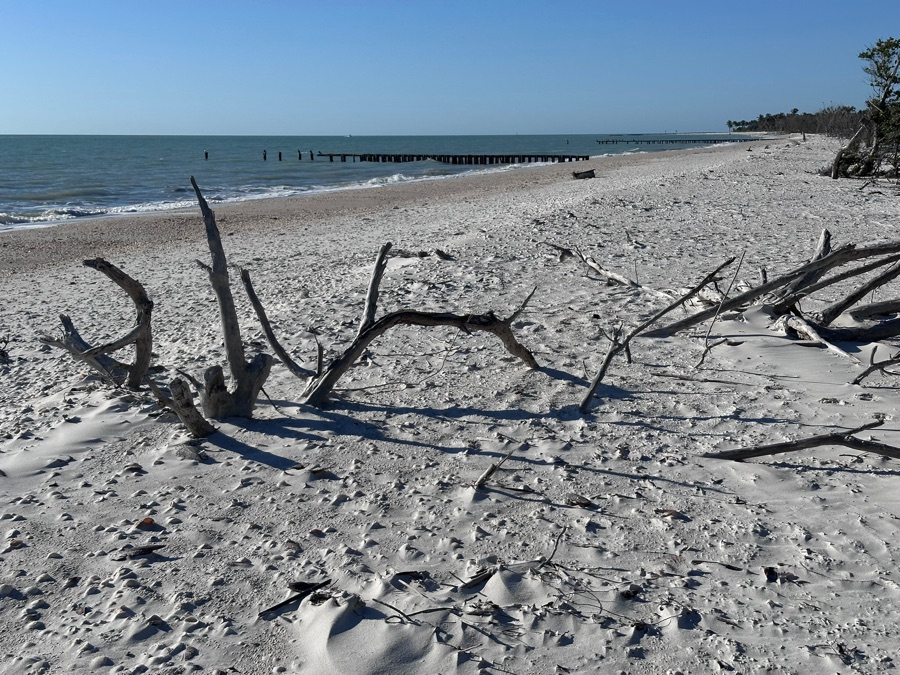
A sandbar day pairs naturally with a beach stop like Keewaydin when guests want both a swim and a walk on real sand, and for the wider lay of these islands and channels our Ten Thousand Islands guide is worth a look before you book.