
Why kids love shelling
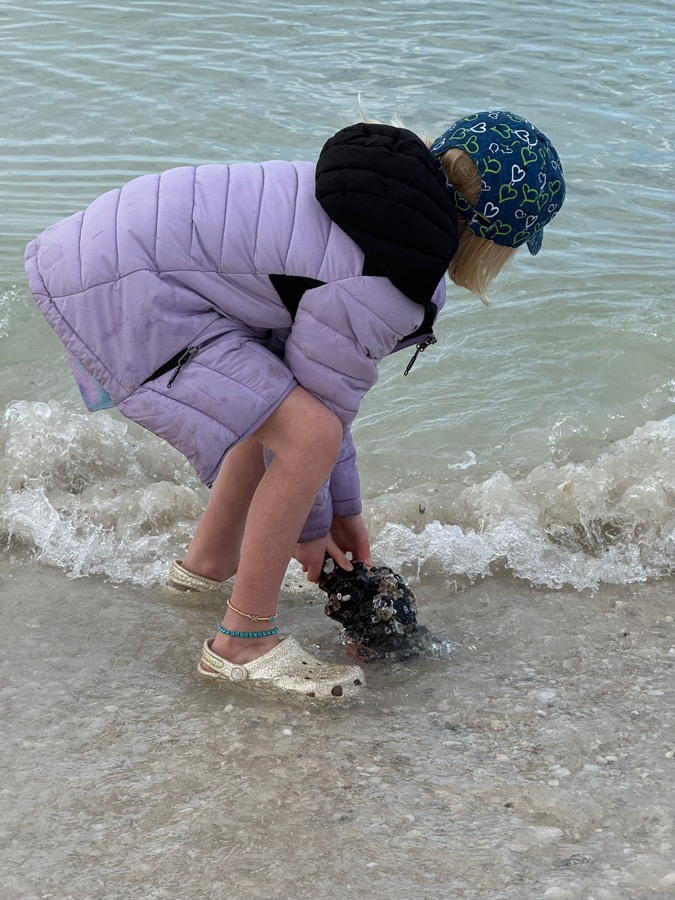
Shelling is basically a real-life treasure hunt, and kids are wired for it. The beaches we visit are flat and easy to walk, there’s no swimming required, and the simple thrill of finding a perfect shell keeps children happily busy for hours — no screens, no boredom. Filling a bucket, racing to spot the next sand dollar, calling out the first dolphin of the day: it’s the good kind of tired by the time you head home.
Is it safe for kids?
Yes — safety is built into the trip. Every guest, including the kids, gets a Coast Guard-approved life jacket. The beaches we land on are calm and shallow, the water is warm and gentle, and your USCG-licensed captain keeps a close, friendly eye on the whole crew. We run small-group and private trips precisely so families get a relaxed, well-supervised day.
What ages is it good for?
All of them. Toddlers love the buckets, big kids love the hunt and the dolphins, and grandparents love how easy and comfortable it is — the flat beaches and calm shallows work for every generation. It’s one of the few activities that genuinely entertains a three-year-old and a grandparent at the same time. That’s why we built a dedicated family shelling tour around it.
| Who | Why it works |
|---|---|
| Toddlers | Buckets to fill and warm, ankle-deep shallows; no swimming required |
| Big kids | A real treasure hunt, plus wild dolphins on the ride out |
| Teens | Remote islands and great photos; genuinely screen-free |
| Grandparents | Flat, easy beaches and a calm, comfortable ride |
Tips for parents
- Book around nap and meal schedules — a well-fed, well-rested kid is a happy sheller. Morning trips often work best.
- Pack sunscreen, hats, water shoes and a change of clothes (see our full packing list).
- Bring a small bag so each kid can keep their own “best” shells separate — it heads off the inevitable negotiations.
- Consider a private charter for birthdays or younger kids, so you can set the pace and the beach time.
From the Helm: Shelling with kids: working the shallow lagoon at Tigertail on a falling tide
With a boat full of kids, we usually skip the open Gulf-side beach and run for the shallow lagoon side of Tigertail instead, especially on the last couple hours of a falling tide. The water there stays warm, ankle-deep and current-free, which means we can let a kid wade twenty feet from the group without anyone’s pulse going up. An outside bar might hold better shells on a good day, but a lagoon holds a kid’s attention and a parent’s nerves a lot better, and that trade is worth it almost every time.
We hand out mesh bags instead of buckets to the younger kids — a full bucket gets heavy and abandoned halfway down the beach, while a mesh bag clips to a belt loop and stays with them. We’ll also do a quick crouch-and-scan demo at the wrack line before anyone spreads out, showing what a fresh-dead shell looks like versus a bleached, broken one that’s been tumbling for months. It takes maybe a minute and saves a lot of “is this a good one?” shouted across the beach later.
Every shell that goes in the bag has to be empty — no live animal inside — and we check for that before it goes in anyone’s pocket, gently and without turning it into a lecture. Most kids get the rule fast once you show them what a live shell actually looks like moving. What they remember afterward isn’t the rule, though; it’s the cool, gritty weight of a full bag against their hip on the walk back to the boat.
If the tide’s already dead low by the time we get a family group there, we’ll walk everyone toward the fresher stretch of the wrack line instead of the widest exposed flat, since that’s where the water just finished turning things over and kids find shells faster without hiking as far. A quick win early in the walk keeps younger kids invested for the rest of the stop instead of losing interest after ten empty minutes.
We’ll also point out the difference between a shell and a sea bean or a scrap of sponge, since kids scoop up everything in reach and sort later, and half the fun for a lot of them ends up being the odds and ends that aren’t shells at all. A little coaching here keeps the bag from turning into a pile of driftwood by the time everyone’s back at the dock.
If shelling’s the plan for your whole group, our shelling tours are built around exactly this pace — shorter walking stretches, more time in one spot instead of covering ground. Check the seashell guide beforehand so kids can go in already knowing one or two shells to hunt for; having a specific target beats wandering an empty beach hoping something turns up.