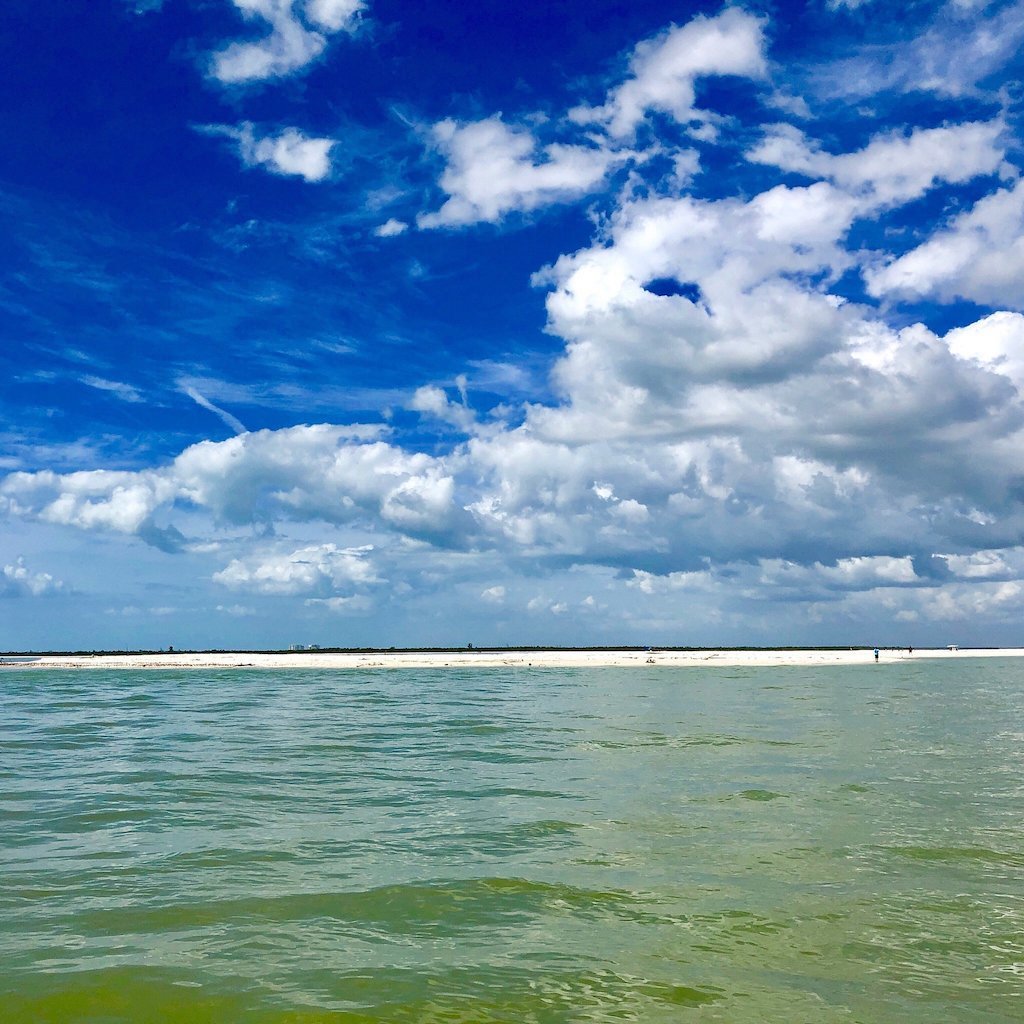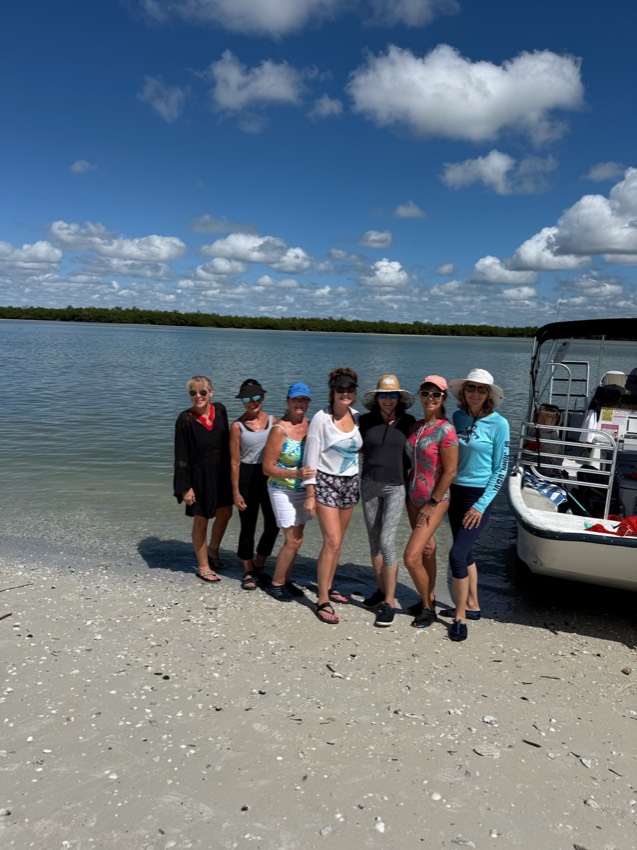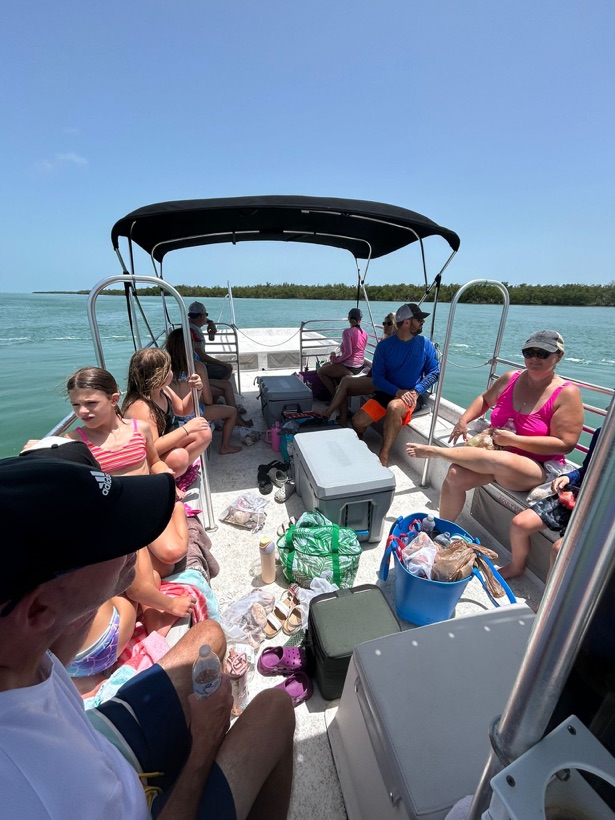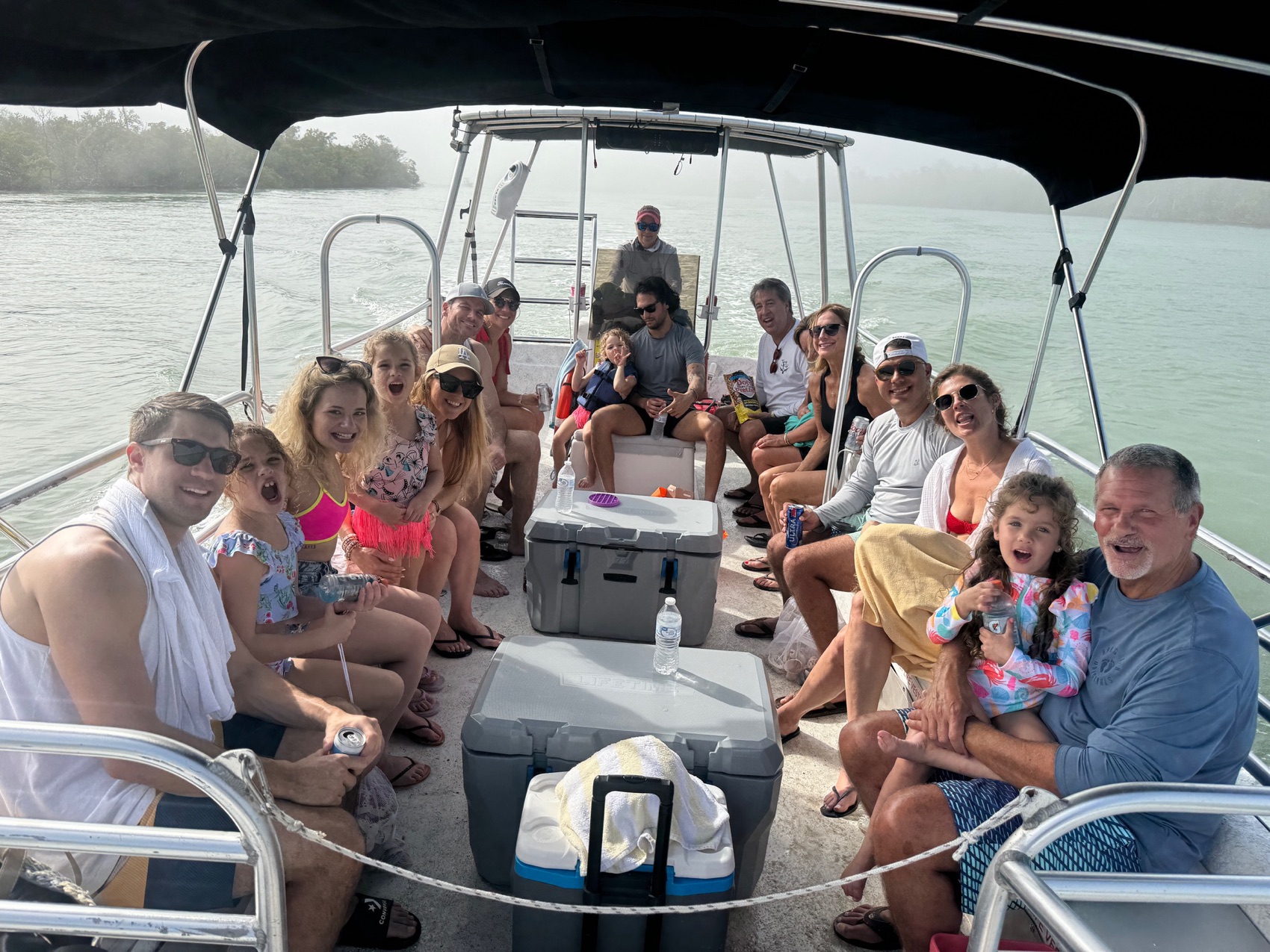
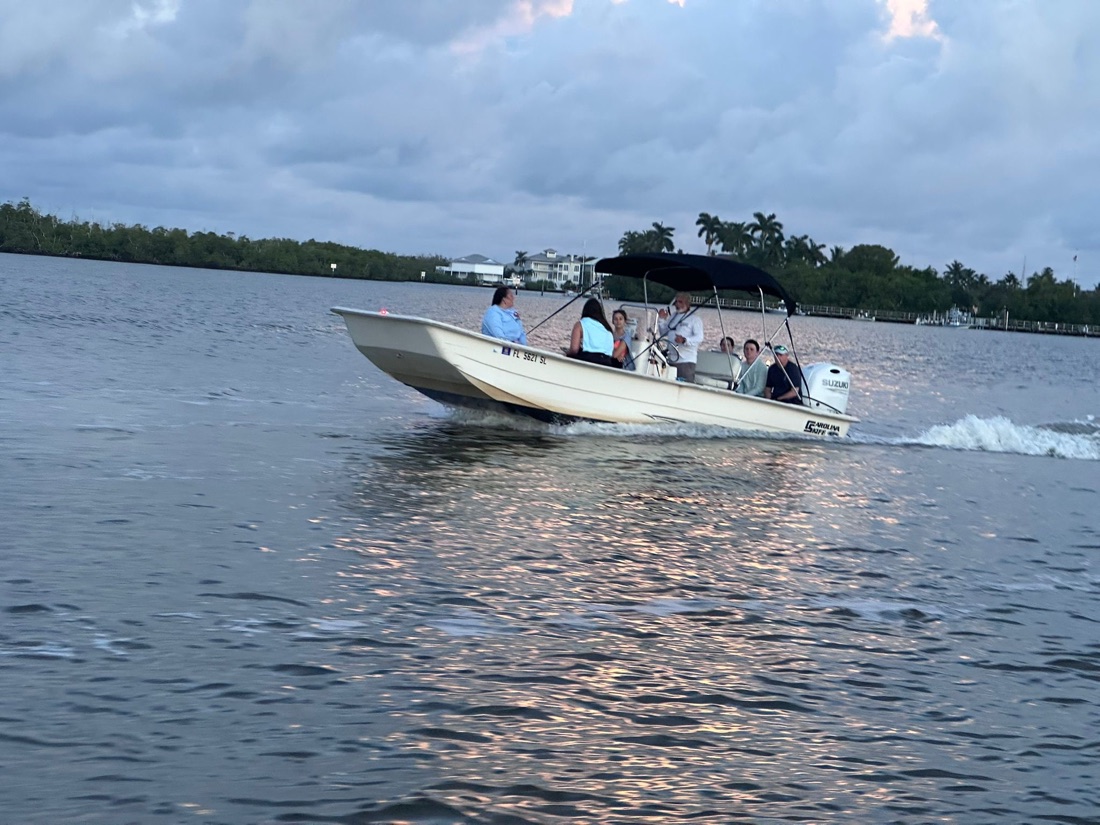
Before we ever call a route on a private shelling charter, we’re checking two things against each other: which way the wind’s blowing and where the tide sits that hour. A light wind and a mid-falling tide usually points us toward Kice Island, running the outside beach where the wrack line piles up thick after the Gulf’s had all night to sort through everything the last front pushed in. A stiffer wind out of the south changes that math fast, and we’d rather make the call before leaving the dock than turn back halfway there with a boat full of disappointed guests.
When the wind’s wrong for Kice, we don’t fight it — we swing the whole charter into the back-creek bars tucked behind the barrier islands instead, where mangrove roots break the chop down to almost nothing. It’s slower hunting, more wading through skinny water than walking dry sand, but a private charter has the time to let that trade-off pay off instead of rushing a rough beach landing just to stick to a plan made before we left the dock.
Kice’s wrack line has a particular look worth knowing before you go — a dark, ropy band of seagrass and shell fragments sitting right at the last high-water mark, distinct from the clean sand above it. Our captains walk that line first, kicking through it lightly rather than digging, since most of what’s worth finding is sitting right on top rather than buried. Guests who dig through open sand instead usually come up with less than the ones working the line itself.
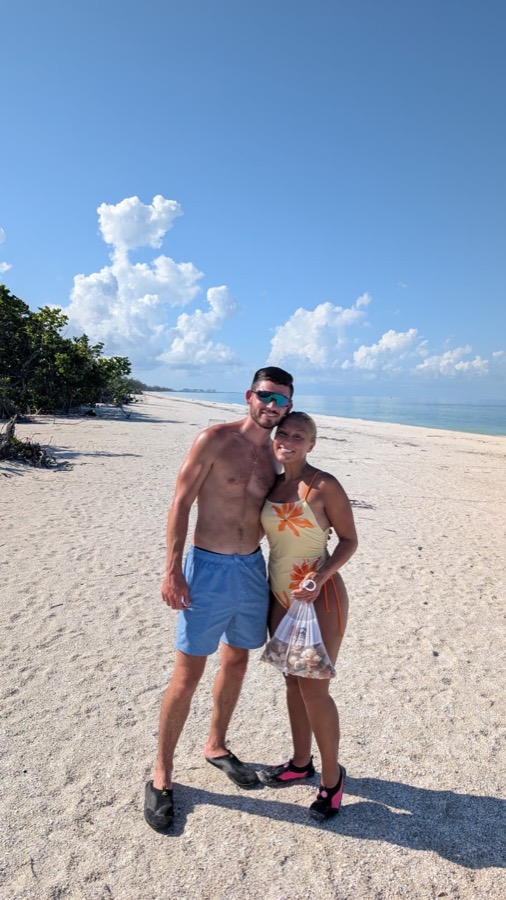
We hand off a mesh bag rather than a hard bucket for this stretch, since it drains as you walk instead of filling with water every time you bend down along the wrack line. Guests who start out with a hard bucket usually trade it in by the second stop — the mesh bag just holds up better an hour into the walk, instead of turning into dead weight swinging off one arm.
Winter cold fronts change this calculus more than almost anything else. A front that’s just blown through usually means a stiff north or northwest wind for a day or two afterward, which can shut the Kice run down entirely even with a falling tide in our favor. On a private charter booked during front season, we’d rather build that into the plan from the start, offering the back-creek route as the default rather than a fallback guests only hear about once we’re already underway.
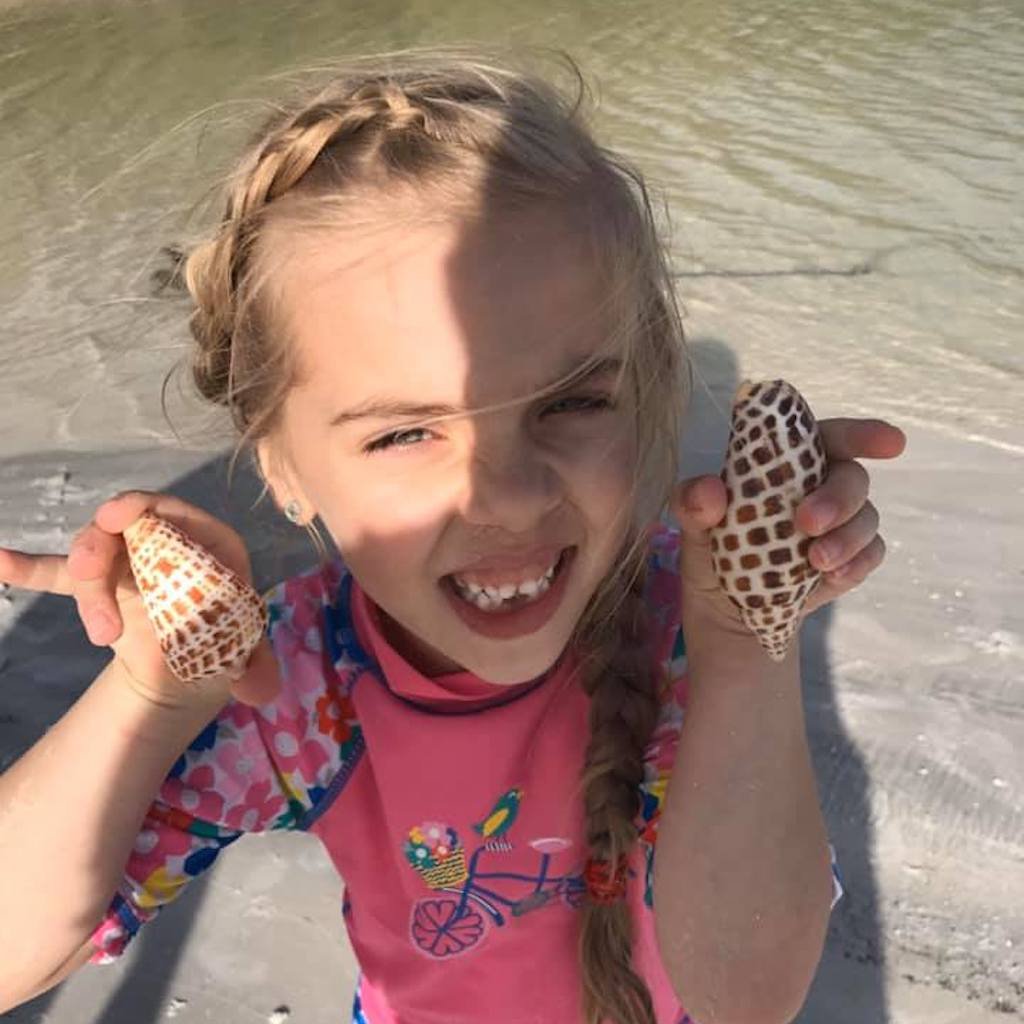
Every find still gets the same check no matter which route we ran to reach it: a gentle shake, and anything with movement goes back to the exact spot it came from, since the rule stays empty shells only, full stop. If your group wants the whole day built around this kind of decision-making rather than a fixed stop, pair the charter with a look at our shelling tours page or the shell guide for what you might be holding by the end of it.