
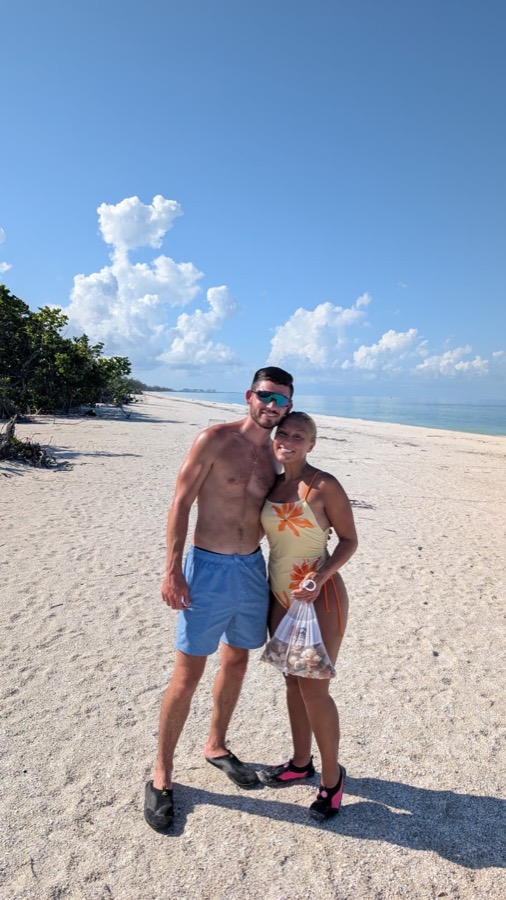
| We provide | You bring |
|---|---|
| Shelling bags or buckets | Reef-safe sunscreen (apply before boarding) |
| Bottled water aboard | Hat & polarized sunglasses |
| A life jacket for every guest | Water shoes or sandals |
| Shell-ID help from your captain | Towel & a light layer |
| Photos of your crew & finds | Phone or camera in a sealed bag |
What we provide
Come empty-handed and you’ll still be set — every shelling tour includes the essentials:
- Shelling bags or buckets for your finds
- Bottled water aboard
- A Coast Guard-approved life jacket for every guest
- Shell-ID help and the best-beach know-how from your captain
- Photos of your crew and your treasures
What to bring
- Sunscreen — reef-safe, applied before you board and reapplied on the beach
- Sunglasses and a hat — the Gulf glare is real
- A towel and a light cover-up for the ride back
- Your phone or camera in a sealed bag — you’ll want photos
- Snacks and drinks — coolers are welcome; bring what your crew likes
- A small bag for any extra-special finds you want to keep separate
What to wear
Think easy and beach-ready: a swimsuit or quick-dry clothes, plus water shoes or sandals you don’t mind getting sandy — you’ll be wading the shallows and walking the tide line. Bring a light layer for the breeze on the water, especially on morning or sunset trips.
What to leave at home
Skip anything you’d hate to drop overboard — heavy jewelry, anything not waterproof, and shoes you care about. There’s no need for shelling tools; hands and a bucket are all it takes. And leave the live shells where they are: we collect empties only.
Not sure which trip fits your crew? Families should check our family shelling tours, and groups who want the boat to themselves can look at a private shelling charter.
From the Helm: Working the shoal edge off Cape Romano before the tide covers it
Nose the boat up to the shoal edge off Cape Romano on a dropping tide and you’ll see a thin band of exposed sand still holding a skim of water, with the real shell material sitting right where that skim thins out to nothing. That’s where we walk guests first, ahead of the drier stretch behind it, because the freshest material is sitting on ground the tide only just gave up. The window doesn’t last — give it another hour and the same stretch is back under a foot of water, off-limits until the next low. We’ve watched this same shoal rebuild itself differently after nearly every strong front that rolls through, so a stretch that produced well last visit can turn up thin the next one, buried under sand a storm pushed in somewhere new.
We hand out mesh bags for most of the trip, but the one thing we genuinely encourage guests to bring themselves is a pair of thin reef or garden gloves, especially for anyone planning to work an oyster-crusted patch near the shoal’s edge. Oyster clusters are sharp enough to nick a bare hand reaching for a shell tucked against them, and a guest who’s already wearing gloves doesn’t hesitate the way someone working bare-handed does. It’s a small thing that isn’t on most packing lists, but it changes how confidently people dig.
The smell out there is part of the experience nobody warns you about — a low-tide flat smells like the Gulf turned inside out, faintly sulfurous where the sand’s been sitting exposed, and it fades fast once the breeze picks up over open water. First-timers usually wrinkle their nose for about thirty seconds before they forget about it entirely, too busy listening to the dry clack of shells settling against each other in the mesh bag every time they take a step.
Whatever comes up out of that sand has to be empty before it goes in a bag, and we say so plainly before anyone steps off the boat — Collier County’s rule on live shells, sand dollars and starfish applies out here the same as it does on the mainland beaches. Most guests are relieved to hear it stated clearly instead of buried in fine print, and it never slows anyone down; there’s always enough already-empty material on a good shoal to fill a bag without touching anything alive.
If another boat’s already anchored on the windward side of the shoal when we arrive, we’ll shift to the lee side instead, where the sand runs a little different but stays untouched. For the fuller rundown on gear before you go, our shelling tours page covers the seasonal side of it, and the seashell guide is worth a look so you know what you’re holding once you find it.