
🐬 At a glance
- Habitat type
- Freshwater only — swamps, marshes, canals & sloughs
- Where they live near Naples
- Everglades interior, Big Cypress & freshwater canals inland
- Salt tolerance
- Very limited — alligators lack the salt glands crocodiles have
- Odds on a Gulf/back-bay tour
- Essentially none — wrong habitat entirely
- What you’ll see instead
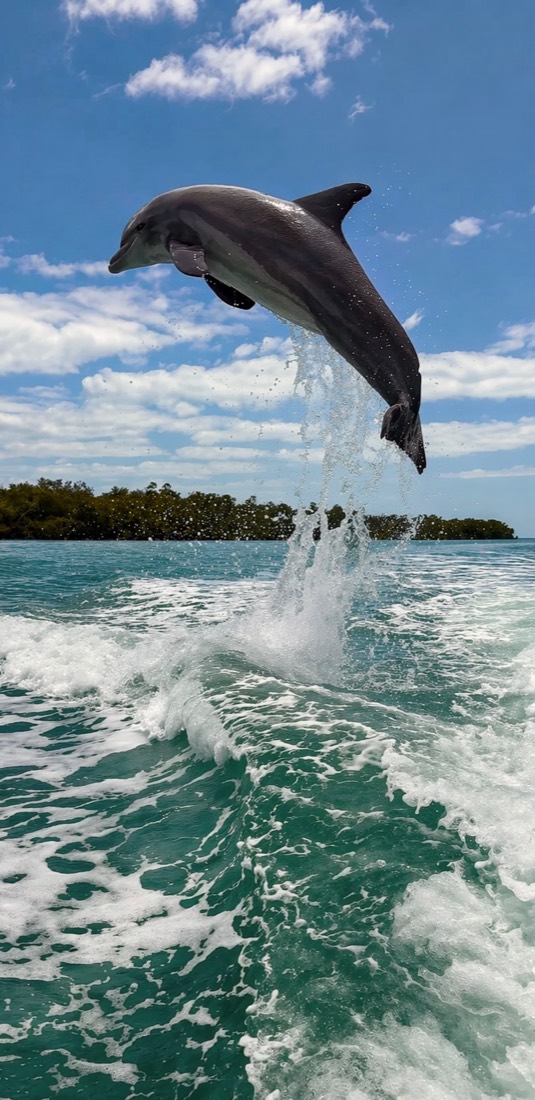
- Bottlenose dolphins, rays, ospreys & wading birds in the mangrove estuary
- Want to actually see a gator?
- Book a freshwater Everglades airboat tour, not a saltwater boat tour
Do Alligators Live in the Gulf of Mexico or Ten Thousand Islands?
Here’s the biology that answers this once and for all: alligators are freshwater reptiles, full stop. Unlike the American crocodile, which has specialized salt glands near its tongue that let it excrete excess salt and tolerate brackish and even open-ocean water for stretches, alligators have no such plumbing. Push one into salt water for more than a day or two and it starts to struggle and dehydrate — which is exactly why you’ll never find gators cruising the passes, back bays or open Gulf that our boats run every day. The water in the Ten Thousand Islands is salt or brackish nearly everywhere you’ll ride: Gordon Pass, Capri Pass, the open Gulf off Marco Island, even the mangrove-lined back bays feel the tide twice a day, mixing salt water deep into the estuary. That tidal salt water is exactly the habitat alligators avoid. So if you’re wondering whether you’ll spot one sunning on a mangrove root during a shelling run to Keewaydin or a sunset cruise past Rookery Bay, the honest answer is no — wrong species for this water.
Where Alligators Actually Live Near Naples
That doesn’t mean Southwest Florida is gator-free — far from it. Alligators are common a few miles inland, in the freshwater marshes, cypress sloughs and drainage canals that thread through the mainland east of Naples. Big Cypress National Preserve and the freshwater interior of Everglades National Park hold healthy populations, and it’s routine to spot one sunning on a canal bank along US-41 or Alligator Alley, or gliding through a roadside ditch out in Golden Gate Estates. Those are all freshwater systems, fed by rain and the Everglades’ slow inland sheet flow rather than by the tide. That’s the habitat line that matters here: fresh water inland, salt water at the coast, and alligators stay firmly on the fresh side of it. If seeing a genuine wild alligator is actually the goal of your Florida trip, you want to head inland to the freshwater Everglades, not out to sea with us.
What You’ll Actually See on a Naples Boat Tour
So what fills that gap on a Ten Thousand Islands tour? Plenty — this is some of the richest estuary wildlife-watching in Florida, just a different cast of characters. Bottlenose dolphins live in these waters year-round, and our captains regularly run past mangrove points and sandbars where they’re working the tide for bait. Ospreys and the occasional bald eagle patrol overhead, while herons, egrets and roseate spoonbills wade the flats at low tide. Cownose rays and, in season, a loggerhead sea turtle (our main nesting species here, May through October) can surface in the shallows too. In the cooler months, roughly November through March, manatees push into the warmer backwaters near Rookery Bay as water temperatures drop below about 68°F — not the big herd gatherings you’d see at a Crystal River spring, but a genuine, quiet thrill when one surfaces beside the boat. None of this is guaranteed on any single trip; wildlife moves on its own schedule, not ours. But it’s real, wild, saltwater Florida, and it’s exactly what a dolphin tour or a run through the mangrove estuary is actually built around.
Boat Tour vs. Everglades Airboat: Which One for Gators?
If seeing an alligator is genuinely on your Naples bucket list, the fix is simple: book both trips, because they show you two completely different pieces of Florida. An Everglades airboat tour runs on freshwater sloughs and marshes inland, skimming across shallow sawgrass flats where alligators bask on the banks and turtles line up on logs — that’s their home turf, and a good guide will get you reasonably close. A Ten Thousand Islands boat tour with us runs the salt and brackish water of the Gulf and back bays, where the show is dolphins, rays, birds and, at the right time of year, manatees. We break down the full comparison — what each trip actually covers, how long they run, and which fits your day better — in our boat tour vs. Everglades airboat guide. Plenty of visitors do both on the same trip: an inland airboat morning for the gators, then an afternoon or sunset run with us for the dolphins and the open Gulf. Neither one substitutes for the other, because the water itself is a different world.
| Animal | Water type | Typical habitat near Naples | Likely on a Ten Thousand Islands tour? |
|---|---|---|---|
| American alligator | Freshwater only | Everglades interior, cypress sloughs, drainage canals | No — wrong habitat entirely |
| Bottlenose dolphin | Saltwater / estuary | Gulf, passes, back bays, mangrove channels | Yes — present year-round |
| American crocodile | Brackish / saltwater (rare) | Far south Florida mangrove edges | Rare — not a typical sighting |
| West Indian manatee | Fresh, brackish & salt | Rookery Bay backwaters in cooler months | Possible, Nov–Mar below ~68°F |
| Bull shark | Saltwater / brackish | Gulf passes, river mouths | Rarely seen from the boat |
Is the Water Safe? Bull Sharks and Other Naples Myths
Since gators come up, sharks usually aren’t far behind. Bull sharks do use the passes and river mouths around Naples and Marco Island — they’re one of the few shark species comfortable moving between salt and fresh water — but they’re rarely seen from a tour boat and pose essentially no practical concern for guests riding above the waterline. The mangrove backwaters and Gulf here are working, wild water, and treating it with normal ocean-going respect (no swimming after dark near the passes, listening to your captain) is really all that’s needed. The bigger picture is this: every animal in these waters, from alligators to sharks to dolphins, sticks to a habitat for real physiological reasons, and understanding that is what actually keeps your expectations honest — no swimming with wild dolphins, no guaranteed sightings, no gators on a Gulf tour, just real Ten Thousand Islands wildlife on its own terms. Browse more honest answers like this one in our Naples boat tour travel guide before you book.