
🌿 At a glance
- What it is
- A tidal estuary built and sheltered by mangrove forests
- Nursery for
- Snook, redfish, snapper, shrimp and crabs
- Why it matters
- Young fish here feed the dolphins and birds you'll see
- Where & when
- Ten Thousand Islands & Rookery Bay; productive year-round
- Densest mangroves
- The Ten Thousand Islands hold Florida's thickest stands
Why the roots are a nursery
Picture a fish the size of your finger trying to grow up in open water — it gets eaten. Now drop it into a flooded red mangrove root tangle: hundreds of arching prop roots break up the current, throw shade, and create a maze too tight for big predators to follow. That's the whole trick. Juvenile snook, redfish, mangrove snapper, sheepshead, shrimp and blue crab all spend their first months hiding and feeding in here before they ever venture out to the passes. Marine biologists call these forests one of the most productive habitats on Earth, and on a quiet creek you can watch it happen — little silver flashes scattering as your shadow crosses the roots.
The food web that draws dolphins and birds
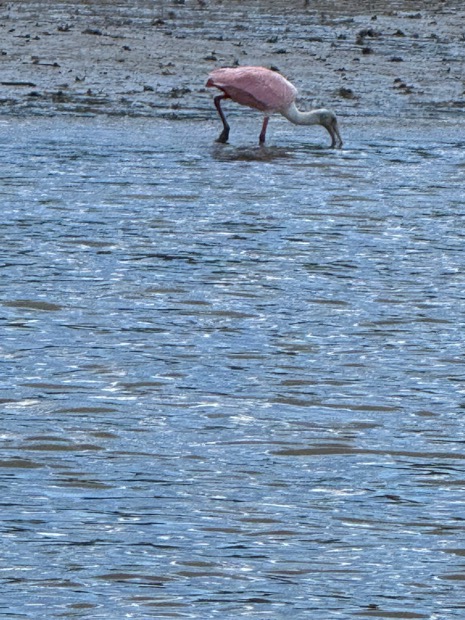
Here's the part that makes a wildlife tour click. The estuary doesn't just hide young fish — it grows so many of them that everything bigger comes to cash in. Mullet and pinfish fatten in the shallows, and when the tide pulls them off the flats, bottlenose dolphins are waiting at the drop-offs and creek mouths to round them up. Above the waterline, the same fish feed the wading birds: herons, egrets, ibis and roseate spoonbills stalk the root edges at low water. Bald eagles and ospreys work the open bays. Every link in that chain traces back to the mangrove nursery, which is why our captains read the shoreline first when we're hunting for wildlife.
A habitat in layers
The estuary isn't one thing — it's a stack of connected habitats, and the magic is in how they feed each other. The mangrove roots are the nursery; just off them, oyster bars and seagrass filter the water and grow more food; and the tidal flats become a buffet every time the water drops. Understanding the layers is the whole game on the water.
| Habitat | Main job | Who it feeds |
|---|---|---|
| Mangrove roots | Nursery & shelter | Juvenile snook, redfish, snapper |
| Oyster bars | Filter & structure | Sheepshead, drum, foraging dolphins |
| Seagrass beds | Food & cover | Manatees, seatrout, crabs |
| Tidal flats | Low-tide buffet | Wading birds, ibis, skimmers |
Where to see it at its richest
If you want the densest, wildest version of this anywhere in Florida, it's the Ten Thousand Islands between Marco Island and Everglades City — thousands of mangrove islets, almost no development, and tidal creeks that refill twice a day. Our dolphin and wildlife tours run out through this maze from Goodland, easing into the creek mouths where the nursery meets open water and the wildlife stacks up. Bring a camera; this is the part of the trip people don't expect to love and then can't stop talking about.
From the Helm: How We Idle a Skiff Into a Flooding Mangrove Creek Near Goodland
Somewhere behind Goodland there’s a creek we like to run right as the tide turns and starts climbing back over the prop roots, the whole system exhaling all at once. We kill the outboard well before the mouth of it and idle in on the trolling motor instead, because a two-stroke wake slapping into a mangrove tunnel sends every mullet and every heron ahead of us scattering long before anyone’s had a chance to see them. Going electric here isn’t about quiet for its own sake — the animals using this creek have never learned to ignore an engine the way the ones out in the open bay have.
Before we’re even inside the mouth, we’re scanning the surface for small signs most guests miss entirely. A push of finger mullet skipping nose-first against the current usually means something bigger is tucked against the roots working them from below, and a faint mud boil rolling up along the bank — a cloudy patch with no visible cause — often marks a redfish or snook that just spooked off the bottom. We’ll cut the trolling motor entirely at that point and drift on the current, letting the boat go quiet so the next disturbance in the creek isn’t us.
We run a shallower-draft skiff for this stretch instead of the deeper-hulled boats we use out in the open bay, specifically so we can nose right up against the root line without grounding out on the oyster clumps that build up along the bank. Those extra few inches of clearance are the difference between drifting past a nursery full of juvenile snapper and having to back straight out before anyone’s seen a thing. Guests usually notice the boat feels smaller and slower back here, and that’s the point — the whole approach to water like this is built around not disturbing what makes it worth the trip.
We often spot a young snook holding dead still in the shadow line where the roots meet open water, and sometimes a small shark working that same edge in the last of the light. None of it is guaranteed on any given pass through — a creek stacked with bait one week can look empty the next, depending on where the tide left the food. What we can promise is the approach itself: slow in, engine off when it counts, and enough patience to let the creek show you what’s using it instead of chasing anything down the bank.
The same tangle of prop roots that shelters this nursery is easier to sort out once you know your reds from your blacks, which our mangrove types guide walks through in full. If backwater creeks like this one are what you’re after, our shelling tours tuck in behind the barrier islands on the same kind of tide, pairing quiet water like this with a shot at a fresh shell line at the same stop.