Before we ever cast off, our captains check one thing that never shows up in a marine forecast: how the tide is moving against the wind right at the Gordon Pass mouth. An outgoing tide pushing into a light easterly builds a clean current seam where bait stacks up and stalls, and that seam is where dolphins actually go to work. A slack tide or a hard onshore wind tells us something different — that today’s best water is going to be tucked inside the bay instead of out at the pass.
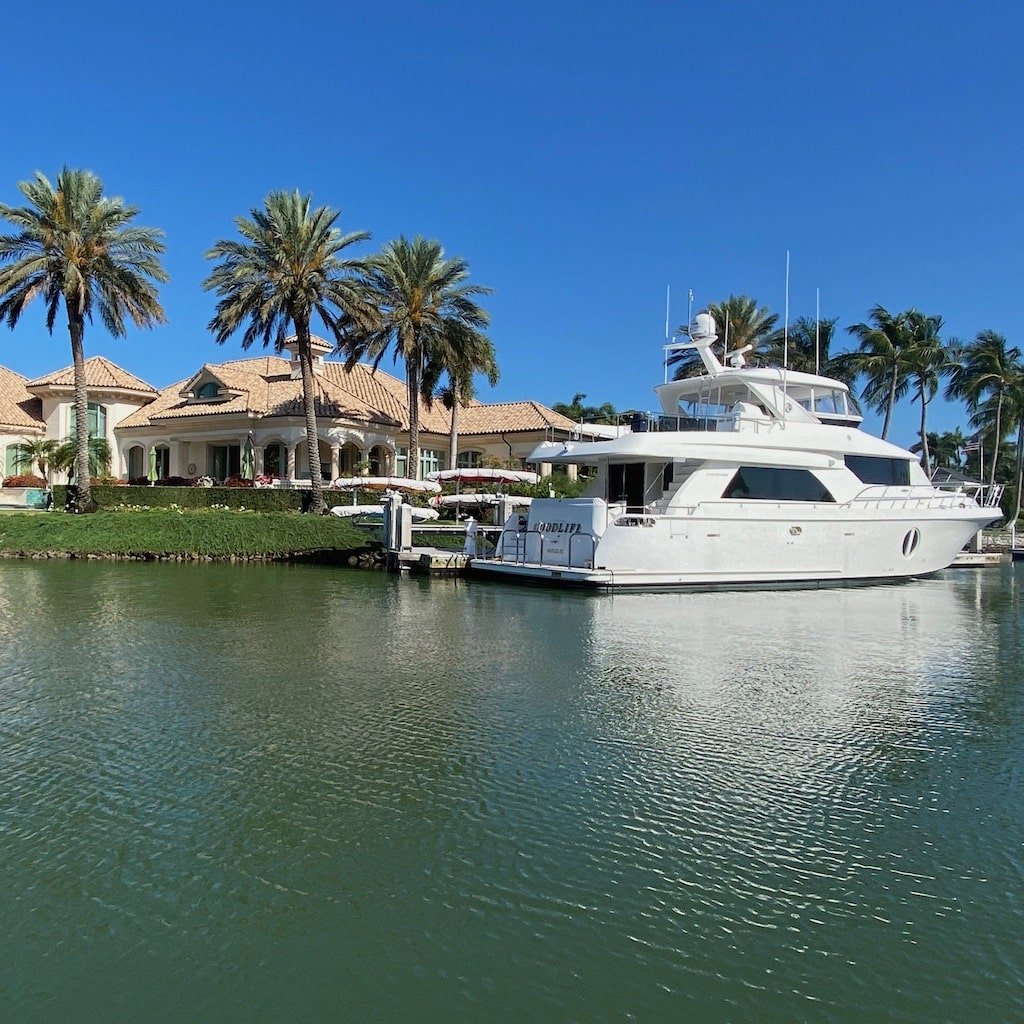
The run down to that seam starts at our downtown Naples marina, holding idle speed the whole way down Naples Bay past the seawalls and dock lines of Port Royal and through the marked manatee zone. It’s a slow stretch on purpose — our captains use it to scan the surface for nervous bait, working birds, or the flash of a dorsal fin rolling through the chop, so by the time the bay opens toward the Gulf we usually already have a direction picked.
When a stiff southwest wind is stacking swell straight into the pass mouth, running out to open Gulf water turns into a bouncy, unproductive slog, and the dolphins tend to peel off that chop anyway. On those mornings we tuck along the lee side of the pass and work the sandbar edge instead, where the water stays flatter and the same tidal current still funnels bait past a shorter, calmer stretch of shoreline — a smaller window, but often a busier one.
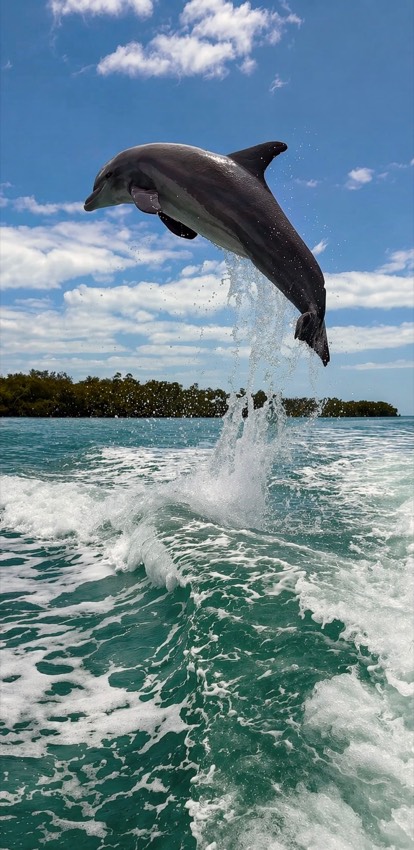
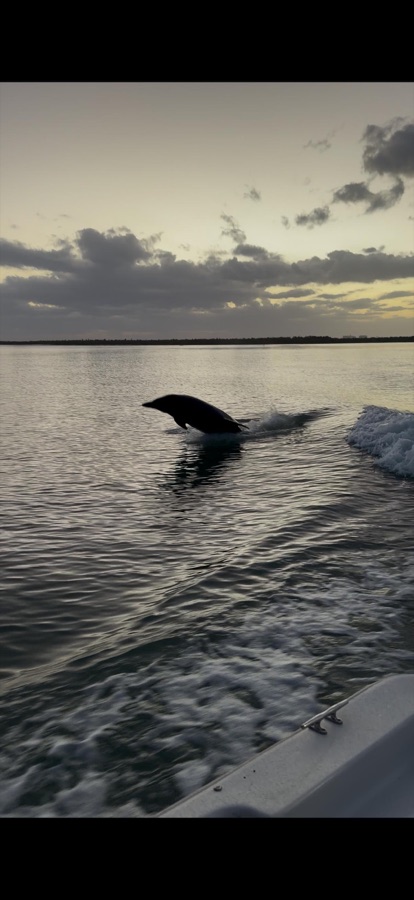
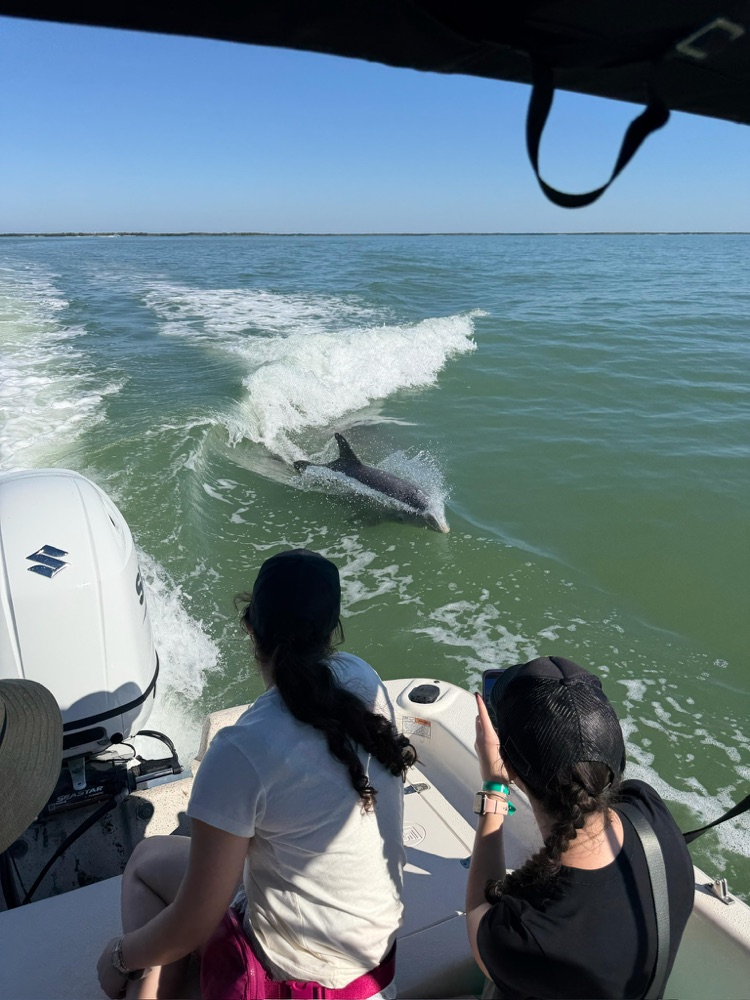
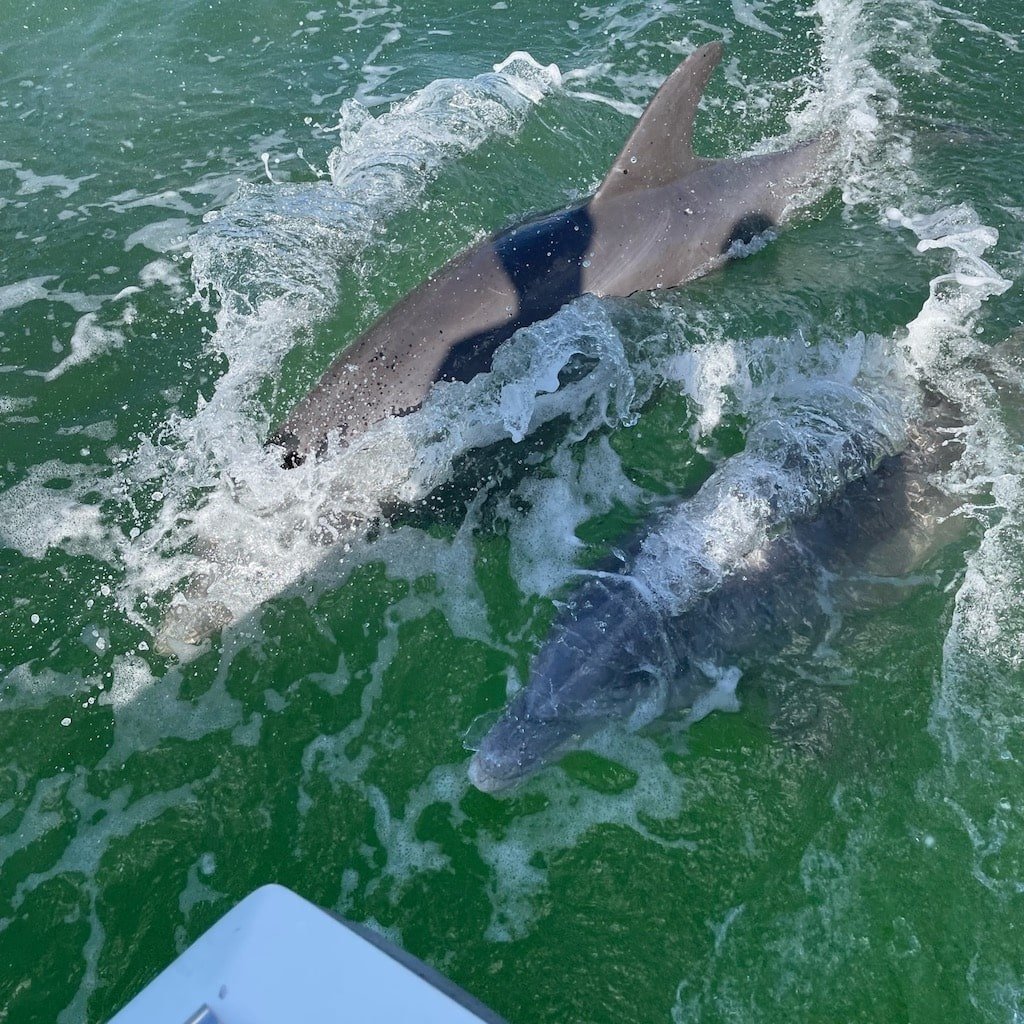
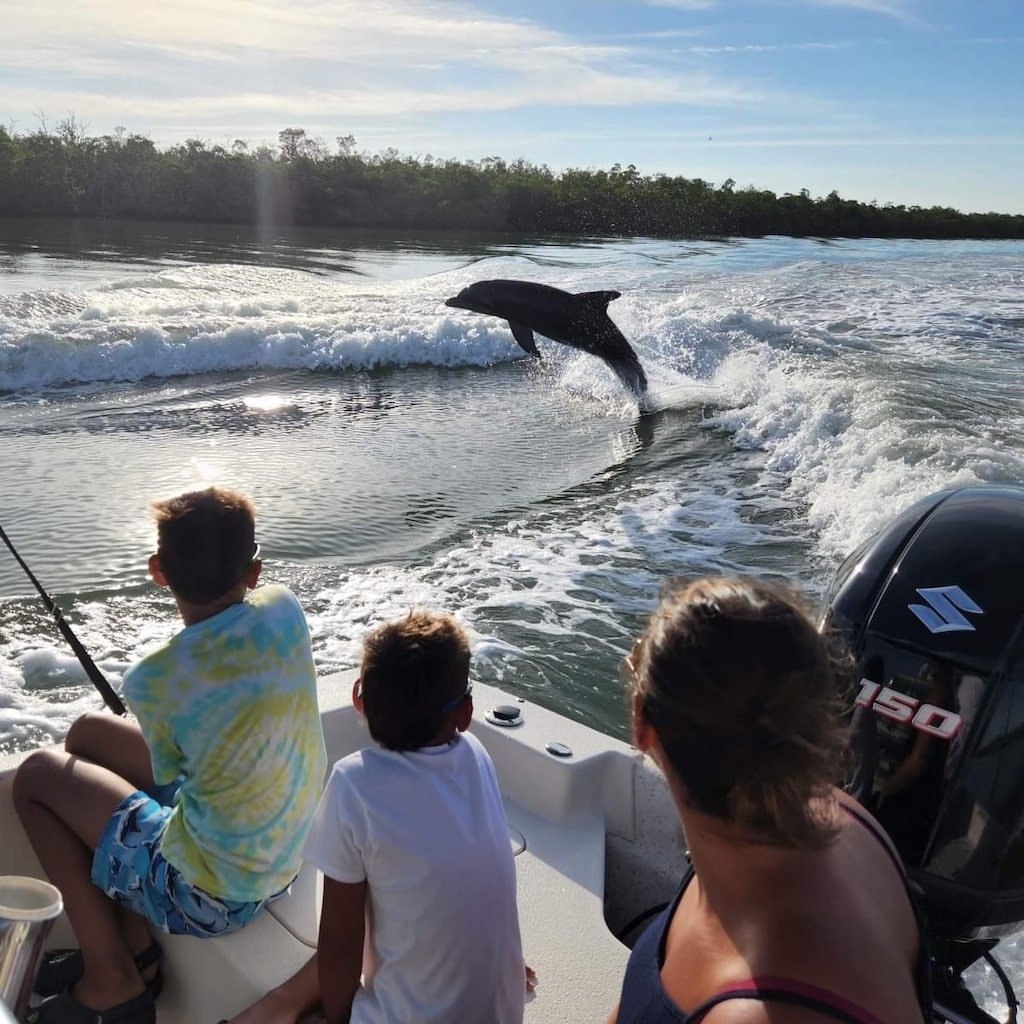
The moment our captains are actually watching for is the boil — that flat, glassy patch where the current seam breaks and bait scatters just before a dorsal fin rolls through it. We cut the throttle early and drift the boat into position rather than motoring straight at the disturbance, because dolphins working bait on their own terms will often close the distance to a quiet, idling boat faster than one still under power.
Sightings are never something we can promise — wild bottlenose dolphins move on their own schedule, following bait rather than our itinerary — but the Gordon Pass seam has been one of the more consistent places to put a boat in their neighborhood. On mornings the pass is quiet, we’ll ease the shoreline route past Port Royal’s mansions and seawalls instead, since slow wildlife water still makes for a good sightseeing run.
For guests who want the longer version of what we’re scanning for out there — bait showers, stacked birds, the oily slicks that mean fish are feeding underneath — our wildlife guide walks through the same signs from a captain’s-eye view. It’s the same read whether we’re working the Gordon Pass seam or a quieter stretch of bay: find where the bait is nervous, and the rest of the food chain tends to be close behind it.