
🌊 At a glance
- What Naples Bay is
- A tidal channel and working waterway linking downtown Naples to Gordon Pass and the Gulf
- Can you swim there
- Not recommended — heavy boat traffic, docks and seawalls, and no designated swim area
- Water clarity
- Brackish and tide-driven, often tea-tinted — not built for a clear-water dip
- Where to swim instead
- Open-Gulf sandbars and barrier-island beaches like Keewaydin, reached by boat
- Best access
- A guided boat tour with an island beach or sandbar stop built in
What Naples Bay Actually Is
Naples Bay is the natural harbor tucked behind downtown Naples — a wide, winding tidal waterway that runs south from the Gordon River past Port Royal’s waterfront estates before spilling into the Gulf of Mexico at Gordon Pass. It isn’t a lake, and it isn’t a quiet backwater either — it’s a working estuary, where fresh water draining out of the Golden Gate canal system mixes with incoming Gulf tide twice a day. Naples City Dock sits right on it, along with marinas, sailboat moorings and some of the priciest waterfront real estate in Southwest Florida. If you’ve stood on the seawall at Crayton Cove or watched boats idle past the Naples Pier from the water side, you’ve seen Naples Bay.
It’s also genuinely worth seeing, just not from in the water. The bay runs straight past Port Royal, one of the most exclusive waterfront neighborhoods in Florida, where multi-million-dollar homes back right up to the seawall — the whole reason our Port Royal tour exists. And where the bay narrows and picks up speed at Gordon Pass, the current draws baitfish, which in turn draws the bottlenose dolphins our dolphin tours regularly find working that pass, year-round residents of these waters.
Why You Shouldn’t Swim in Naples Bay
Picture rush hour, but on the water. Naples Bay funnels sailboats, charter fleets, center consoles and the occasional yacht through a relatively narrow channel all day long, especially on weekends and in season. There’s no lifeguard, no roped-off swim area and no stretch of the bay set up for people in the water — just docks, pilings, seawalls and a steady current of boat traffic moving at speed once boats clear the no-wake zones. Jumping in off a seawall downtown puts you in the same lane as everyone else’s propeller.
Water clarity doesn’t help the case either. Naples Bay is brackish — part fresh canal runoff, part incoming Gulf tide — and that mix runs tea-colored more often than not, especially after summer rain. You won’t see your feet in three feet of water the way you can on a good day out at the sandbars. None of this means the bay is unsafe to be near or unpleasant to look at — it’s genuinely beautiful, lined with mangroves and million-dollar docks alike — it just isn’t built, or used, as a place to swim.
Naples Bay vs. the Open Gulf
The confusion is understandable. “Naples” gets used loosely to describe everything from the bay to the beach to the backwater canals, and they’re genuinely different bodies of water with different rules of thumb for swimming. If you want the full breakdown of how the bay, the Gulf and the passes relate to each other, we cover it in our guide to the difference between the Gulf and the bay in Naples. The short version: the bay is for boats, the Gulf side is for you.
| Naples Bay | Gulf Sandbars & Barrier-Island Beaches |
|---|---|
| Working boat channel with steady marina and bridge traffic | Open water off boat-only islands like Keewaydin |
| Lined with docks, seawalls and pilings | Wide sand shallows with no dock hazards |
| Brackish, tide- and rain-driven clarity | Sun-warmed shallows that run clear on calm days |
| No designated public swim area | Natural sandbar swim stops built into tours |
| Best experienced by boat, not by swimming | Best experienced by swimming, wading and shelling |
Once you clear Gordon Pass and head into open Gulf water, the whole picture changes. Fewer boats, no docks to dodge, and sandbars that build up soft and shallow around the barrier islands — the kind of water most people are picturing when they imagine a Naples beach day.
Where to Actually Swim Near Naples
If you’re downtown without a boat, the public Gulf beaches are your best bet — the sand around Naples Pier and the beaches north toward Vanderbilt front the open Gulf, not the bay, with lifeguards on duty in season and real swimmable water. But the water most visitors remember from their trip isn’t a mainland beach — it’s a sandbar you can only reach by boat.
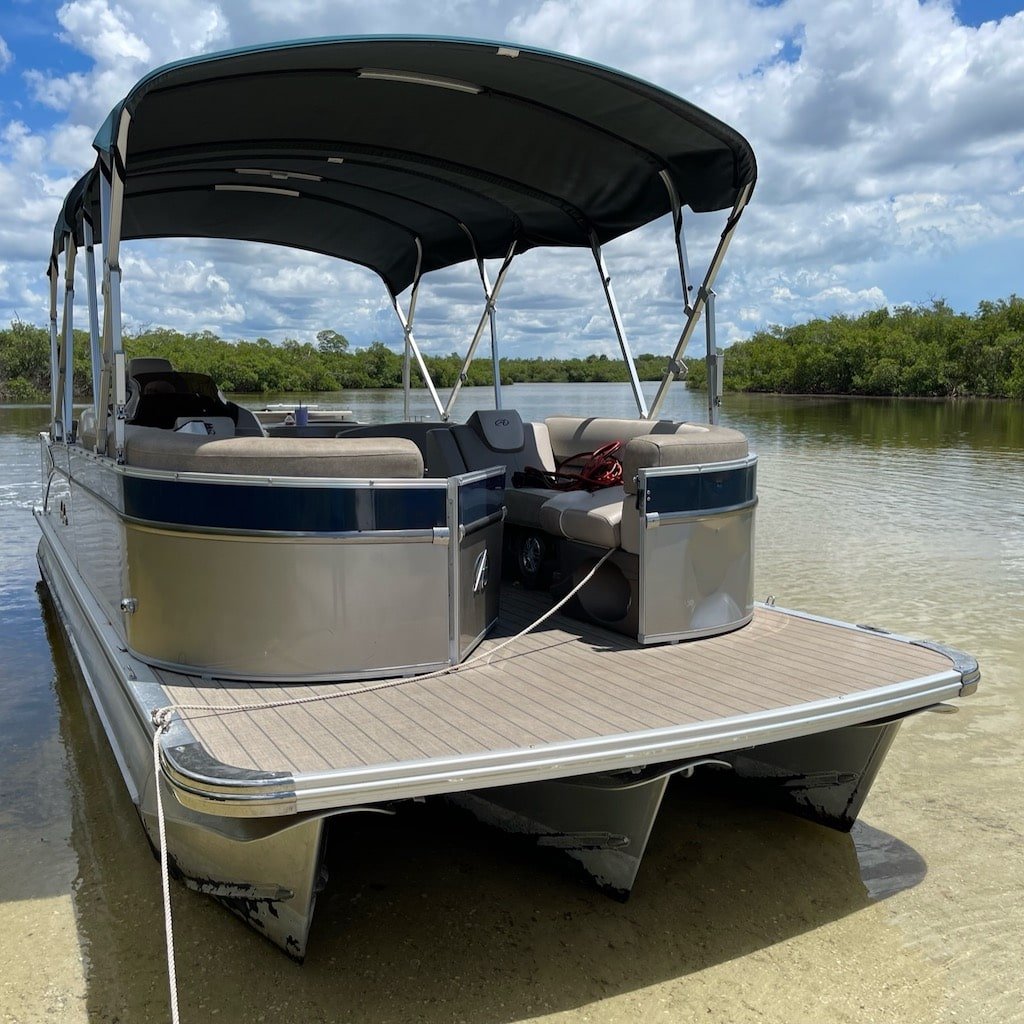
Out past Gordon Pass, barrier islands like Keewaydin build wide, sun-warmed sandbars that flood in at high tide and dry into walkable shallows as it falls. That’s where our island beach stops happen — calm, waist-deep water, a sandy bottom instead of mud, and none of the dock traffic you’d find back in the bay. It’s prime shelling water too once the tide drops, so a swim stop and a shelling hunt often happen on the same island the same afternoon. Just remember: Collier County requires empty shells only, so anything alive stays right where it is.
Not every tour includes a dedicated swim stop, and how wet you get depends on the boat and the day’s plan — we spell out exactly what to expect in our guide to swimming off the boat in Naples. For more on the bay itself, including its history and the neighborhoods along it, see our Naples Bay guide.
Tips for a Real Swim Stop on Your Boat Tour
If getting in the water is the whole point of your trip, build your day around the Gulf side, not the bay, and say so when you book. Pack reef-safe sunscreen — the open sandbars offer zero shade — water shoes if you’re not used to a shelly bottom, and a dry bag for your phone. Tide matters too: a falling tide toward low is when the sandbars are widest and the shelling is best, while a rising tide gives you more water to actually swim in rather than wade through.
Tell your captain up front if a swim stop matters to you. Most of our island and shelling trips can work one in when conditions cooperate, and if you want the whole day custom-built around a longer swim — a specific island, extra sandbar time — ask about setting your own itinerary rather than sharing a set route.